
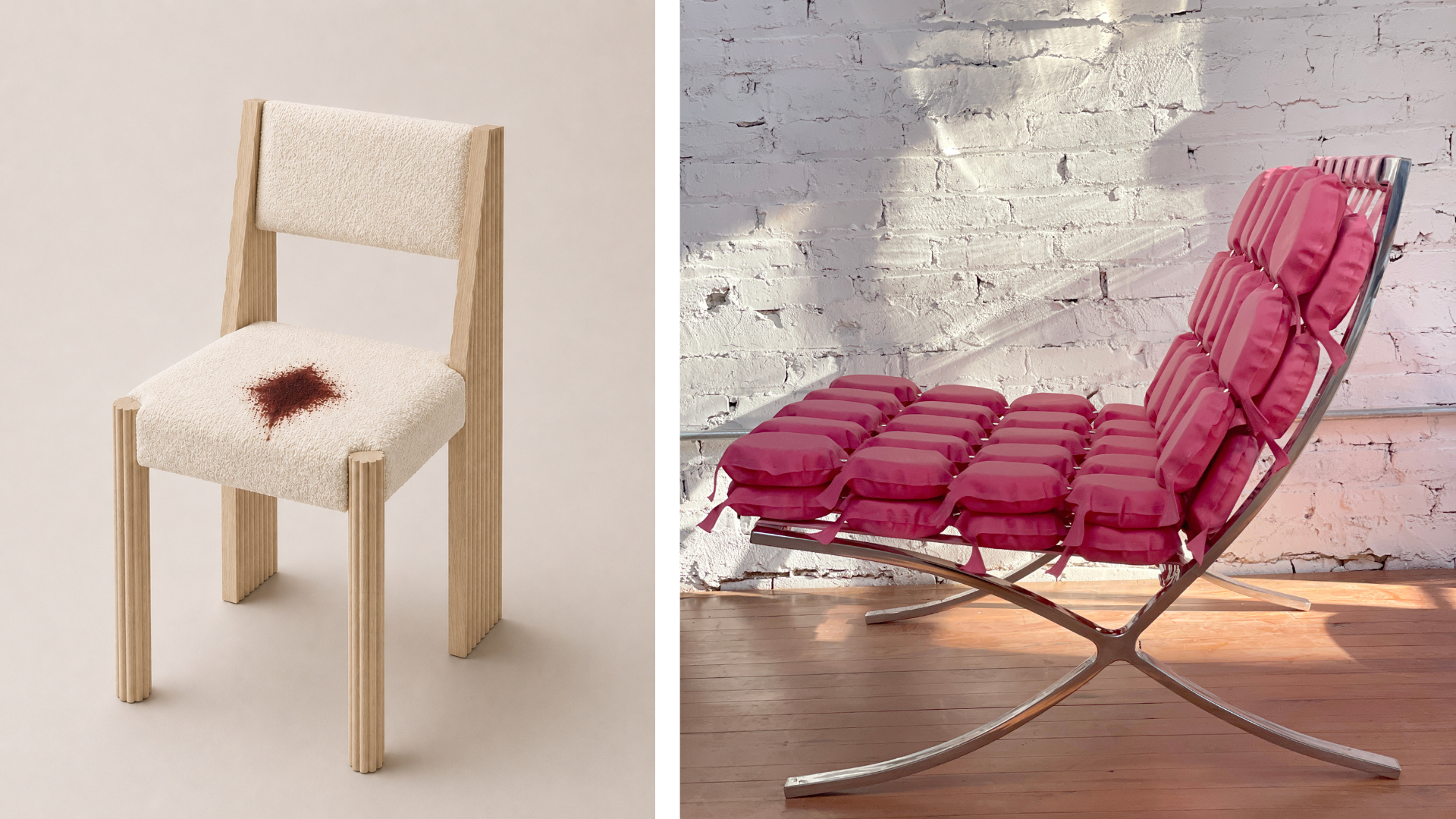
Standing Up and Making a Statement With Chair Design
Take a stand, and make a difference. That’s the idea behind Don’t Sit on Me, the latest group exhibition at the Hudson Valley design store/gallery Available Items. Design industry veterans Kristin Coleman and Chad Phillips founded this business in 2022 as a place to champion contemporary design. And they’re not afraid of making a statement. Featuring 13 chair designs that confront injustice, this protest show runs through Aug. 2 with a portion of the proceeds benefiting Human Rights Watch.
Read More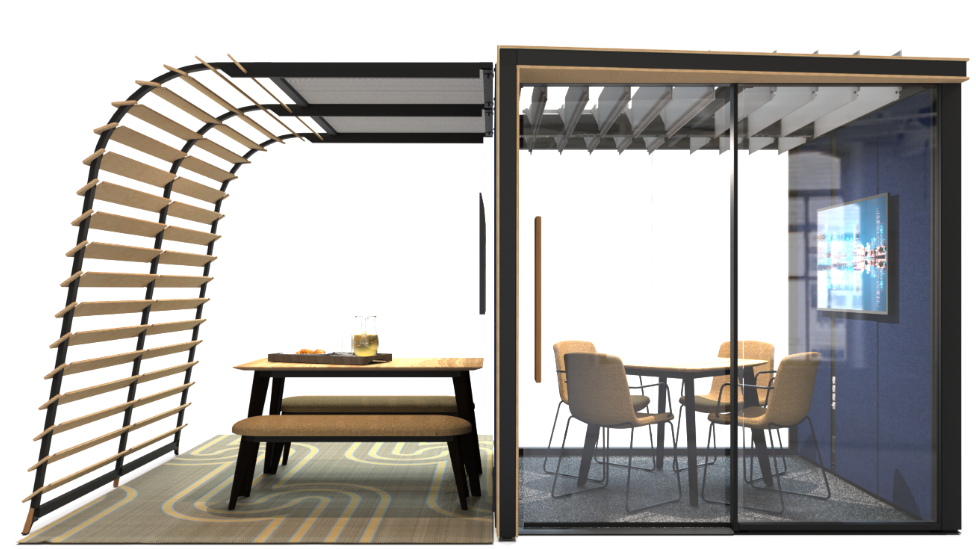
5 Furniture Picks for a Growing Demographic You Shouldn’t Ignore
Who isn’t looking for solutions that cut through the noise when it comes to product specification—especially for the autistic set? The IBCCES's Certified Autism Resource (CAR) product designation helps specifiers find products that have been rigorously vetted by a board of experts that includes autistic self-advocates. From Orangebox's modular acoustic pods to Creative Activity's fully customizable sensory rooms, these six furniture selections prioritize universal design principles for the wave of neurodivergent individuals soon to be entering the workforce.
Read More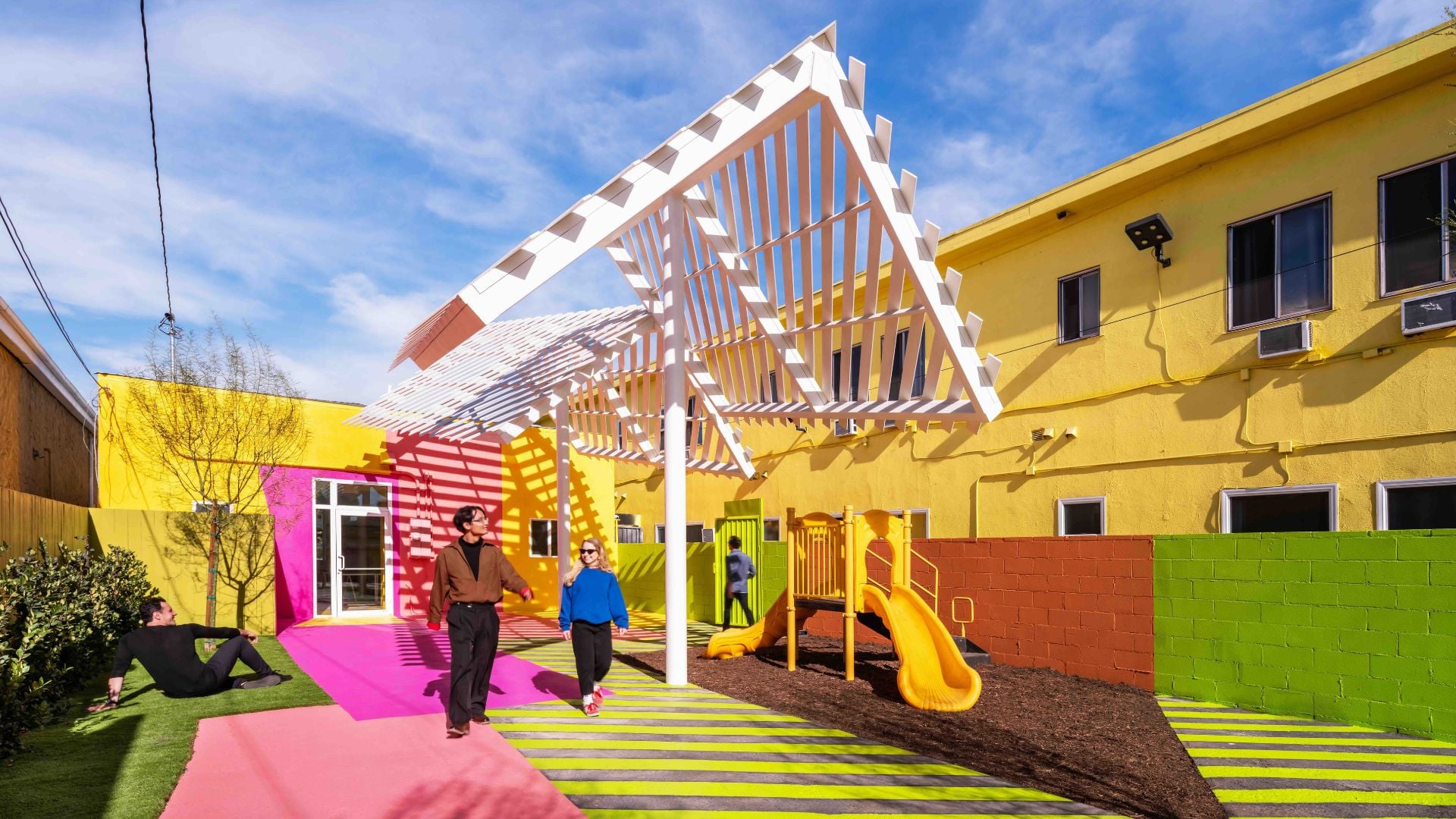
From Refugee to Architect of Hope in LA
Nerin Kadribegovic doesn’t just design buildings—he designs second chances. In this candid Q&A, the founder of Kadre Architects reflects on how his experience as a refugee has shaped his deeply human approach to architecture, why dignity should never be value-engineered out, and how projects like The Woodlands are rewriting the narrative around housing for formerly unhoused families. Creating adaptive-reuse projects with bold, joy-filled designs, Nerin makes a compelling case that good architecture isn’t a luxury—it’s a necessity. And yes, he’s doing it all with a whole lot of heart (and color).
Read More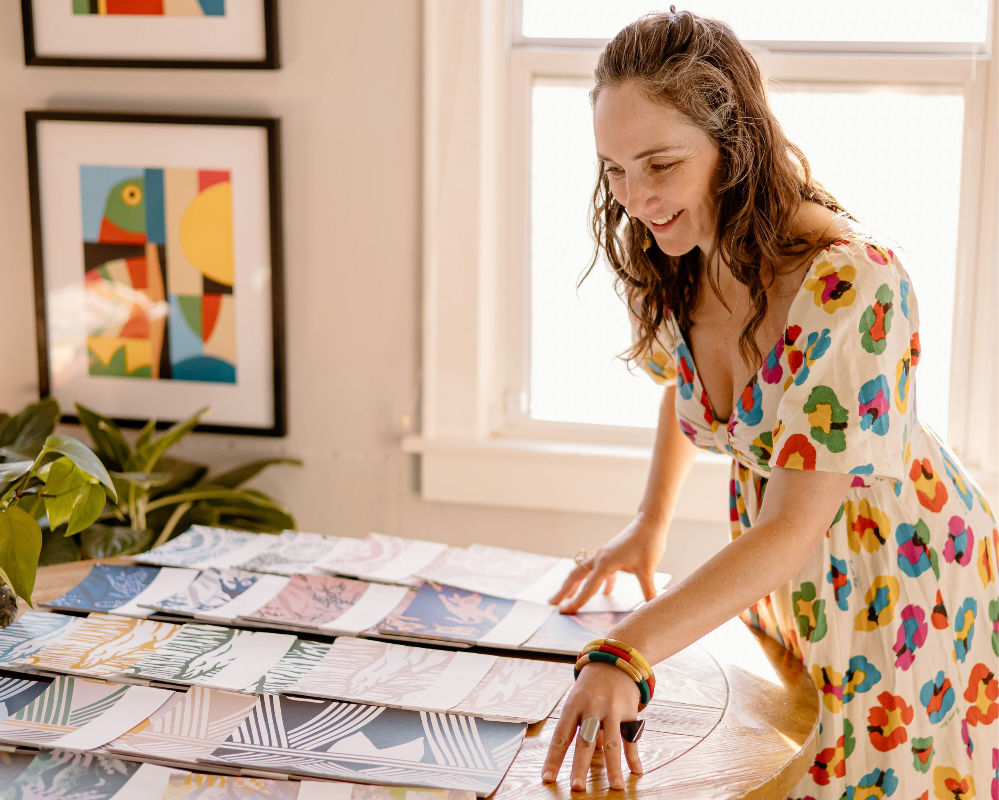
Rewriting the Rules: Anduba Wallcoverings Sets the Standard for Design Equity
Inspired by the public storytelling of Diego Rivera’s murals, Flavia Pereira founded Anduba to bring indigenous art into everyday spaces while challenging long-standing industry norms. The wallcovering company ensures its artists retain full copyright and earn royalties well above the standard rate. Appropriately dubbed The Brave Ones, the first collection features work by indigenous artists from Brazil, Mexico, and the United States and explores themes of interconnectivity and cultural continuity. Produced sustainably and made to order, the line reflects a deeper commitment—not just to environmental responsibility, but also to equity, transparency, and community impact. Anduba is proving that design can be both beautiful and radically fair.
Read More
Seoul Takes a Bold Step With "Spectrosynthesis," Its First Major Queer Art Showcase
After stops in Taipei, Bangkok, and Hong Kong, "Spectrosynthesis" lands in Seoul for its fourth edition. Opening March 20 at Art Sonje Center, the exhibition marks the first time a major Korean institution has dedicated a large-scale presentation to queer subjects, narratives, and artistic practices. With more than 30 works and a roster that spans local and international names, it’s a significant cultural moment.
Read More
Wyndham Grand Barbados Debuts “Treasures of the Tide” Art Experience
What if your beach walk ended in a work of art? At Wyndham Grand Barbados, artist Sheena Rose leads a sunrise shoreline experience where hotel guests collect treasures from the tide and transform them into keepsakes—part workshop, part storytelling session, and completely rooted in the island’s culture.
Read More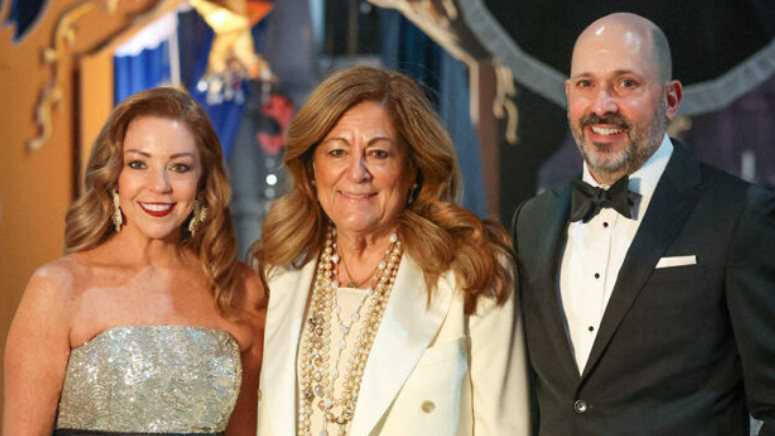
DIFFA’s Reinvention Into a Bold New Era
DIFFA has always thrown a great party—but now it’s throwing its weight behind an even bigger mission. Executive Director Dawn Roberson walks us through why the 42-year-old nonprofit has expanded its focus beyond HIV/AIDS to tackle risk factors behind the health condition, such as housing and food insecurity. She discusses how the design industry continues to power its magic and why this year’s Angels & Demons gala at St. John the Divine is more than just a creative black-tie affair. (Though trust us—it’s that, too.) It’s legacy, reinvention, and a whole lot of heart.
Read More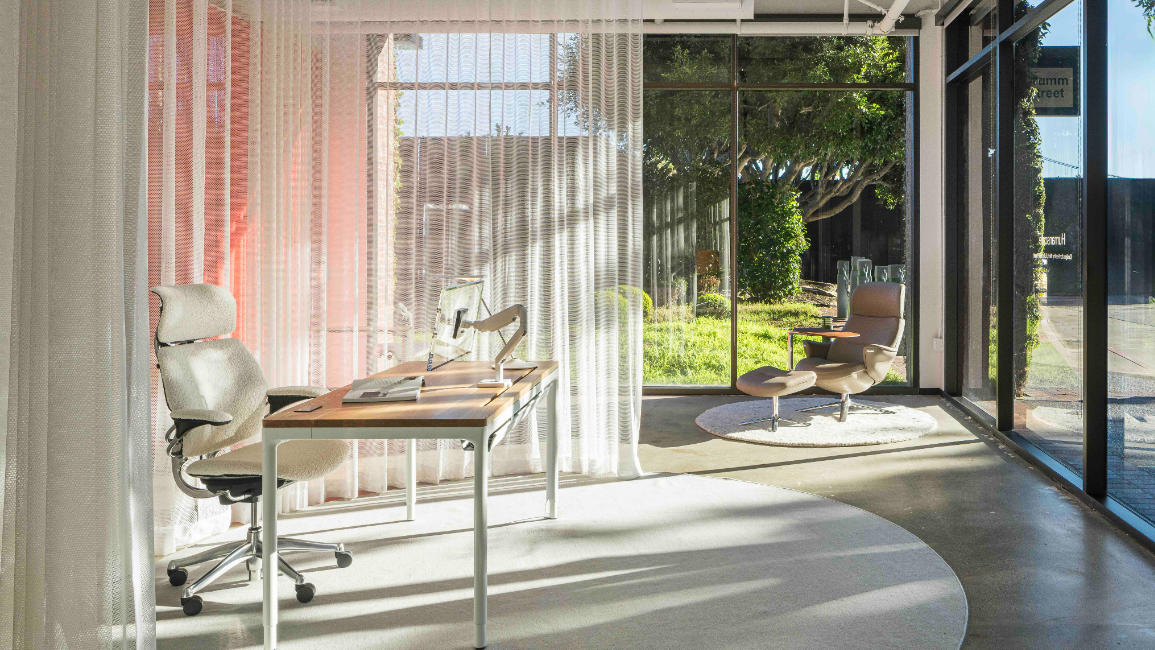
Inclusive by Design: A Women-Led Vision for Humanscale
Designed by architect Suchi Reddy of New York City–based Reddymade, Humanscale's San Francisco showroom opened in January. The new, light-filled space features garden views, a flexible layout, and material choices reflecting the City by the Bay’s culture of sustainability, innovation, and well-being. It also serves as a hub for the local community while setting a standard for how inclusive design can be practiced as thoughtfully as it's produced.
Read More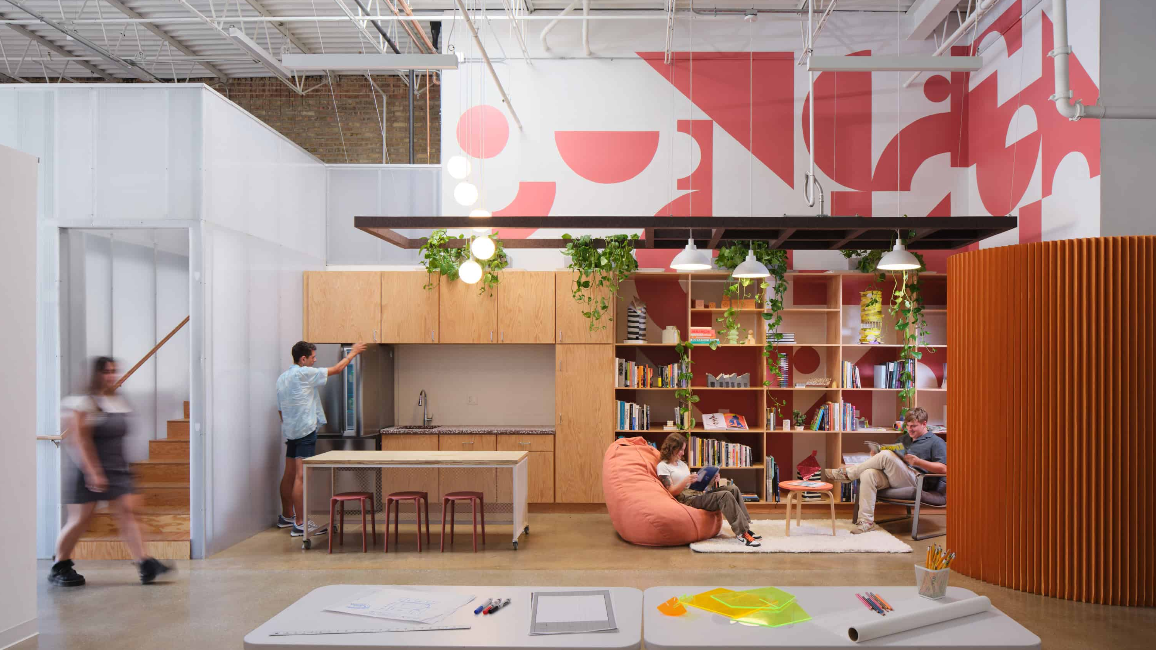
The 3D Textbook: How Maya Bird-Murphy Built a Sanctuary for Design Activism
Mobile Makers has officially parked in a permanent home: a former semi-truck loading dock turned into a kid-friendly makerspace on Chicago's South Side. This isn’t your typical education space/office: Exposed systems and translucent walls show youth exactly how buildings work. From high-energy fabrication workshops to collaborative workspaces, this flexible industrial hub is a masterclass in design activism. Maya is building a literal foundation for the next generation of architects.
Read More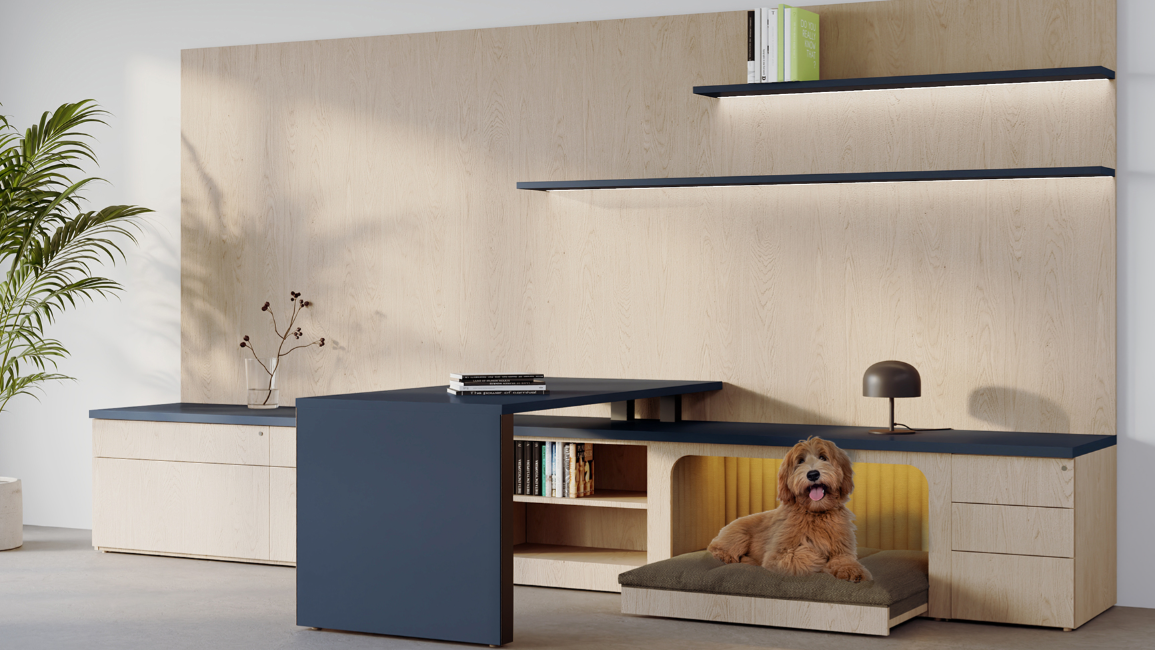
Sit, Stay, Work: Central Bark Redefines Inclusive Office Design
More than a simple pet bed, this "shelter" unit by DARRAN integrates seamlessly with professional workstations to foster a truly inclusive environment. Designed by Chrissy Fehan and Maison Fee, Central Bark is a groundbreaking office furniture solution specifically crafted for service animals. Featuring sound-dampening, PFAS-free upholstery, locally sourced materials, warm lighting, and expandable beds to accommodate various breeds, Central Bark was crafted with sustainability in mind. By prioritizing the needs of neurodivergent individuals and those requiring physical assistance, Central Bark proves that high-end aesthetics and functional accessibility can "sit and stay" together.
Read More
Pascale Sablan on Leadership, Advocacy, and Expanding the Canon
Architect Pascale Sablan is reshaping what architectural leadership looks like by pairing design excellence with advocacy, authorship, and justice. Her work expands the canon, widens the profession, and proves that representation isn’t a metric—it’s a responsibility.
Read More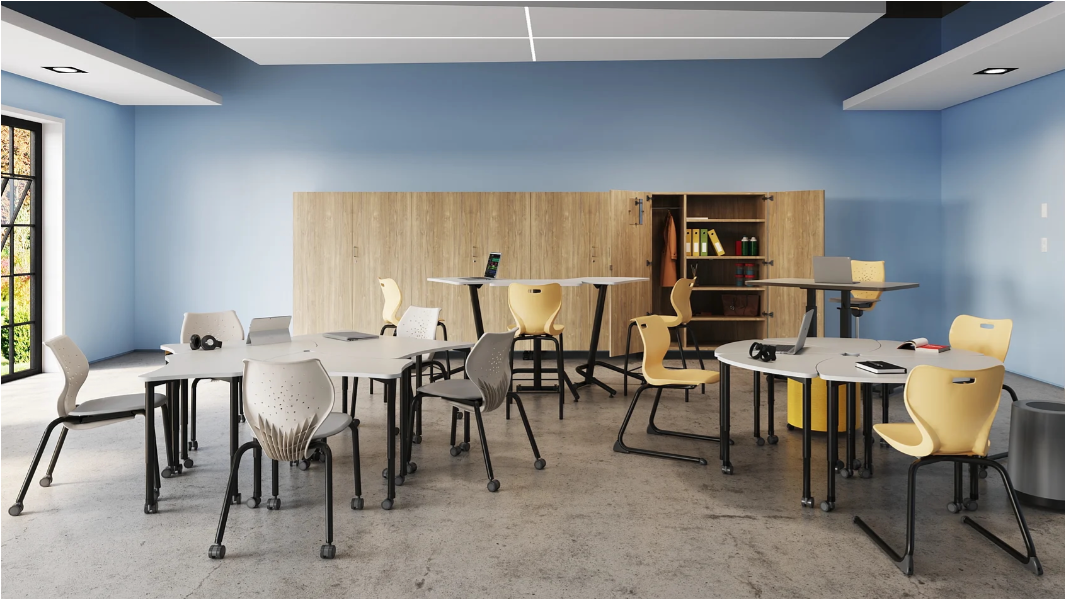
Special Ed Teacher Sees How Flexible Classroom Design Helps All Learners
What does truly flexible classroom design look like in practice? Veteran educator and nurse Holly Light has 27 years of on-the-ground experience working with students with orthopedic impairments. She reveals how space, furniture, technology, and storage can either unlock learning—or quietly block it. Holly makes a compelling case for access-first design, including designing for movement and mobility and intentionally placing cognitive supports. The takeaway is simple but powerful: When classrooms are designed to support movement, flexibility, and independence, they don’t just work better for some students—they work better for all.
Read More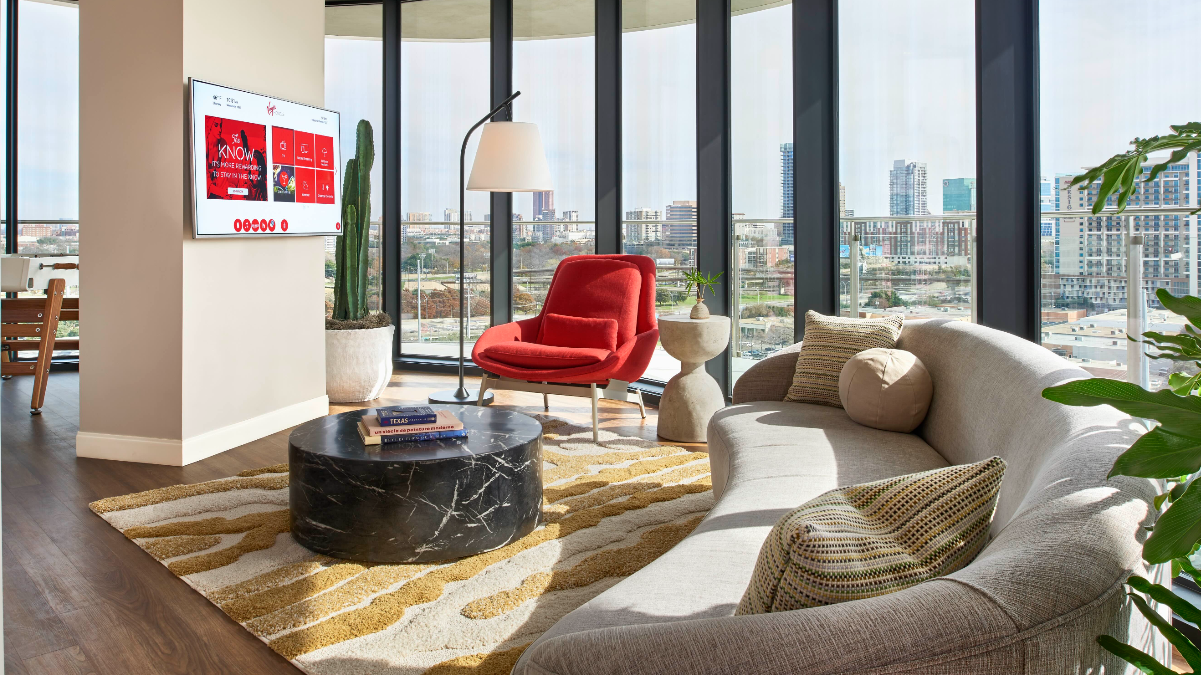
Virgin Hotels Integrates Design Details Autism Parents Will Appreciate
Family travel is never easy, but for those with autistic children all the unknowns can make it a hard "no” for the whole family. While many brands claim to offer programs that cater to neurodiverse travelers, some fall short out of touch with the needs and the nuances of children on the spectrum and their parents. Virgin Hotels has set out to change that: A number of its properties have been certified Autism Double-Checked, including Dallas, where one activist and influencer made a stopover with her two ASD kiddos. And let us tell you—they were not disappointed!
Read More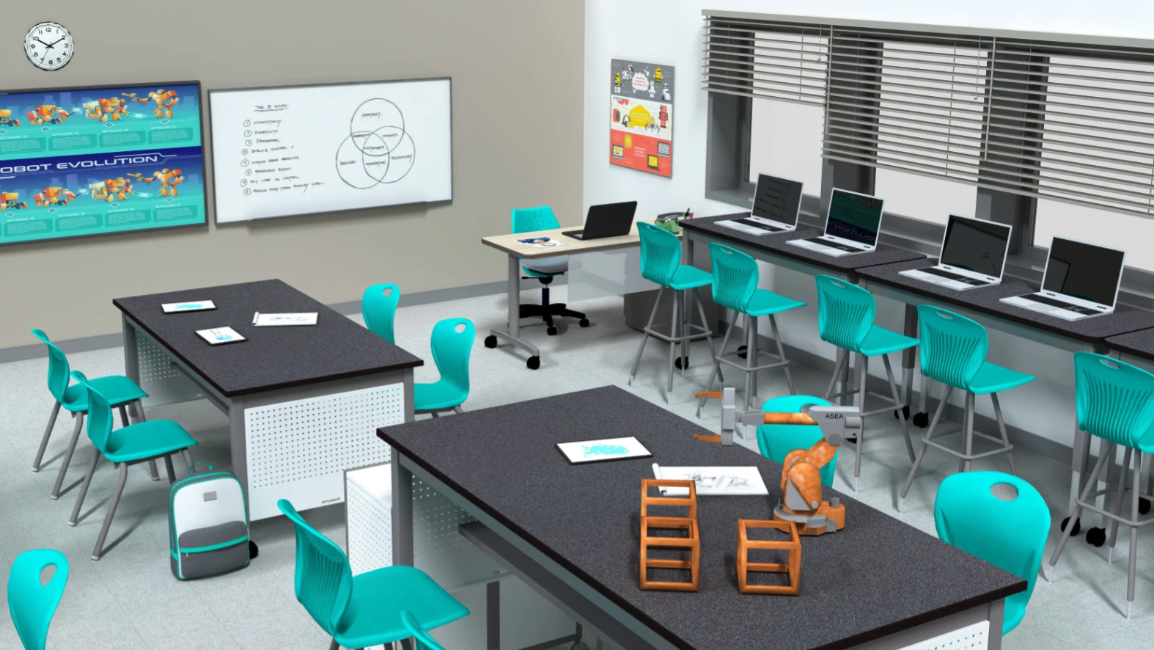
Flexible Classroom Design Gives Every Student a Voice, Says Speech Pathologist
Supporting students with moderate-to-severe disabilities across Fresno County, California, Crystal Martinez focuses on augmentative and alternative communication (AAC) tools that help nonverbal learners express themselves. Her approach proves that inclusive design isn’t just about furniture or lighting; it’s about making communication physically accessible. From low-mounted “community buttons” to flexible storage for devices and adaptive tables, Martinez works with teachers to create environments where every student can participate. Her vision: classrooms where communication tools are standard, modeled by everyone, and every learner’s voice is genuinely welcomed.
Read More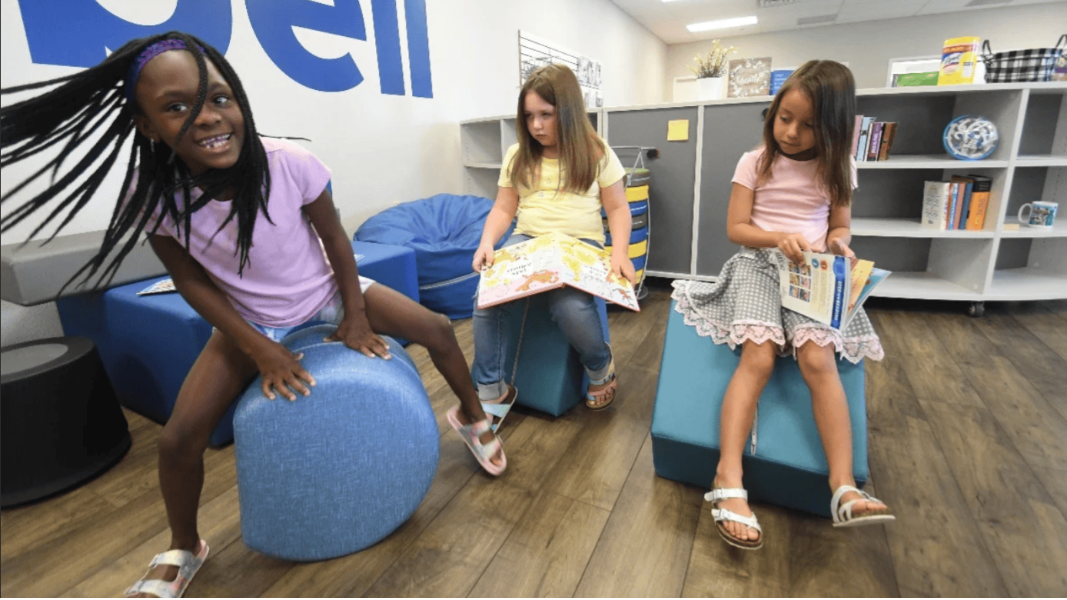
Flexible Classroom Design Matters, Says Occupational Therapist
A flexible classroom isn’t just a nice-to-have—it’s a game-changer, says occupational therapist Rana Alcocer in part two of Artcobell’s design series. After 25 years working with kids with sensory processing disorder, Rana breaks down why one-size-fits-all furniture simply doesn’t cut it. Students experiencing visual fatigue, poor posture, and constant fidgeting—sound familiar? All signs the environment needs to work harder. Her advice: Think adjustable everything, room for micro-movements, better lighting and acoustics, and spaces that feel more human than institutional. The takeaway? Smart, flexible design helps every learner thrive, not just those with SPD.
Read More
Building a Nest for Eco-Conscious Parents: A Chat with Gabi Fiorentino
Mothers juggle an extraordinary amount, and architect-turned-entrepreneur Gabriela Fiorentino knows this firsthand. After years in sustainable design, she realized that healthy living wasn’t just about buildings—it was about what touched her baby’s daily life. Craving reliable, judgment-free guidance, she founded Nest Earth, a vetted community where eco-conscious parents can access expert advice, share tips, and find solidarity in the “messy middle” of modern parenting. Built during the chaos of new motherhood, Nest Earth blends Gabi’s design expertise with a mission to make sustainable parenting approachable, supportive, and genuinely doable.
Read More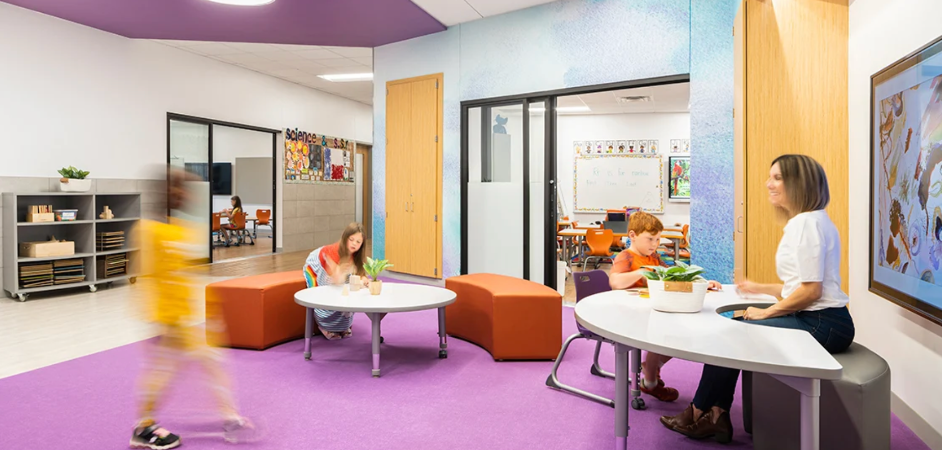
Designing Inclusive Classrooms Where All Students Thrive
Early collaboration between teachers, administrators, and designers creates inclusive learning environments that support every student. Former special education coordinator and current middle school assistant principal, Alyssa Marshall discusses the factors driving this new vision for the classroom and pinpoints specific design strategies that benefit those with sensory processing disorders and create positive learning environments for all.
Read More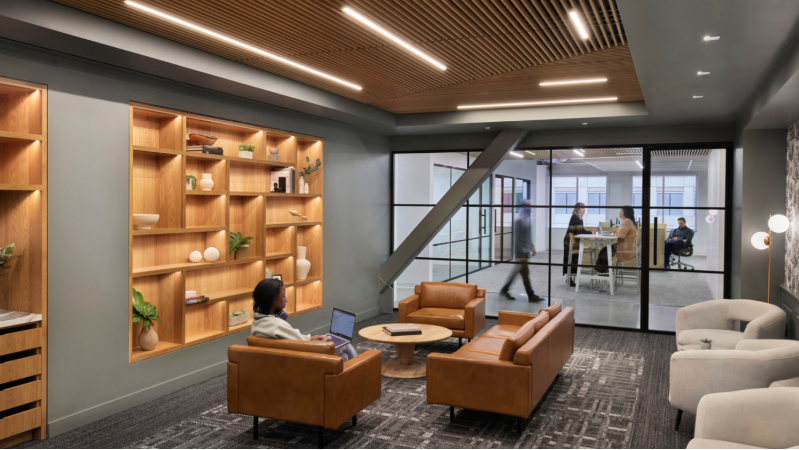
Mindful Design + Mindful People = Neuroinclusive Workplaces
In this edited and condensed excerpt from an HKS article, we examined HKS’s workplace research on Creating a Brain Healthy Workplace with a neurodiversity lens to expand its applicability and equitability.
Read More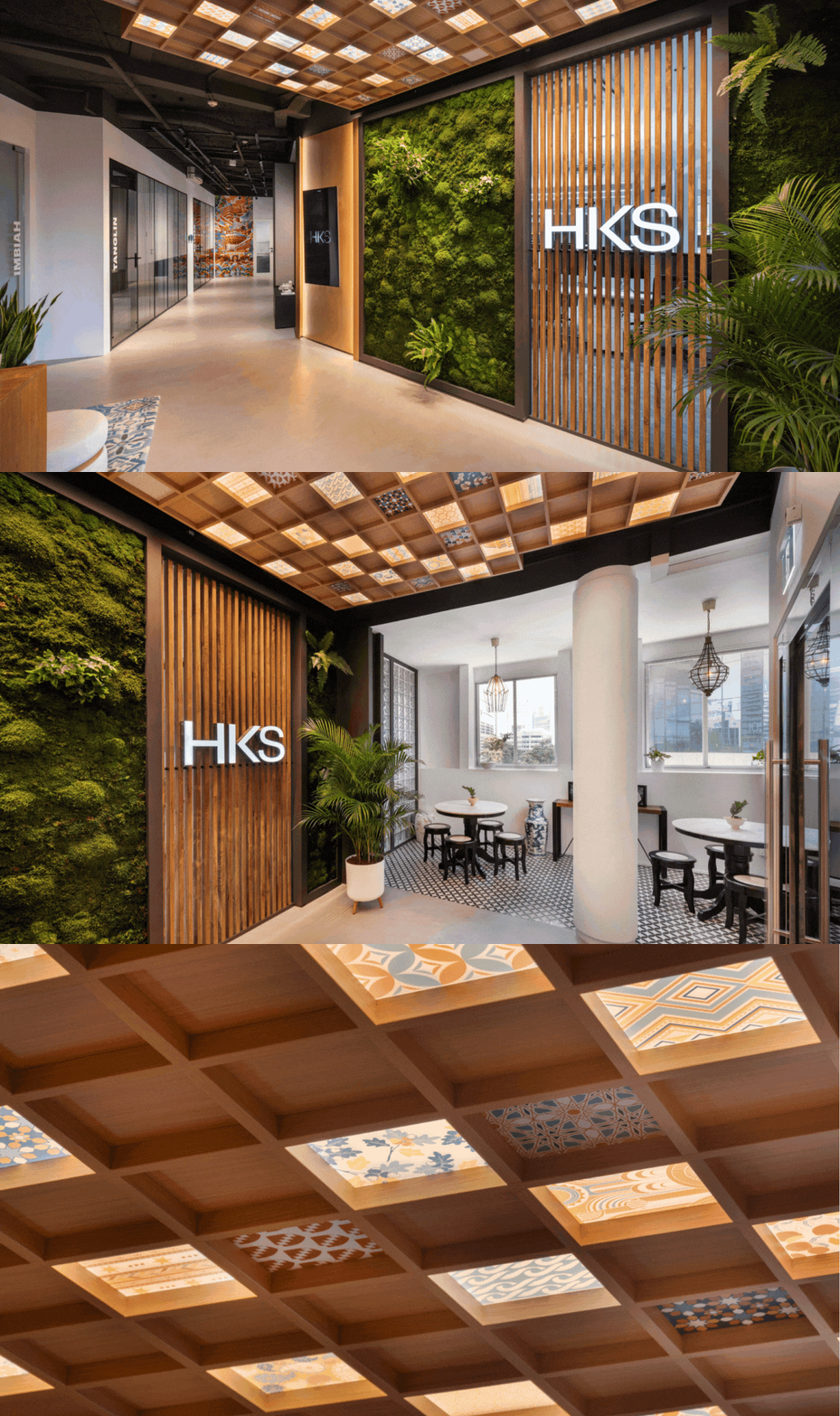
How HKS Singapore Built Its Brain-Healthy Office
HKS has built a fresh, state-of-the-art workplace in Singapore's buzzing central business district that's a unique adaptive reuse of a 1920s-era building. Rooted in the firm’s BrainHealthy Workplace program, the interior balances aesthetics and well-being, nurturing employees’ professional, personal, and mental health at every turn.
Read More