A First-of-Its-Kind Preschool Is Rewriting the Future
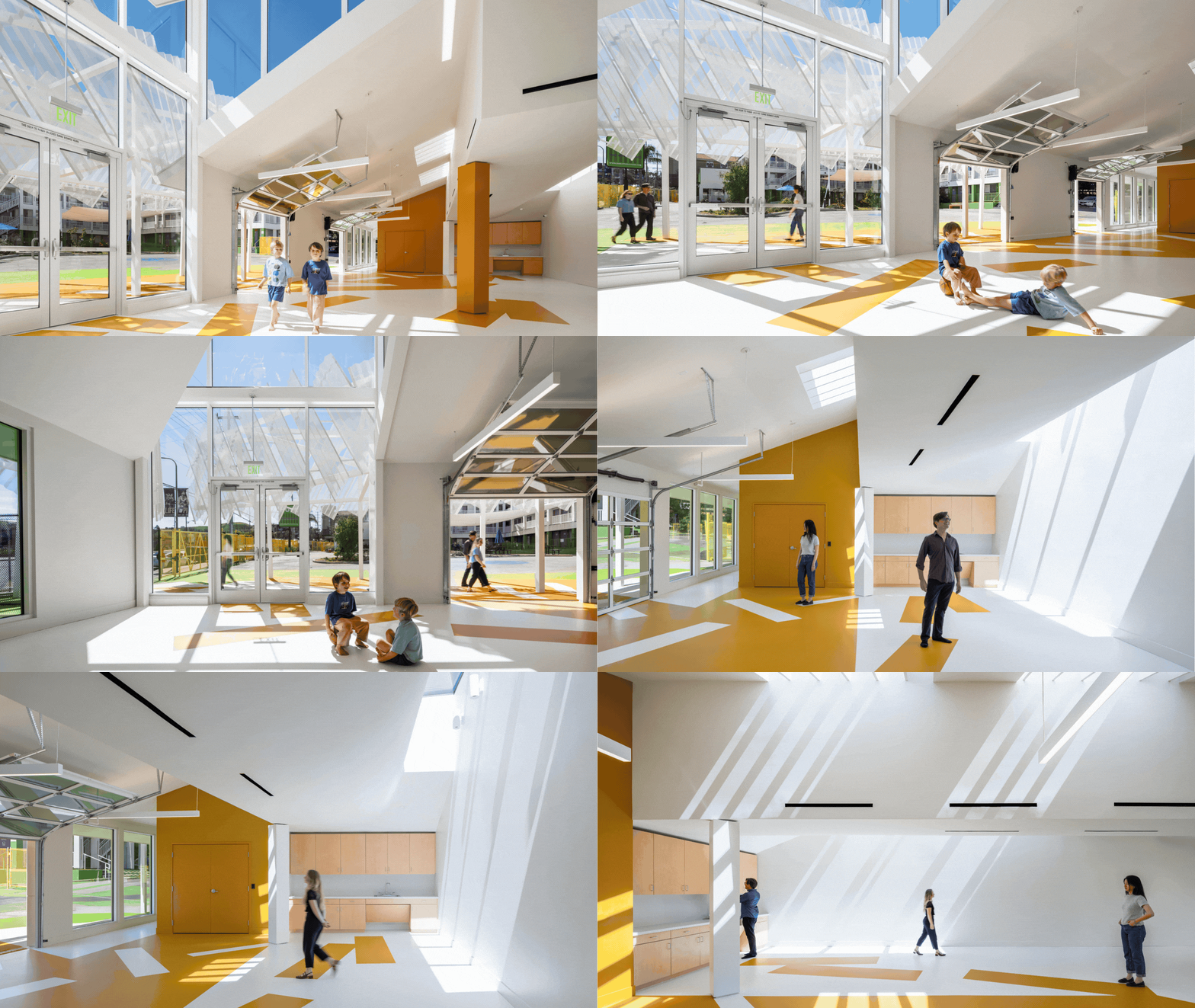
Photography by Paul Vu
A new preschool that just opened its doors in Los Angeles is doing way more than just teaching the ABCs. The Woodlands, a supportive housing community designed by Kadre Architects, is proving that good design can actually break the cycle of housing insecurity.
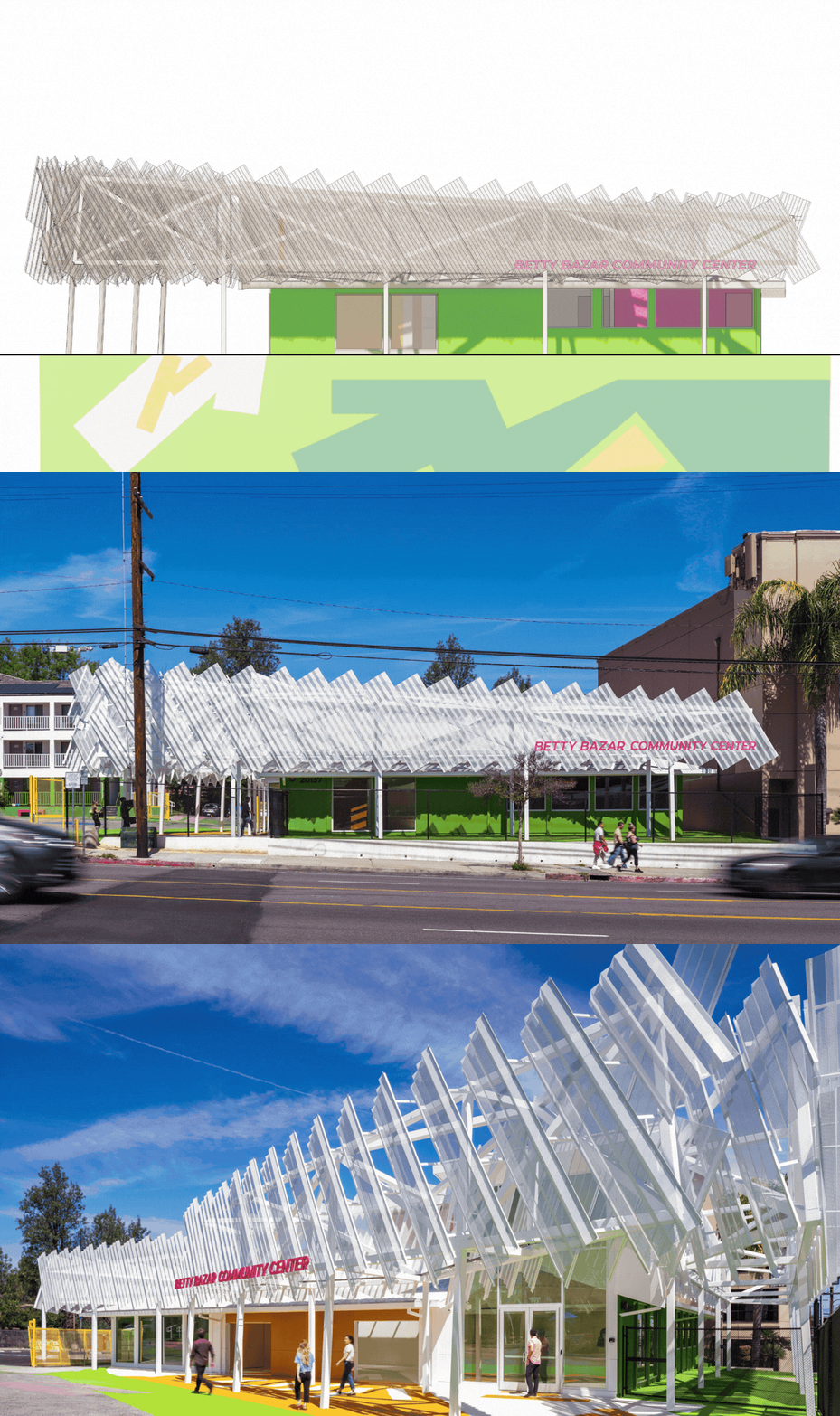
The Woodlands brings 100 new transitional housing units online for unhoused families. It’s part of the emergency, state-wide response to Governor Gavin Newsom’s order to purchase old, underused hotels and rapidly transform them into transient or permanent housing for those currently unhoused. In addition to providing housing, the community offers the Betty Bazar Community Center and Preschool with free childcare for resident families.
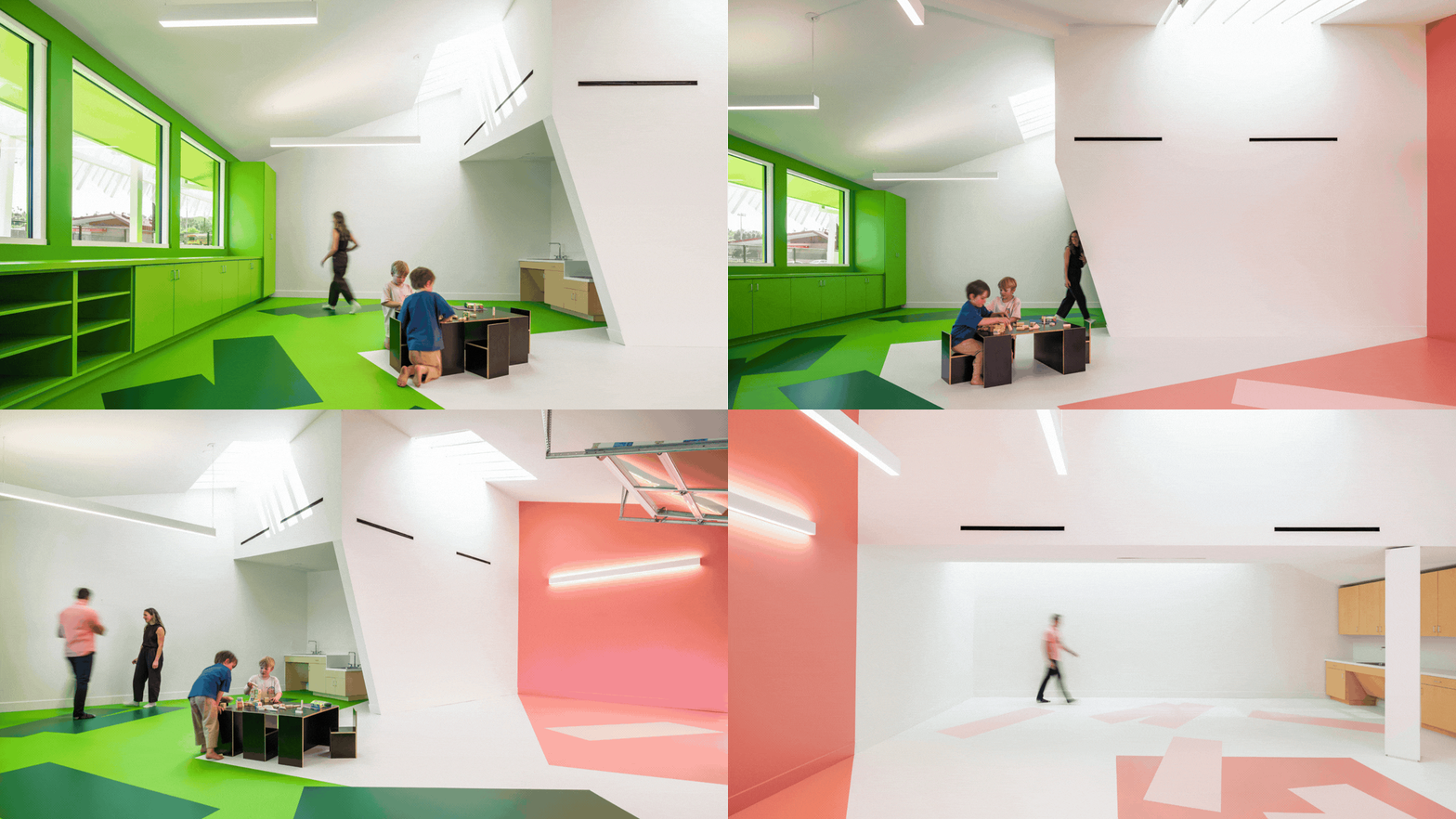
The architects reimagined the two-acre complex—including a former motel, parking lot, and a shuttered Denny’s restaurant—into a colorful composition with bright green, yellow, pink, ochre, and cobalt. Why such bright, playful colors? “Normally, there is a lot of neighborhood opposition to these projects because of the stigma associated with transitional housing. This is in part due to past projects not having the greatest presence or contribution to the neighborhood,” says Kadre Architects founder Nerin Kadribegovic. “Our goal is to change this perception, one project at a time. By projecting light, positivity, and beauty out into the neighborhood, both during the day and at night, the Betty Bazar Community Center gives back not only to those who use it, but also to the community at large.”
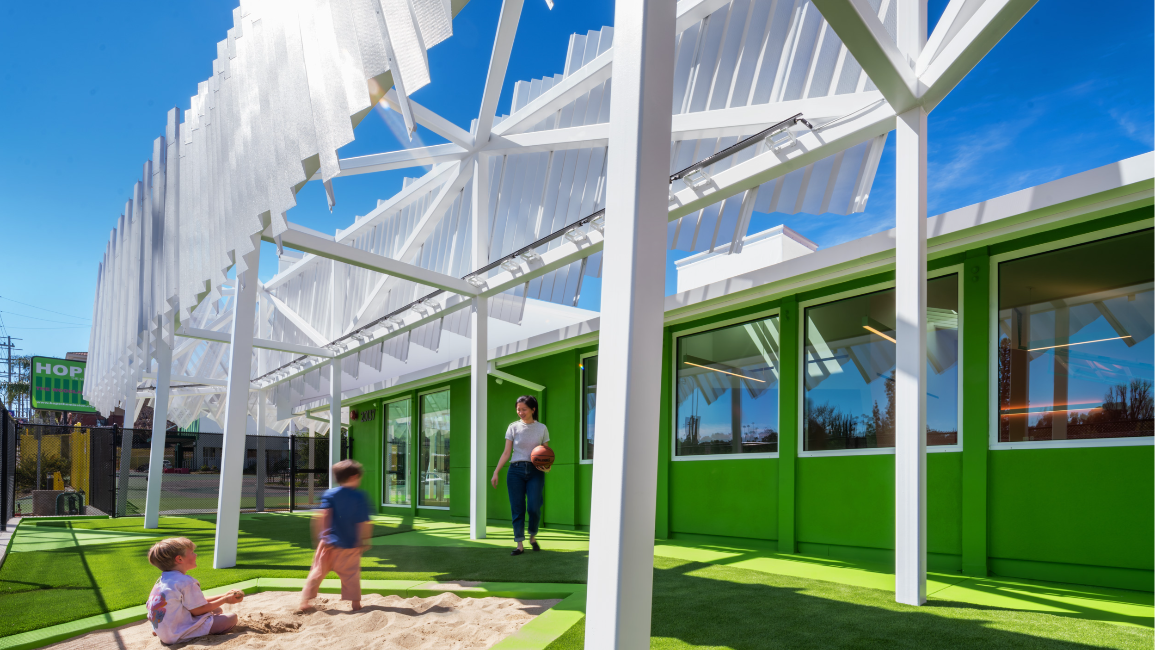
A new central plaza connects the housing to the new community center, and strategic landscaping makes a park-like atmosphere for a safe play space. The Denny’s restaurant is being overhauled to be reborn as a preschool, specifically for the residents living on-site. The school supports with case management, three meals a day, and other services creating a true community focus for this social mobility ecosystem.
This work is absolutely incredible! And Nerin agrees.
“It is transformational,” he says. “Single moms, who are mostly the residents here, cannot afford childcare and as a result cannot enter the workforce, trapping them in an endless, vicious cycle of housing instability. Having excellent built-in, free childcare breaks that cycle and allows for opportunities to be contributing members of society. Most importantly, it offers hope for a brighter future, which is often the needed spark.” It’s not just a roof; it’s the infrastructure needed to hold down a job and transition to permanent independence.
What’s more, it's net-zero. The building uses "passive sustainability”—think solar chimneys and reflective paint—to keep the lights on and the air cool without the massive utility bills. Nerin says, "Anytime we reduce operating costs through design, we’re putting money back towards services for folks who need it most." And that means more funds allocated to mental health support, case management, and hot meals.
This isn’t just business for Nerin. He was a refugee from the wars in Yugoslavia and Bosnia in the ’90s and spent time living in motels with his family after being displaced. That lived experience of social upheaval is why Kadre Architects—recently named one of Fast Company’s Most Innovative Firms, and the AIA LA Award for Best Emerging Firm—prioritizes dignity and hope for a brighter future in their designs.
This project is more than just a community center and preschool; it’s a radical prototype. By proving that high-quality architecture and childcare are vital services, Kadre Architects is showing the rest of the country how to build a path home.
—Louis Noha