A Wellness Clubhouse Rooted in Nature—Literally
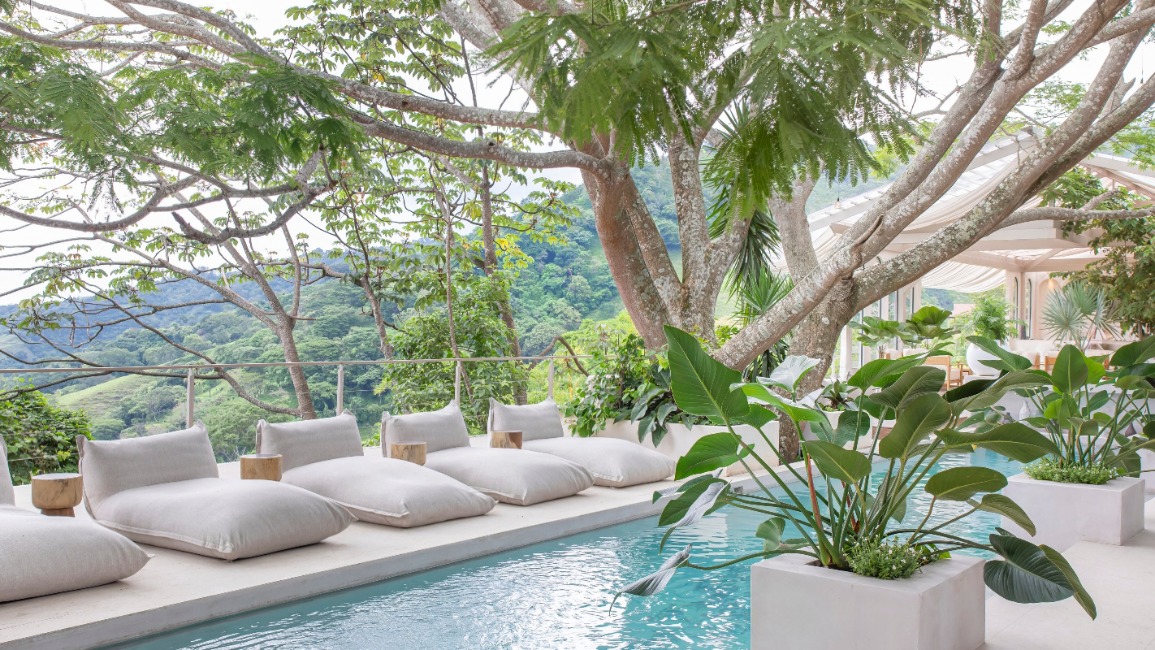
Some buildings sit on the land. Others listen to it.
Diana Stobo isn’t just a hotelier. Or a wellness expert. Or a designer. She’s … kind of all three—plus author, chef, and the driving force behind The Retreat Costa Rica, a destination spa that’s quietly become one of the most sought-after wellness escapes in the world.
Diana approaches design the same way she approaches wellness: intuitively, holistically, and with a strong belief that environment shapes how we feel. She doesn’t start with the plans—she works from energy, landscape, and what’s already there.
Which brings us to Santosha.
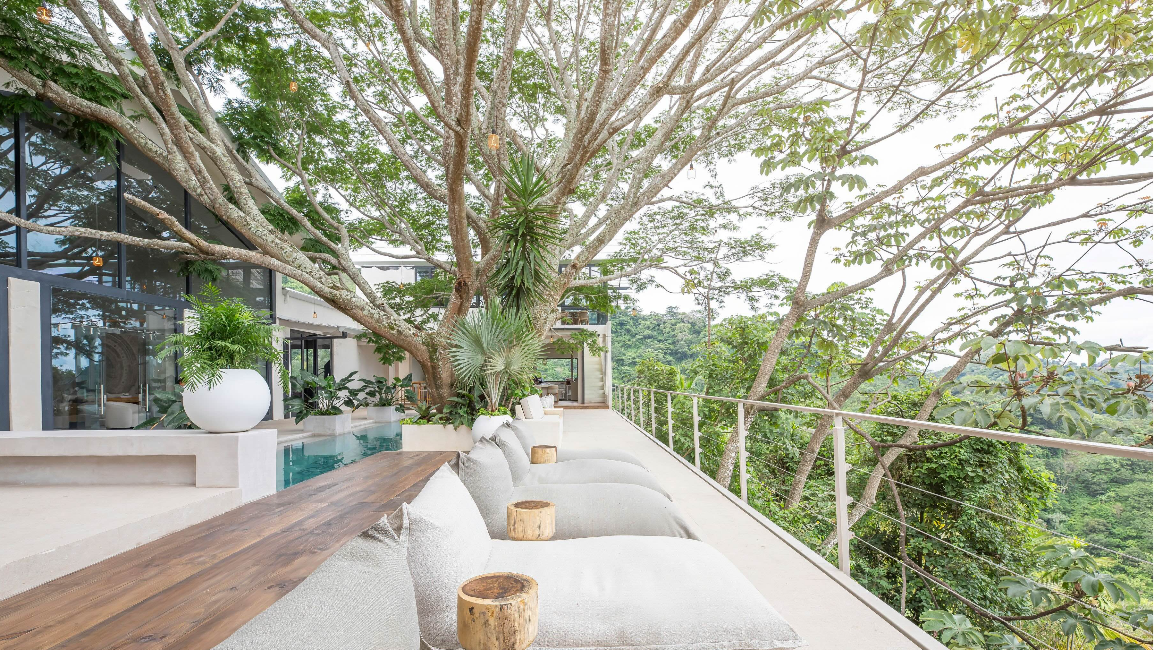
At the new Santosha Clubhouse at The Retreat Costa Rica, Diana didn’t design around a tree—she designed from it. A 60-foot Guanacaste (Costa Rica’s national tree) rises through the heart of the project, shaping everything from circulation to atmosphere.
And you feel that immediately.
This isn’t just an expansion—it’s a rethinking of what hospitality can look like when it’s grounded (literally and philosophically) in nature.
The Tree That Runs the Show
The Guanacaste wasn’t optional—it was the project.
“From the very beginning, the Guanacaste tree was the heart of the project,” Diana says.
As the vision evolved from a private home into a full wellness clubhouse, the tree naturally became the organizing force—and not just spatially. Known as the “tree with many ears,” the Guanacaste is believed to listen and to hold stories, energy, and connection.
“When people gather beneath it, they feel heard, even in silence,” Diana explains.
So, the design follows suit: the pool, yoga shala, and social spaces all orbit its canopy, turning the tree into both anchor and host.
Wellness, But Make It Social
Santosha introduces a concept that Diana calls “social wellness.” She says, “Wellness isn’t only about the body, it’s about belonging.”
Instead of isolating guests, the architecture gently pulls people together. Open gathering spaces flow into studios and quiet zones, creating opportunities for connection without forcing it.
It’s less about escaping the world and more about re-entering it, just a little more grounded.
Where Indoors Doesn’t Exist
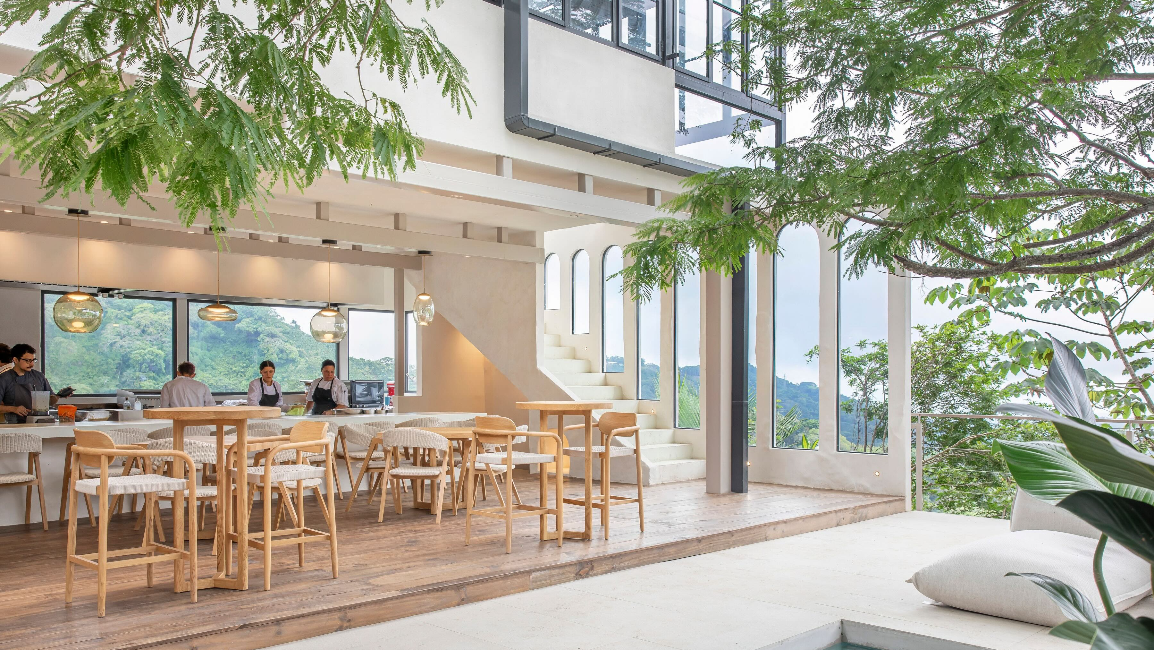
At Santosha, walls are more suggestion than boundary. Open-air architecture, high ceilings, and expansive glazing allow light, air, and sound to move freely. Mechanical cooling takes a back seat to cross-breezes and shade.
“To fully enclose the spaces would separate guests from the landscape that heals them,” Diana says.
You hear birds mid-conversation. You feel the breeze shift. The mountains don’t sit outside the building—they are the building.
Quiet Luxury, Rooted in Place
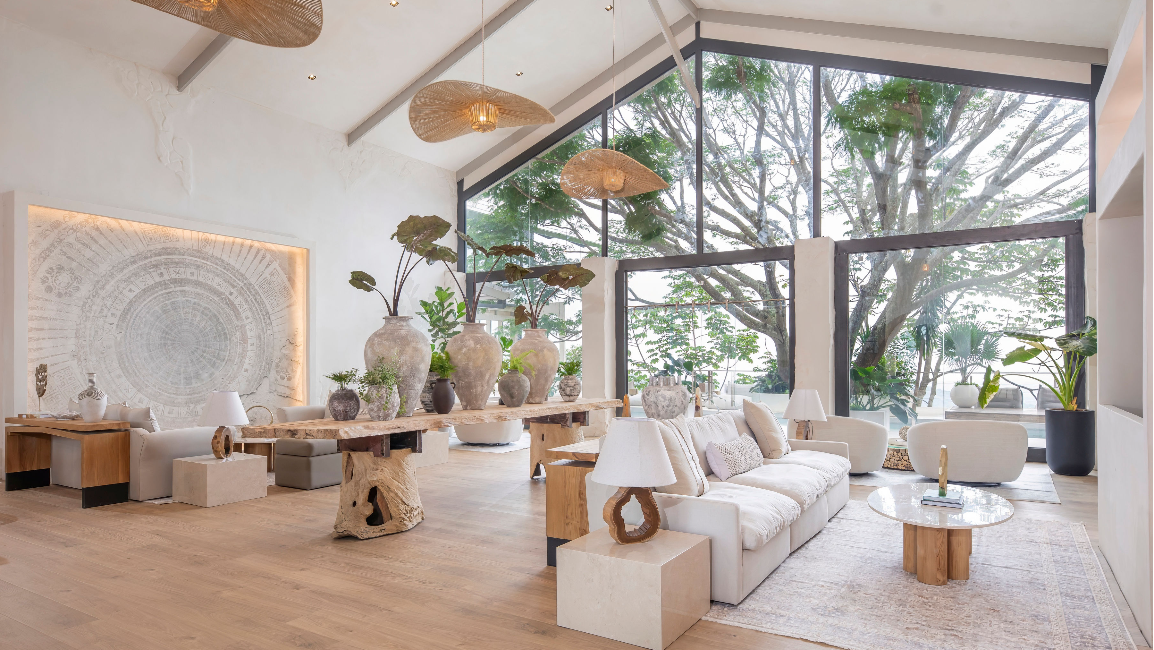
The material palette is intentionally restrained: pale woods, textured stone, teak, and handwoven textiles—all locally sourced and crafted. “What belongs here?” became the guiding question.
Much of the stone comes directly from the mountain itself, while local artisans contributed carved doors, stonework, and custom details that feel integrated rather than applied. Nothing screams for attention. And that’s exactly the point.
An Earth Day State of Mind
As Earth Day approaches, Santosha feels like a blueprint for something bigger.
The design works with the land, not against it, following natural contours, minimizing intervention, and prioritizing passive strategies over mechanical ones.
“When the earth remains uninterrupted…nothing feels forced,” Diana notes.
It’s sustainability without the lecture. Just thoughtful, intuitive design that’s better for the planet by default.
The Moment You Walk In
If there’s one scene that sums it all up, it’s the entrance. You descend a staircase, the space opens, and suddenly, the Guanacaste tree reveals itself—massive, quiet, and completely in charge.
“She is the true host of Santosha,” Diana says.
And honestly? You believe her.
—Murrye Bernard