Atari Hotels Phoenix Will Be Designed by räkkhaus as a Playable Dreamscape
Renderings by räkkhaus
Let’s just say it: This is not your average hotel. The first Atari hotel is planned for downtown Phoenix’s Roosevelt Row Arts District, and it’s less of “place to crash” and more “place to plug in.” Designed by the team at räkkhaus, Atari Hotels Phoenix leans hard into what creative director Zac Cohen calls a shift already underway: People aren’t paying for rooms anymore; they’re paying for stories. And this one glows, pulses, and probably has a soundtrack.
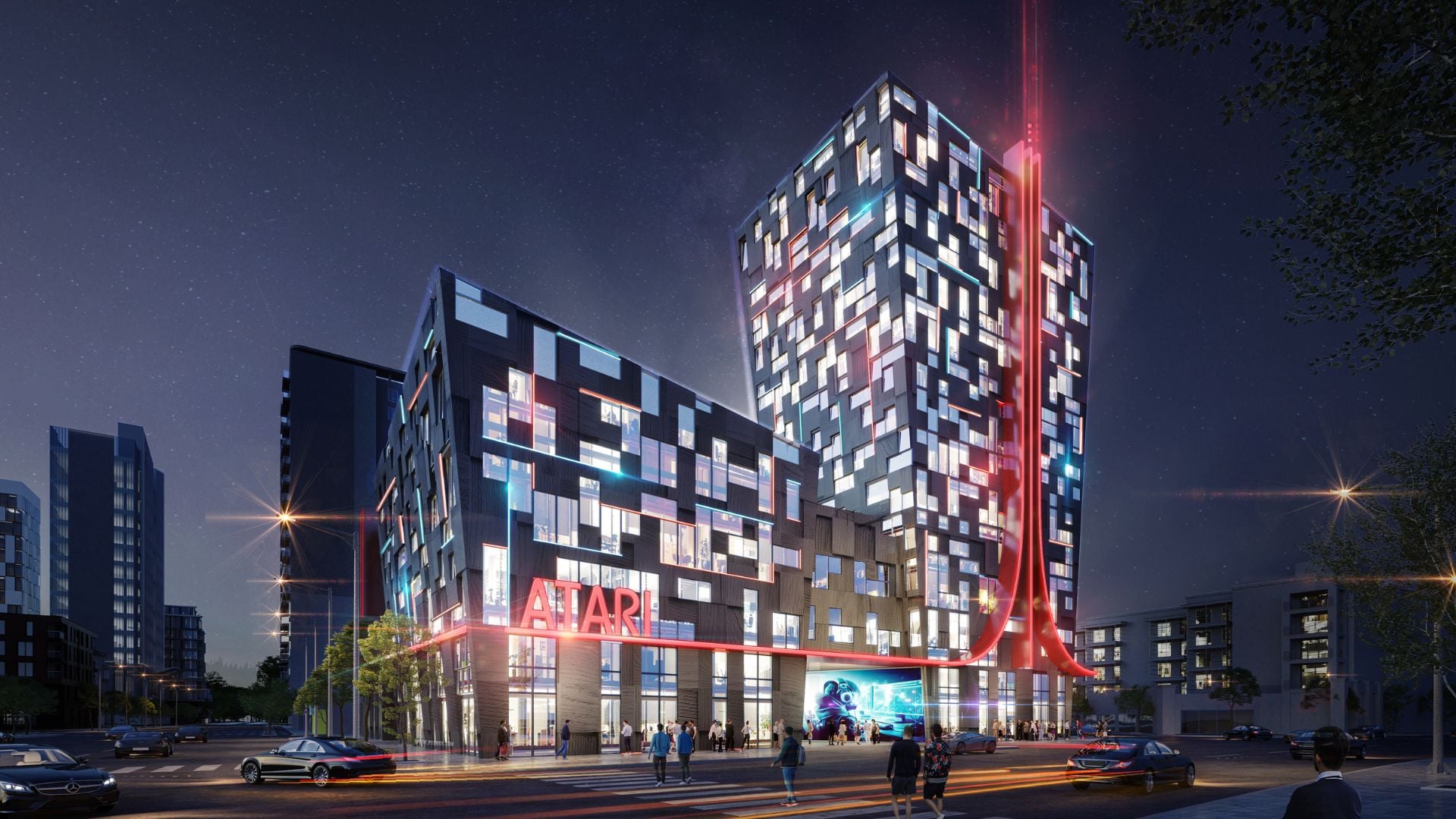
Conceived as a luminous, pixelated monolith, the building is part architecture, part interface. Its façade riffs on retro gaming grids while a massive, reimagined Atari logo stretches skyward like a neon exclamation point. It’s giving Tron meets Blade Runner, but in a hospitality format.
Not a Theme—A World
Here’s where it gets interesting: Zac is adamant that this is not a “themed hotel.” No kitschy arcade nostalgia is slapped on the walls. Instead, the design operates more like game design itself.
“We thought about it as constructing a world with its own internal logic,” Zac explains. “Every material, every light, every threshold had to serve that world—not the brand.”
That mindset isn’t accidental. Zac is a self-taught designer who’s spent more than a decade living and working across Europe—and traveling to more than 50 countries—which quietly informs how he thinks about space. After a while, he says, you stop seeing differences and start recognizing what’s universal: People want to feel something, to connect, to lose track of time. That idea sits at the core of this project.
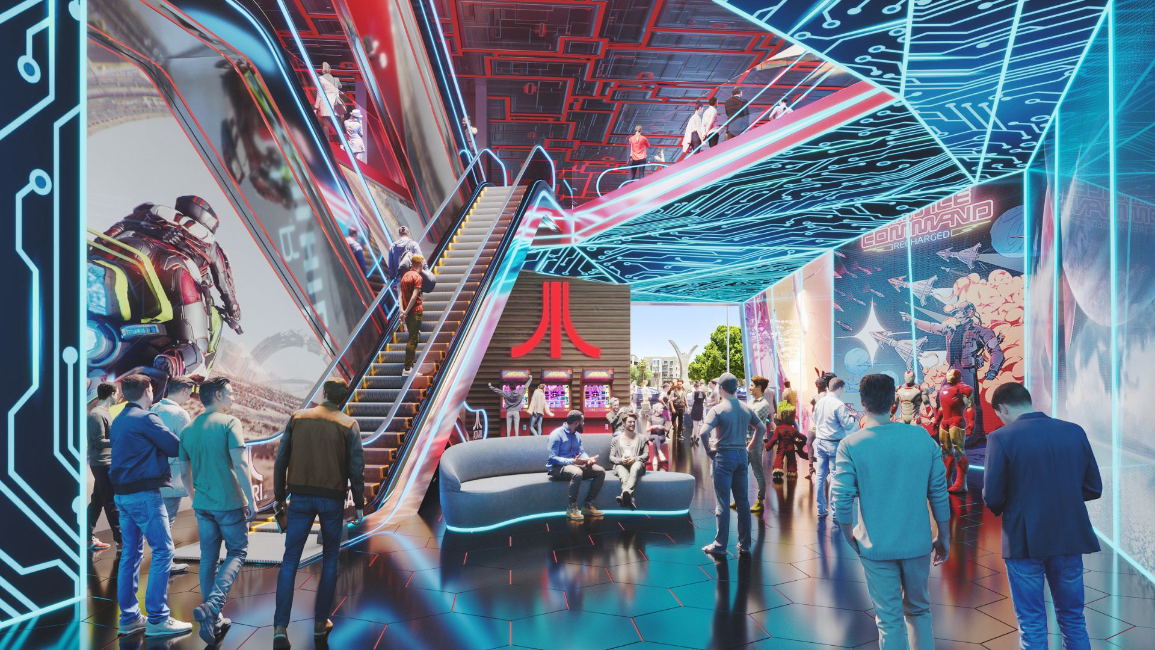
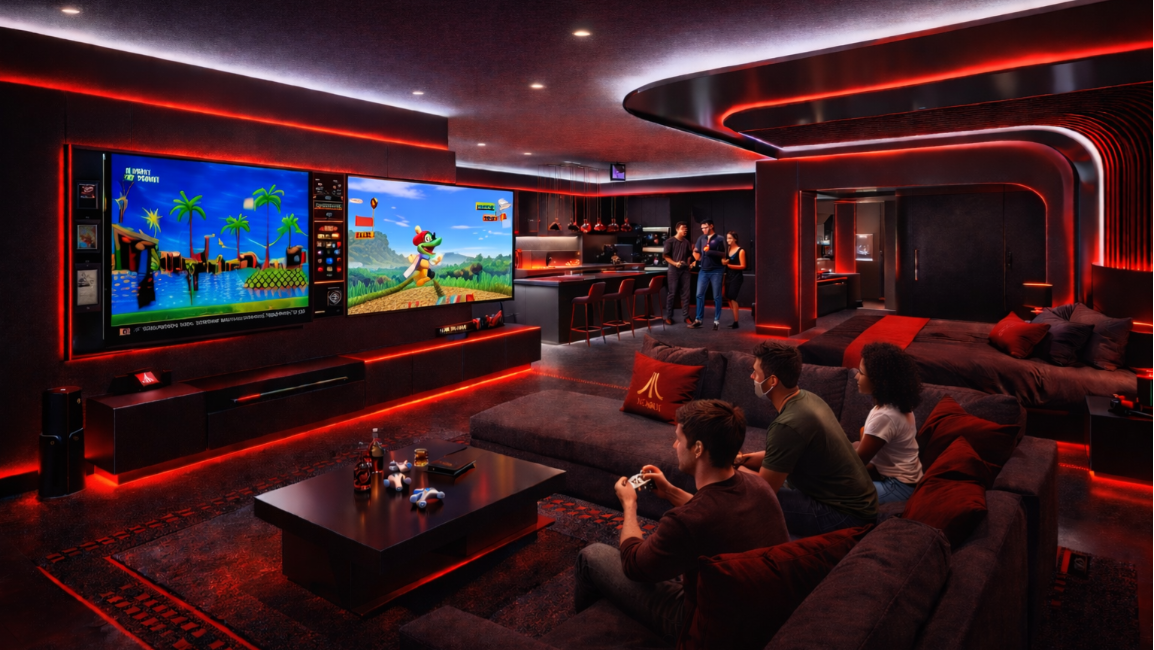
And that philosophy shows up everywhere. Guest rooms glow with programmable lighting. Corridors feel like circuits. Even the numbers matter—19 suites and 72 guest rooms, a nod to Atari’s founding year, 1972.
An Entertainment Complex…That Happens to Have Rooms
If traditional hotels orbit around the guest room, then Atari flips the script. This is, in Zac’s words, “an entertainment complex that happens to have a hotel in it.”
The numbers and program back that up:
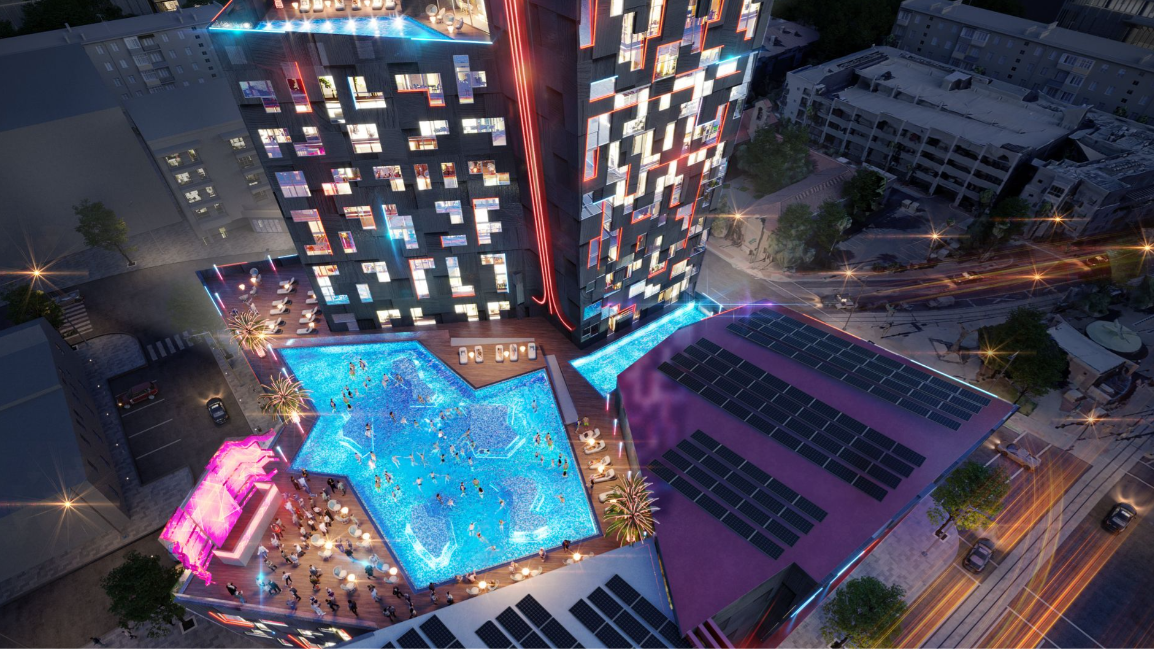
a 20,000-square-foot event venue for concerts and esports
a 10,000-square-foot sportsbook
90,000+ square feet of experience-driven programming
restaurants, retail, and a high-energy pool scene
At the heart of it all is a wild architectural move: an LED-lined breezeway slicing through the building. Think of it as a portal—part entry sequence, part performance space—constantly shifting with light, color, and motion.
Why This Is Happening Now
So why are hotels suddenly trying to be everything? Because the physical world is playing catch-up.
As Zac puts it, younger generations grew up in environments that are “responsive, layered, and alive.” Walk into a traditional hotel and—yikes—it feels static by comparison.
This Atari hotel is part of a bigger shift toward experiential hospitality, where spaces are immersive, not just aesthetic; technology disappears into atmosphere; and buildings behave more like platforms than places.
And once you see it, it’s hard to unsee. That sleepy boutique lobby starts to feel a little underachieving.
The Bigger Picture
Zoom out, and this project isn't so much about gaming but rather about what architecture is becoming.
With construction slated to start later this year and a targeted opening in 2028, the Atari Hotel sits at the intersection of gaming, hospitality, and entertainment—a Venn diagram that, according to the project team, has been waiting for someone to connect the dots.
What’s emerging is a new kind of building: one that doesn’t just house experience but generates it. Hotels are just the beginning.
—Murrye Bernard