RA!'s Latest Hotel Design Is a Geometric Gem
By Nicole Haddad | Photos by Oscar Hernández
Sometimes, the hotels that linger with us the longest are the ones that offer pure escape, other times, we measure them by how beautifully they reflect their surroundings. In the case of the Laiva San Jose, a boutique hotel set in the historic center of San Josè del Cabo, Mexico, it does both.
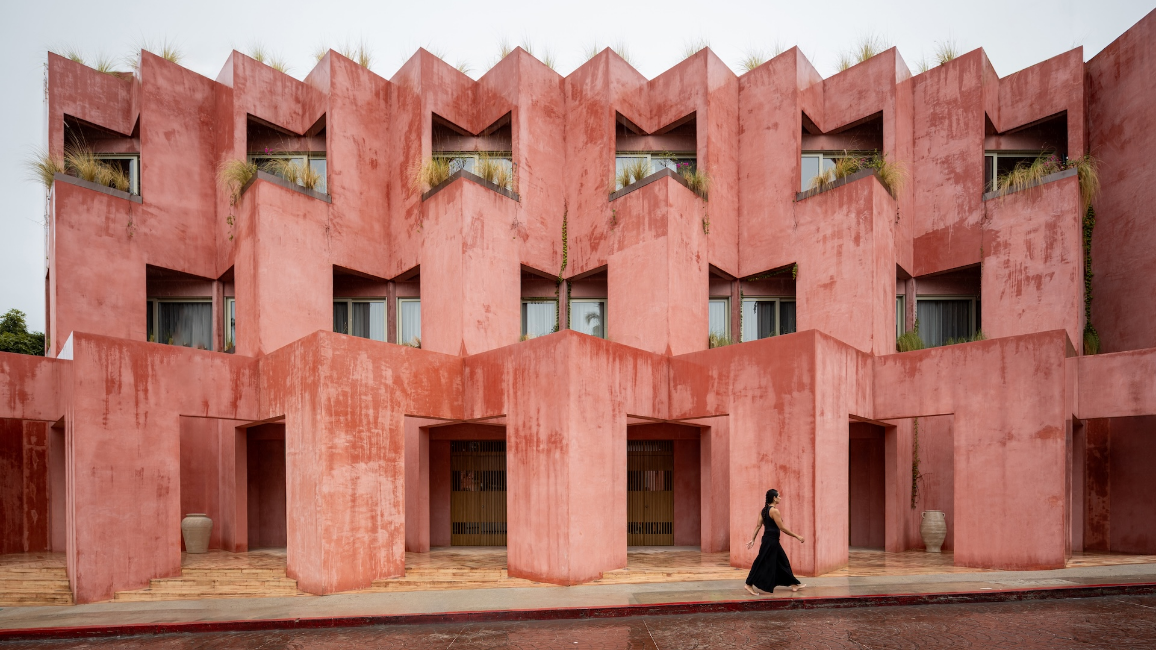
Designed by Mexico City-based architecture studio RA!, the hotel unfolds in an evocative manner that reflects the coastal city’s provincial charm. Purposely set back from the street, the structure carves out a public atrium that allows for mixed-use spaces on the ground floor, welcoming in pedestrians to flow through sequences of light, form, and shadow.
The façade itself is quite spectacular. To engage with the historic center without overshadowing neighboring buildings, the architects employed a symmetrical, sawtooth plan of interlocking walls and setbacks. The resulting geometry creates a mesmerizing, Escher-like appeal that strikes a surreal note, while also remaining supremely functional.
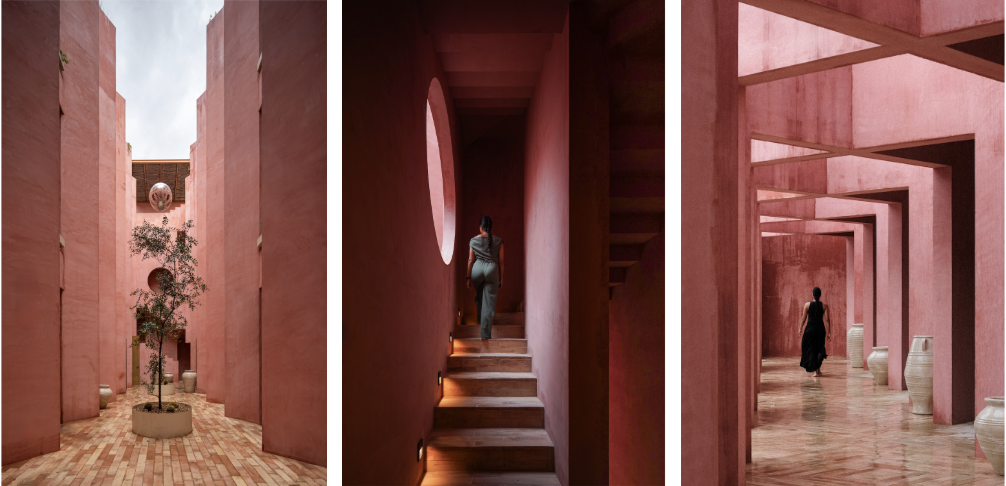
A vertical, open, central courtyard anchors the hotel, choreographing not only circulation but also natural light and cross-ventilation throughout. “It’s a meeting point, a space of connection between different levels,” says RA! co-founder Cristóbal Ramírez de Aguilar. “There is always a visual relationship with this central void, and that creates a very different atmosphere from that of a conventional hotel.”
Cristóbal is certainly right about that! The breezy climate created by the central axis encourages guests to use the staircases—a feat many architects in America have yet to accomplish. (I kid!) The circular openings of this atrium serve as structural viewpoints—or as an influencer’s scenic dream—that create moments of cinematic intrigue, offering shifting vistas of the city, sky, and interior courtyard as one ascends.
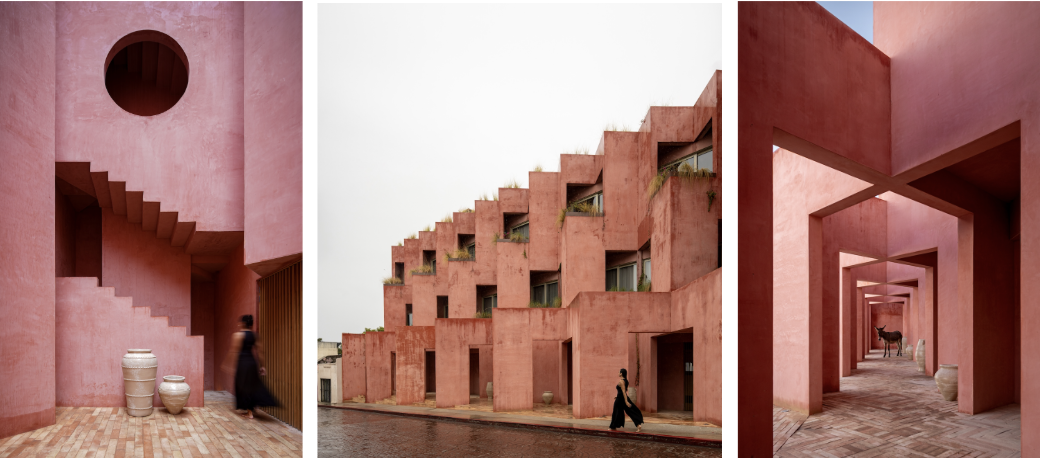
As for the papel picado-inspired exterior? “The repetition of the geometric elements creates a reading that recalls the banners forming the visual identity of the historic center of San José del Cabo,” explains RA! co-founder Santiago Sierra.
Reinterpreting culture through architecture isn’t just about clever perforations and ribbed slab systems, though. “Sustainability is often associated exclusively with technology, but for us it also means working with local materials, reducing unnecessary transportation, and taking advantage of existing knowledge,” Cristóbal explains.
A defining Conkal red stucco, hand-applied throughout by local craftsmen, adds texture, complements the surrounding architectural vernacular, and beautifully interacts with the Baja California sun. Highly breathable and moisture- resistant, pigmented stucco can serve as a heavy-duty insulator. Handmade clay tile flooring adds to the warm ambiance.
“Our work is deeply connected to context, experience, and the construction of a narrative,” says RA! co-founder Pedro Ramírez de Aguilar. “The hotel is more than just a place to stay; it is part of the urban life of the city and the people who inhabit it.”
We agree! (As I quickly pull up my app to book a room.)
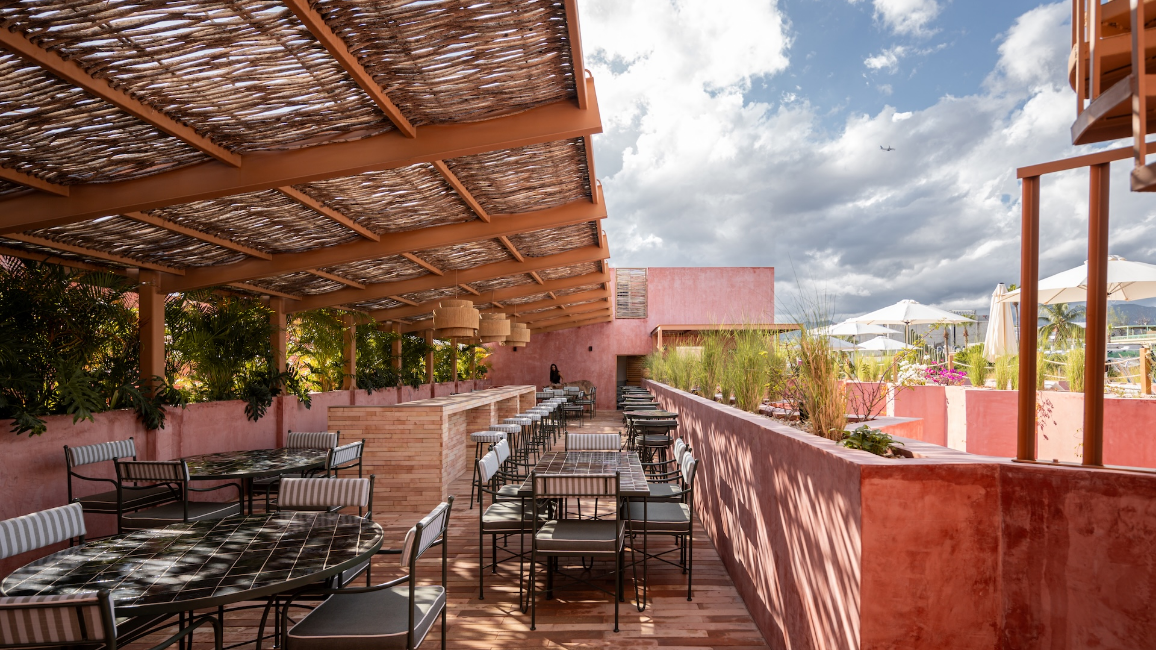
But truly, the hotel features two floors of equally chic guest rooms (hello, Egyptian cotton sheets!) and boasts a stunning rooftop bar and pool, a ground-floor café, a speakeasy-style bar serving curated cocktails, and Mestizal, a destination restaurant that uses local ingredients to deliver a modern spin on regional Baja cuisine.
So… see you there? ⬥
Join our community!
Thank you for subscribing!
Have a great day!