From Refugee to Architect of Hope in LA
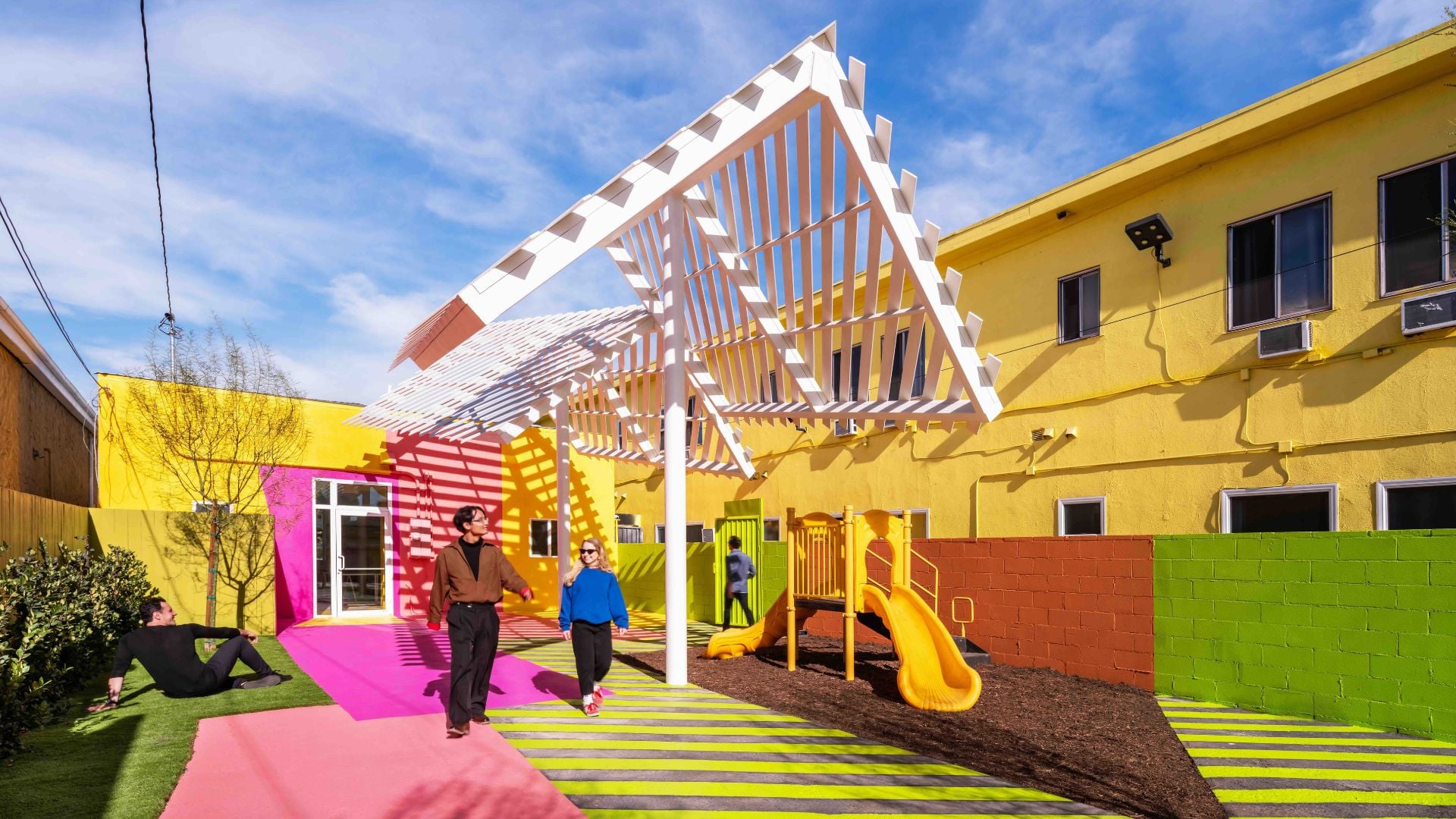
The Compton Community Center features bright, vibrant colors, a signature design element of KADRE Architects. Photo by Paul Vu
There’s a certain kind of architect who talks about space in terms of light, form, and proportion—and then there’s Nerin Kadribegovic, who talks about it in terms of dignity.
As the founder of Los Angeles–based Kadre Architects, Nerin has carved out a practice that sits at the intersection of design and social impact, with a focus on housing and community infrastructure for people experiencing homelessness. His work doesn’t shy away from visibility—in fact, it leans into it. Bold colors, expressive facades, and joyful interiors are all part of the language. Because for Nerin, good design isn’t reserved for museums or luxury homes. It’s essential, especially for those rebuilding their lives.
That ethos is on full display in projects like The Woodlands in Woodland Hills, Los Angeles—a transitional housing community where Kadre transformed a former motel into housing for families, and later reimagined an on-site diner as the Betty Bazar Community Center and Preschool. What could have remained an overlooked relic is now a vibrant hub designed to support healing, growth, and connection.
But to understand why Nerin approaches architecture this way, you have to go back to the beginning, to a childhood shaped by displacement, uncertainty, and the search for stability. Those early experiences didn’t just influence his career—they defined it.
We caught up with Nerin to talk about empathy, adaptive reuse, and why architecture should always, always show up with heart.
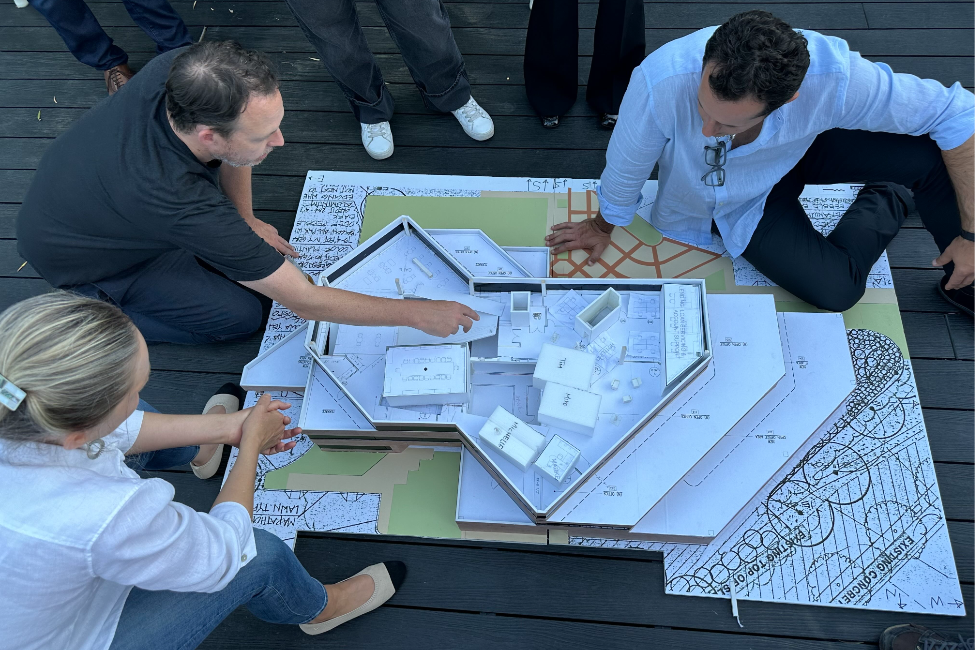
Nerin and his team reviewing an architecture model
You’ve spoken about arriving in the U.S. as a teenage refugee from the wars in Bosnia and Yugoslavi, and living in motels after your family was displaced. How did those experiences shape your approach to architecture?
“Empathy is an extraordinary trait. Experiencing displacement at a young age and moving from one temporary place to another gave me a deep understanding of how profoundly the built environment shapes a sense of stability and belonging.
“Feeling empathy without judgment becomes a powerful source of energy. It sharpens one’s sense of responsibility. Housing is never only about shelter. It is about dignity, identity, and the possibility of rebuilding a life.”
Was it always the plan to have Kadre Architects focus heavily on housing and community infrastructure?
“The firm was born from a desire to bring thoughtful design to urgent social challenges. In California, homelessness is one of the most visible and complex issues facing our communities, so it naturally became central to our work.
“Over time, the mission expanded. We began collaborating with a broader range of mission-driven institutions and public agencies, always guided by the belief that design can improve the quality of civic life.”
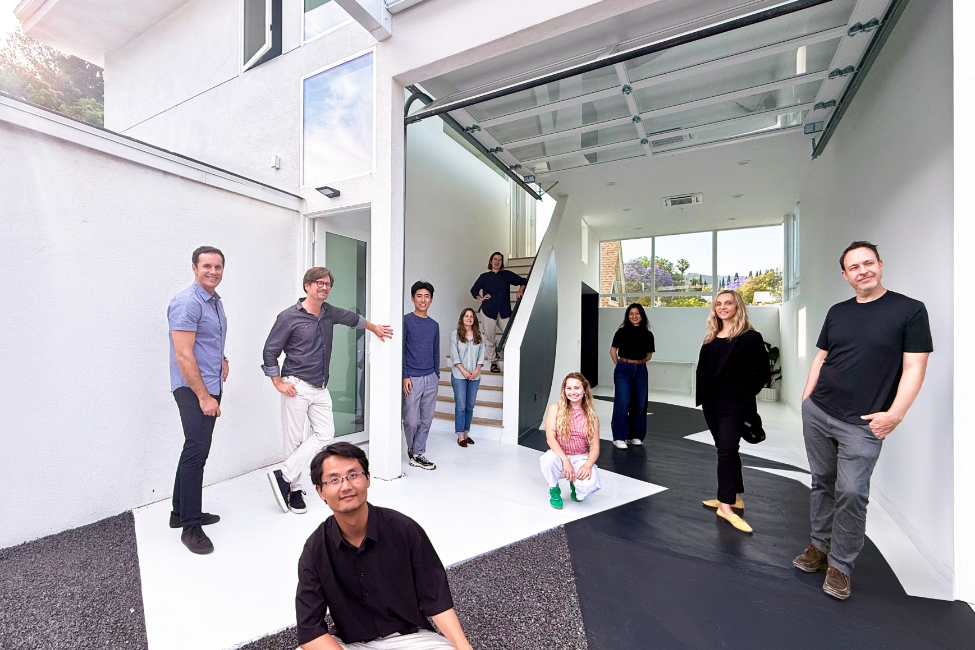
Kadre Architects
Architecture can sometimes feel removed from everyday social issues. What do you wish more architects understood?
“Everyone deserves good design, but for people experiencing homelessness, especially families, it becomes essential.
“If architects can work a little harder to make environments more intuitive, welcoming, and humane, then we can lessen the burden that place sometimes carries. That’s part of our ethical responsibility.”
Your projects often feature bold colors and strong street presence. Why is that important in this work?
“Projects serving vulnerable populations have long been shaped by stigma and resistance from surrounding neighborhoods. We try to shift that narrative by demonstrating that caring for those most in need can also enrich the civic fabric.
“Joy, visibility, and a confident presence communicate value. They signal that the lives unfolding inside matter. When a building feels uplifting, it invites acceptance—and even pride.”
What excites you about adaptive-reuse projects?
“There is something profoundly energizing about transformation. When a building moves from neglect into care and purpose, the surrounding neighborhood often begins to change as well.
“Adaptive reuse allows us to work with the memory of the city rather than erasing it. It also reduces embodied carbon and frees up resources that can be directed toward supportive services.”
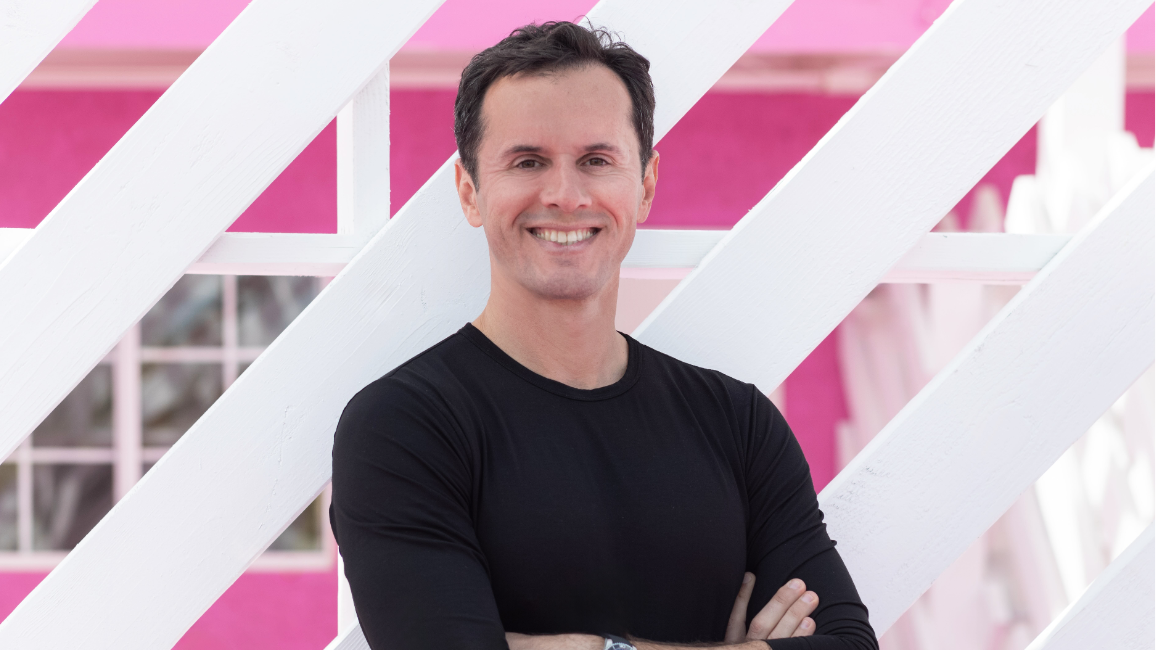
Kadre Architects Founder Nerin Kadribegovic
What does designing with dignity and hope look like in practice?
“Dignity often begins with access to natural light and a sense of spatial generosity. Some of the most contemplative architectural experiences occur in museums, where designers carefully shape light and movement.
“We believe that same level of care should extend to environments serving people who may never visit those institutions. When architecture responds to struggle with beauty and thoughtfulness, it affirms human worth. And in that affirmation, there is hope.”
For Nerin, architecture isn’t about spectacle—it’s about impact. It’s about what happens after the ribbon cutting, when families move in, when kids run through sunlit corridors, when a building quietly does the work of making people feel safe, seen, and supported.
And so maybe designers don't have to choose between creating projects that are beautiful or meaningful. In the hands of someone like Nerin, they can be both.
—Murrye Bernard