Coil + Drift Celebrates a Decade of Dancing with Light
By Rita Catinella Orrell
Some people just have creativity in their bones. John Sorensen-Jolink is one of them. A decade ago, the formally trained contemporary dancer and choreographer switched gears to pursue his lifelong love of design. For his second act, John turned to lighting- and furniture-making and launched Coil + Drift in the Catskill Mountains of New York. From this 3,000-square-foot showroom, office, and production facility, John and his team design and manufacture all products.
The Comm Sheet recently caught up with John as his company celebrates its 10th anniversary. While Lafayette, the office dog, snoozed happily in the corner, I chatted with John about his unique career path, what it’s like to live and work in a rural area, and his company’s expansion into the commercial market.
Tell me about your multi-use space.
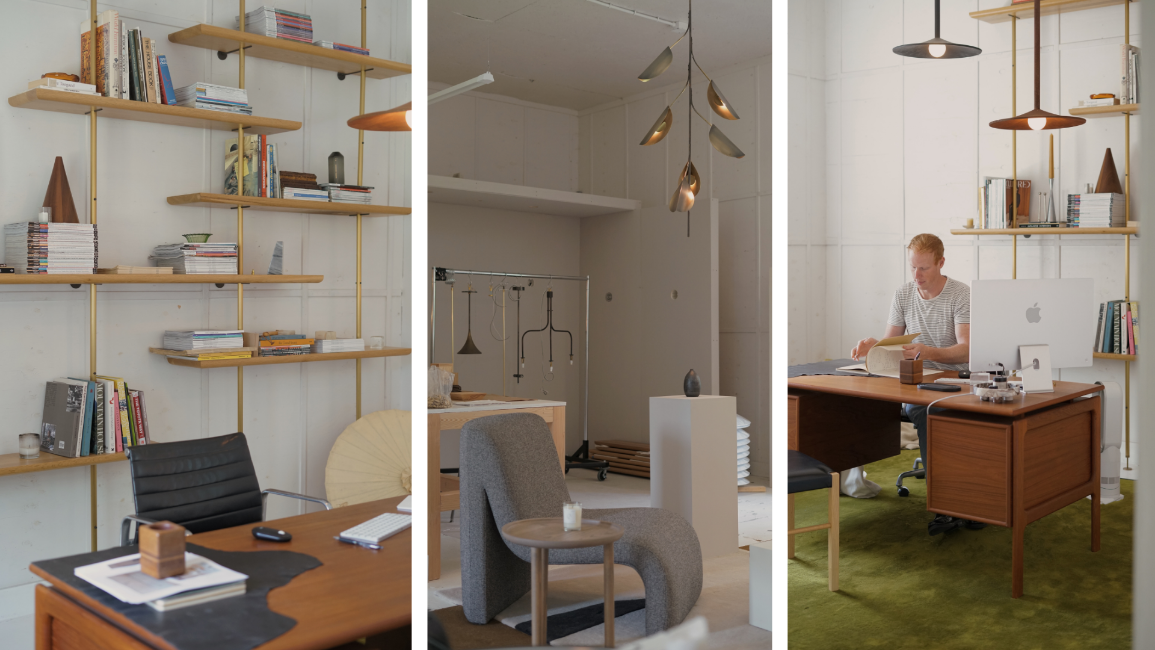
This building was built in the '80s. It was a machine garage for a gravel business, so it was big, open, and raw. The reason I fell in love with it was that it was insulated. It's very hard to find large, barn-like buildings in the Catskills that are not for barn use or storage. We have a photography booth, which we love because it has a small ceiling. We have a beautiful hand-built, cast-iron wood stove. It is not a primary heating source, but it is a really defining element of the space.
What are the advantages of living and working in a rural area?
I think for most people it's about nature, engaging with animals or their land in some way: kayaking, hiking, floating down the river, farming. It's about experiencing four distinct seasons. I have a baby horse. He will move to our home eventually, along with other horses, and we are designing a horse facility right now. The eastern branch of the Delaware River is just right here. Every day at lunch during the summertime, at least one person on the team will go swimming.
I’m sure this is the question on everyone’s mind: How did dance lead to lighting and furniture design?
I don't know that it was a conscious identification that I could do these things one day, but there was definitely an acknowledgment that costume design, set design, and fashion were in the same world as choreography. The difference is that with choreography and dance, people move, so you're arranging movement in space. [Now] we are arranging objects in space … by understanding and influencing how people will move and experience the objects that you're putting in the space. So that is choreography. It's all about human-centered design flow, the way a person moves in a space.
What inspired your recent lighting collections?
The idea for the Ridge lighting series started with looking at a plant or a tree that hasn't gotten a lot of water for a long time, and it's quite dry, and then it rains, and it wakes back up. It's almost a reawakening.
The other images in the creation process were pictures of birds of prey that were in that pushed down position and then rise up, which felt very similar to the awakening of the plant when it gets water. We tend to launch collections with two series that are in relationship to each other. The complementary series with Ridge is called Foundry, a swooping, trumpet-like fixture.
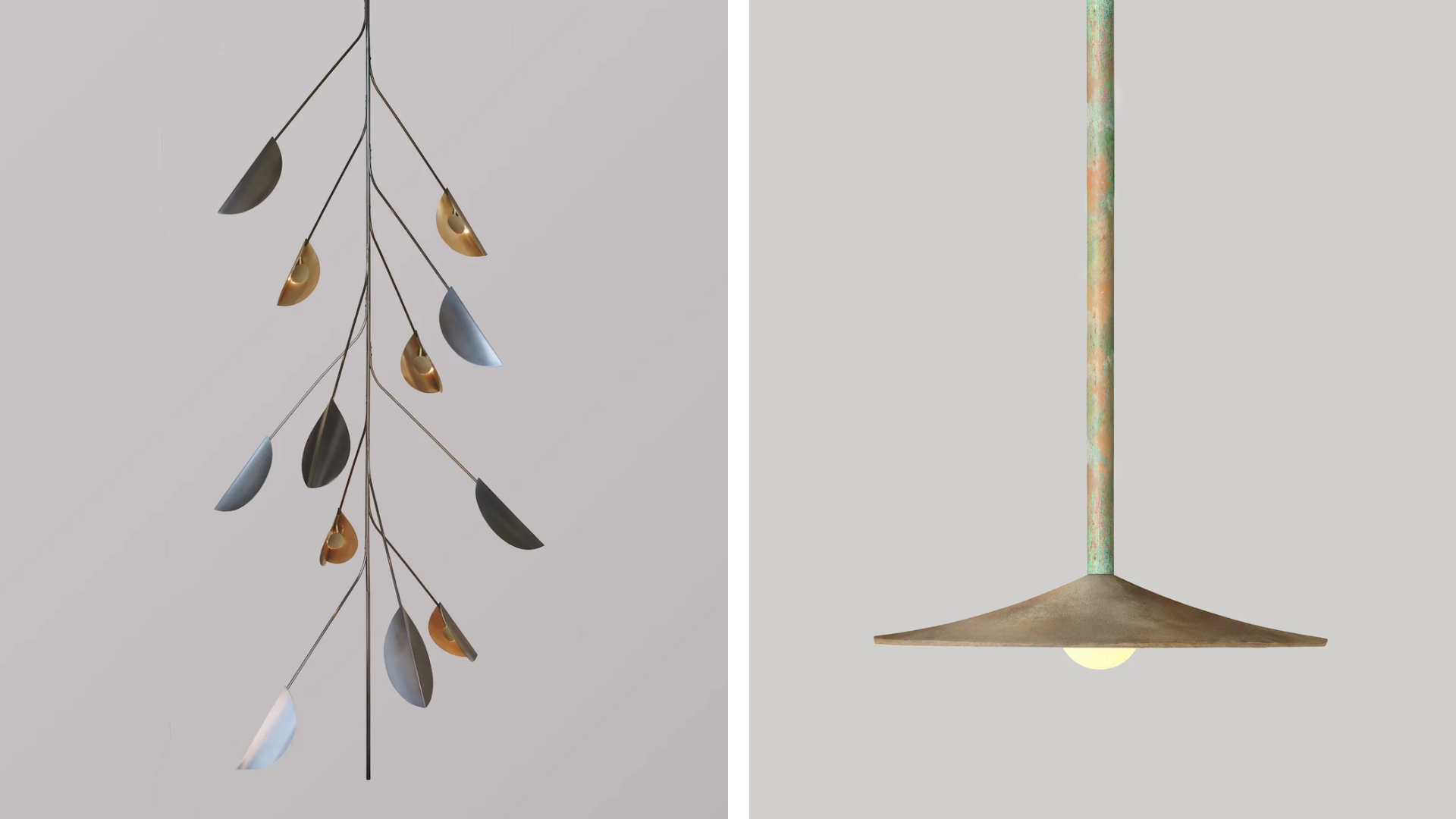
Ridge (above left) | Foundry (above right)
What are you working on next?
The largest collection we've ever created will launch in September. It’s two families of lighting. We're in the final stretch of finishing the prototyping. We're about to launch a digital configurator on our website, where you'll be able to build your own Hover shelving system. We know there's huge potential for growth there, especially in commercial hospitality.
Why enter the commercial market now?
We are making a contract-quality product that is bespoke and handmade in the United States, and there's a very small group of people who are doing that. The contract and hospitality community doesn't know we're doing this—because we weren't ready. We held off for quite a long time as we were building this team and this expertise. Now, we’re ready. ⬥
Join our community!
Thank you for subscribing!
Have a great day!