She Turned Away From Her Korean Heritage. Architecture Brought Her Back.
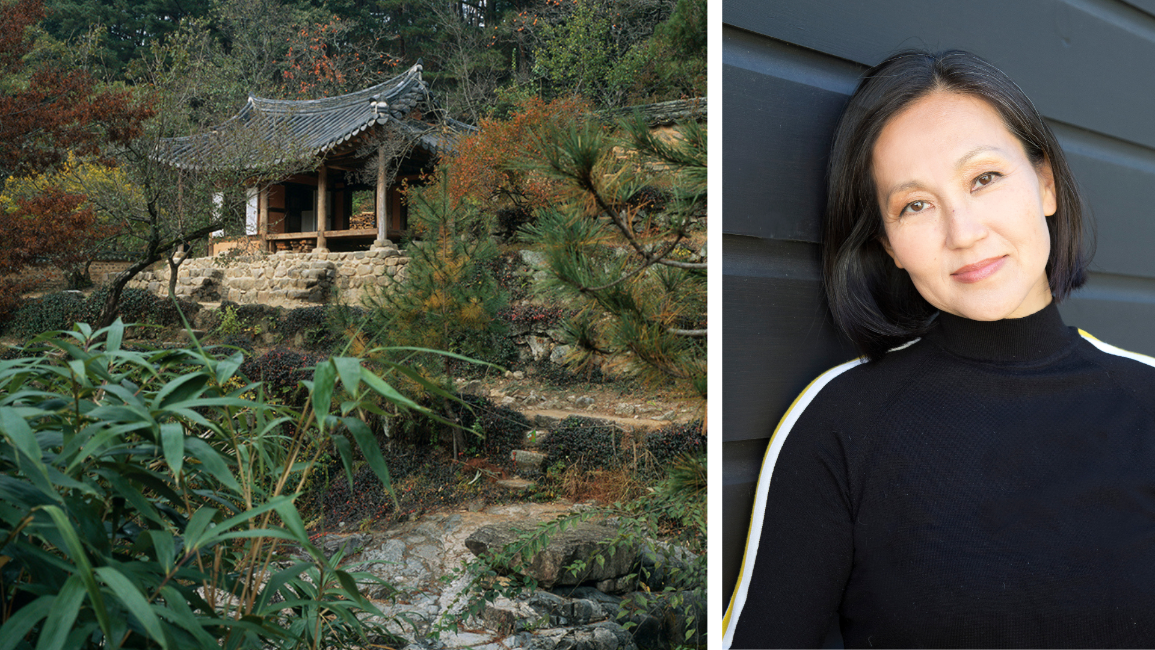
Photo of Soswaewon (above left) by Juhee Lee-Hartford and James Hartford
By Murrye Bernard
Some leave home because they think their future exists somewhere else. I myself left the American South for New York for that very reason. And Juhee Lee-Hartford gets that thinking.
After immigrating to New York from Korea as a child, the founder of River Architects left her family home at age 16, determined to become an architect, turning away from the traditions she believed were holding her back. Years later, architecture itself became the thing that led her home.
What started as a search for Korean architecture eventually led to a memoir-in-progress, Over the Moon Village, and an unexpected dive into her own family history. Along the way, there was a rain-soaked garden pavilion and a connection to her 16th-great-grandfather.
Not your average architecture story.
In this deeply personal Q&A, Juhee discusses Korean architecture, family history, memory, modernization, and why returning home sometimes becomes its own kind of creative education.
What led you back to Korea?
“The answer is absolutely architecture. By the time I was 21, I began wondering if I had been too hasty in abandoning my Korean heritage. I started searching for books on Korean architecture and was shocked that I couldn't find any. My first thought was, ‘Well, I guess I'll have to write it myself then.’
“After getting burned out during my first four years as an architectural intern in New York City, I returned to South Korea as a newly licensed architect on a Fulbright research grant to pursue that dream. That was the start of my lifelong learning journey.”
Was there a place in Korea that emotionally stopped you in your tracks?
“There is a very modest yet elegant garden compound called Soswaewon. The man-made elements seemed to dissolve into nature.
“As I sat there in the rain, reading about why this compound was built as a healing refuge for those who fled the government after the mass execution of scholars back in 1519, my eyes paused at the name Jo Gwang Jo.
“When I returned to Seoul, I asked my father who he was. Instead of a history lesson, my father told me that Jo Gwang Jo had been a close friend of my 16th-great-grandfather. His execution led to the banishment of our ancestor, who tried to implore the king’s mercy for his friend’s life. This is how our family eventually took root on Jeju Island, where I spent part of my childhood.”
There’s a recurring theme in your story about leaving in order to return. What do you hope other designers or creatives might recognize in that journey?
“I think circular movement is regenerative. Now that I’ve completed this book, I want to re-evaluate what I’ve learned and distill my unique voice. In mundane terms, it will feel like emptying out a cluttered drawer and putting back only what I want, exactly the way I want it.
“It took me too long to understand how reconciliation is necessary in personal growth. In this noisy world, quiet reflection is critical. A reset button. A much-needed recovery.” ⬥