Axia Invites You to See the Chandelier in a New Light (Or Not)
By Meredith Constant
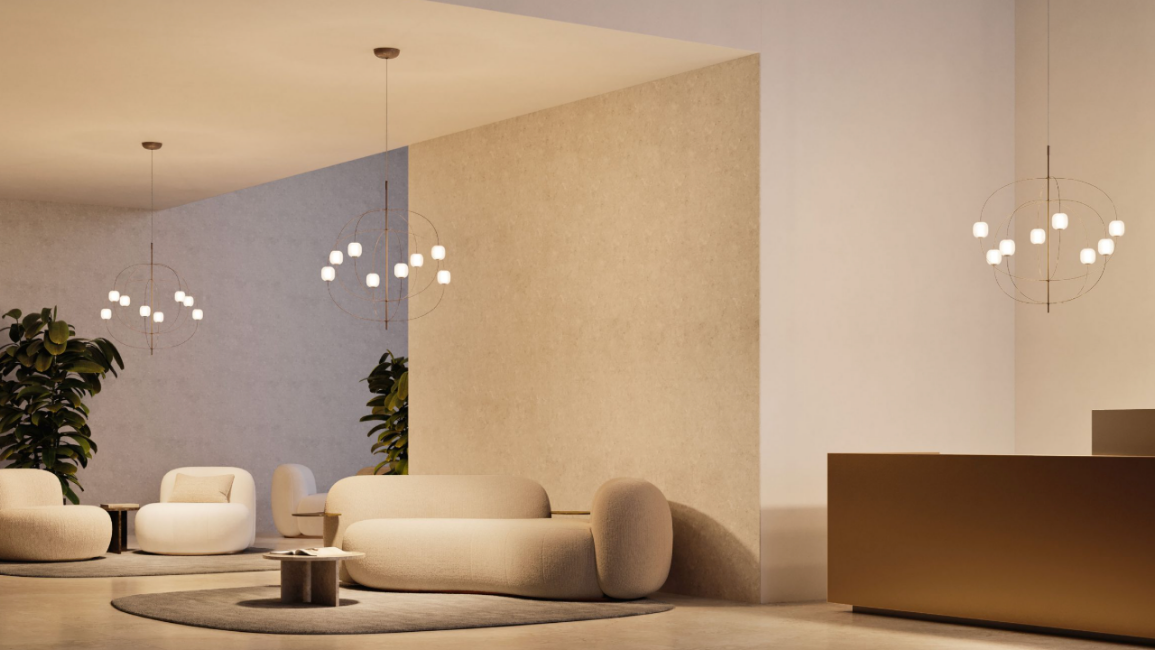
Artemis II’s space mission revolved around (no pun intended) a simple question: “What does it look like on the dark side of the moon?” (cue Pink Floyd) Similarly, a goal for the designers of the Axia Chandelier from Lodes, unveiled at Milan Design Week 2026, was to create a lamp with a “presence in its own space” that served a purpose beyond its light.
“The chandelier is an extraordinarily resilient typology that didn’t need to be abandoned, but rather reinterpreted,” say Carolina Martinelli and Vittorio Venezia, the designers behind this collaboration with contemporary lighting brand, Lodes. By eliminating the visible wire, the designers allowed Axia’s structure and energy to become one.
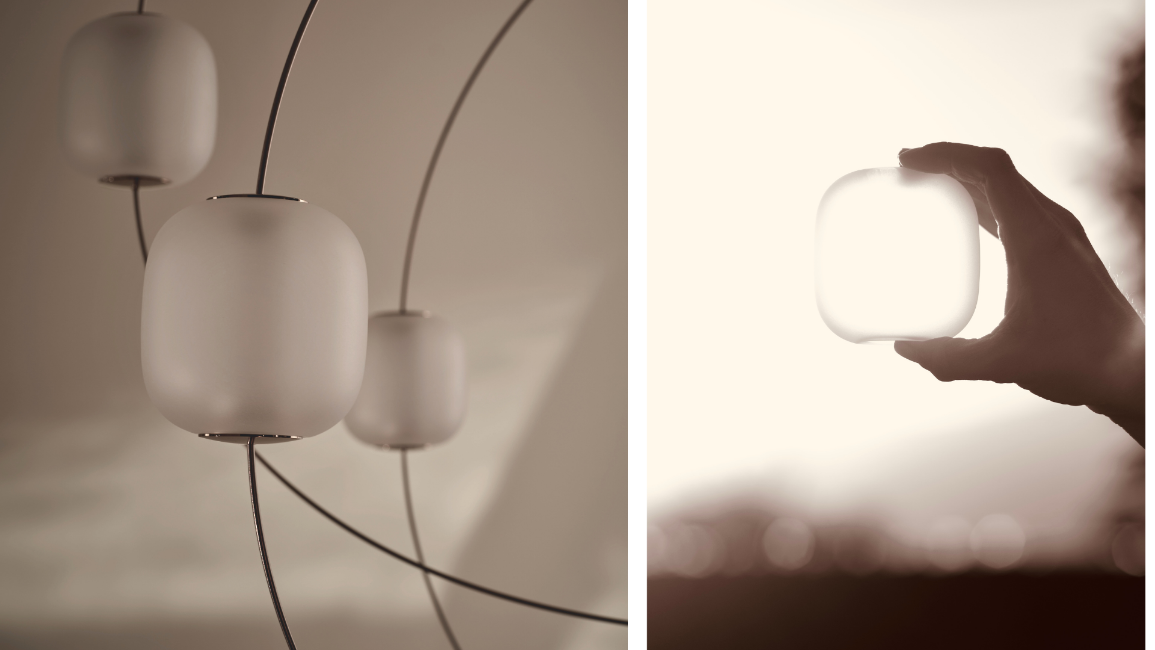
Reinterpreting an object also means remembering what made it popular in the first place. Carolina and Vittorio aimed to recover “that balance between technique, lightness, and the ability to create atmosphere,” like some of history’s greatest chandeliers, they note.
The Axia does feel a bit like planets harmoniously rotating around a shared source. There’s order without rigidity. A gravitational pull you can’t see, but certainly feel, like the tides responding to the shifting position of the moon.
Instead of emphasizing the sculptural and spectacular dimension of the chandelier or pursuing extreme reduction almost to the point of making the object disappear, the Axia maintains a tension between these two conditions. “The form is recognizable, yet never decorative,” the designers say.
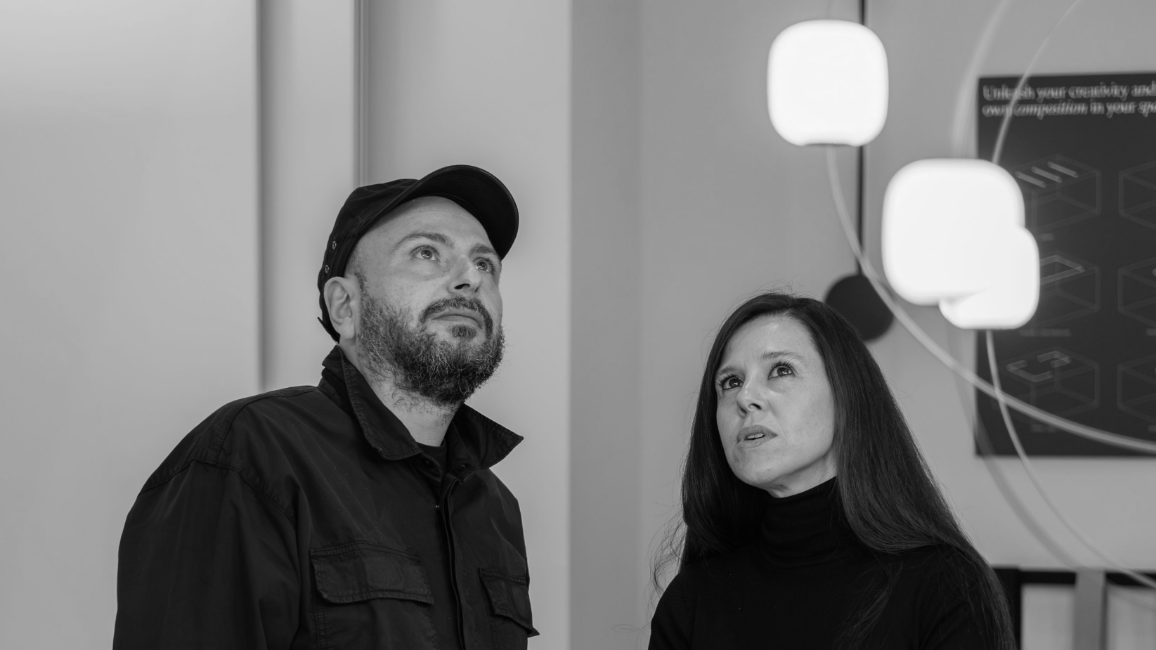
Axia designers Vittorio Venezia and Carolina Martinelli | Photo by Maurizio Morra
More than an object, Carolina and Vittorio think of the Axia as “a small constellation: a group of elements held together by a shared logic, yet capable of generating a living and dynamic presence in space.”
Lodes didn’t want the chandelier to disappear. They wanted to see it in a new light… or lack thereof. ⬥
Join our community!
Thank you for becoming a part of our community!
Have a great day!