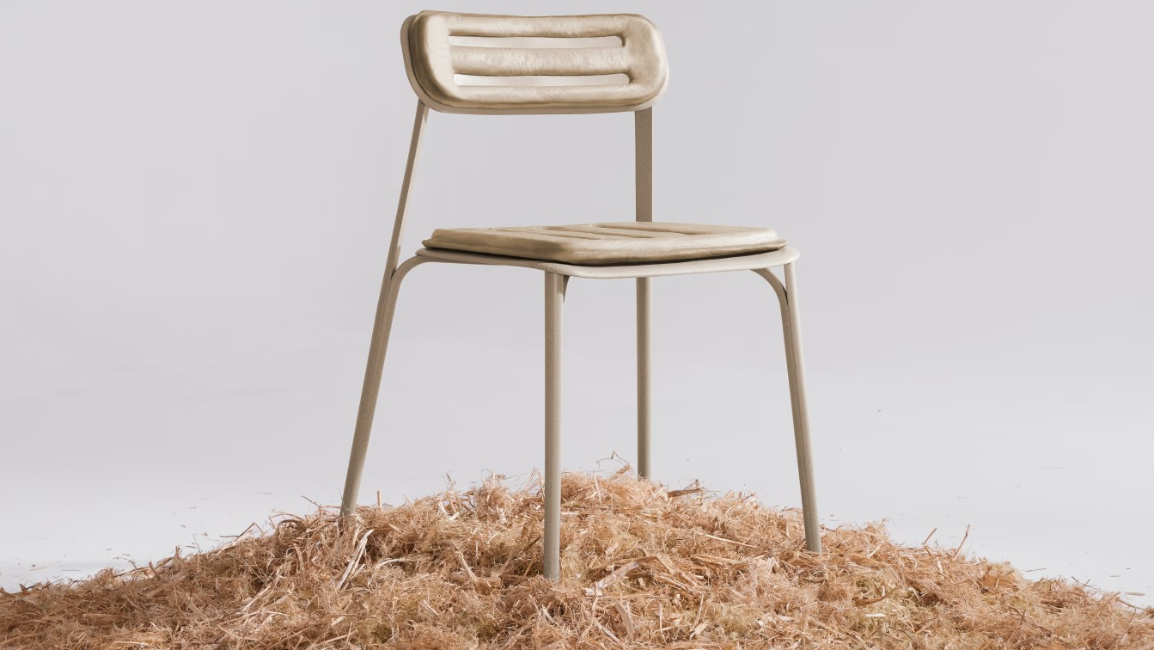
A Chair Designed to Disappear: PEEL by PROWL Studio
We begin with the end.™ Well, if that isn’t the most genius tag line I’ve ever heard…
Mostly because it can’t cut any faster to the core of PROWL Studio’s mission. And its infamous PEEL chair can’t be a more perfect representation of it.
“To create differently, we think differently,” the studio proclaims on its site, giving equal weight to design and its regeneration. That means designers work backward from the product’s end of life. For the PEEL stacking chair, that meant taking cues from hemp stock and how different parts of the plant are removed for harvesting and reuse.

"Conventional plastics—such as the polypropylene commonly used in plastic stacking chairs—take an estimated 450 years to break down," PROWL Studio co-founder Lauryn Menard has said. "In contrast, our hemp-based PLA breaks down in just six months when under the right controlled conditions." That leaves PROWL with the bold (and risky?) claim that PEEL is "the first injection-molded chair that can be composted.”
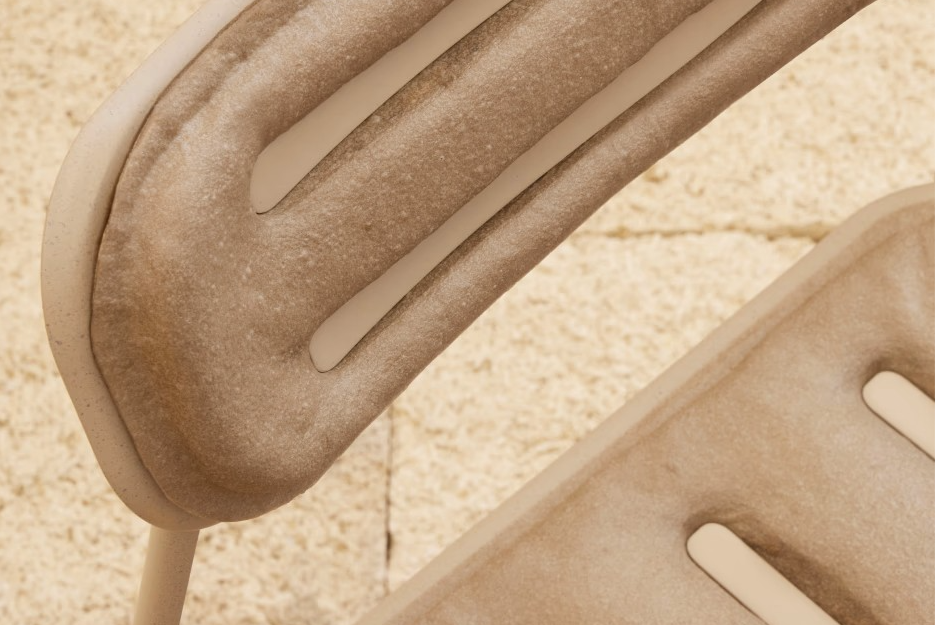
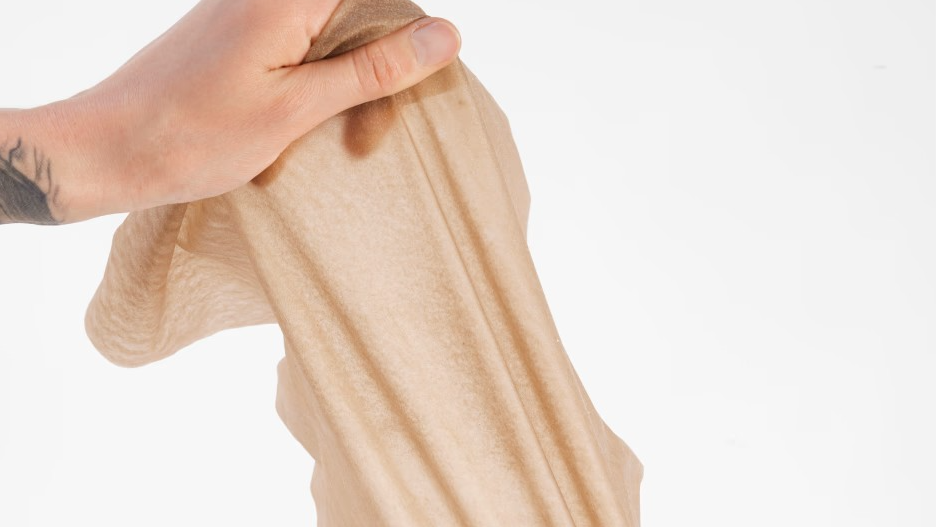
Either way, PEEL delivers a HUGE blow to the “fast furniture” industry. Its structural frame, developed by M4 Factory, is made out of a hemp-based bioplastic that combines the crop’s bast fiber and hurd with biopolymers. Those are both byproducts of industrial hemp processing that are typically wasted. It’s then topped off with a hemp foam cushion encased in hemp bioleather, developed with Studio Veratate.
That begs the question of comfort. Does the sit also live up to its altruistic ideals? And can it withstand the rigors of commercial spaces? We suppose only time will tell. But one thing is for sure: PEEL doesn’t stay late to the party. “It serves its purpose, but only for as long as it needs to,” reads the product description. Here’s hoping all manufacturers follow suit with PROWL’s regenerative design process in these critical years to come.
—AnnMarie Martin