Julia Watson Wants Designers to Rethink Water
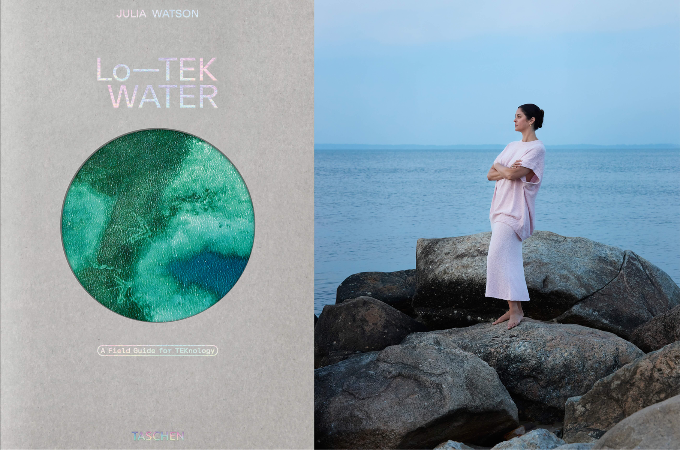
Portrait by Isabel Parra
What if the future of climate-resilient design has existed for thousands of years? Designer, educator, and author Julia Watson has spent much of her career exploring that idea.
Through her research on what she calls Lo—TEK—a term she coined to describe sophisticated environmental systems developed by Indigenous communities around the world—Julia argues that many of the most effective climate technologies aren’t new at all. They’re ancestral systems that have evolved alongside ecosystems and cultures for generations.
The concept first gained global attention with her 2019 book Lo—TEK: Design by Radical Indigenism, which documented ecological infrastructures ranging from living root bridges in India to aquaculture landscapes in China. Her latest book, Lo—TEK. Water. A Field Guide for TEKnology, published by TASCHEN, zooms in on water—arguably the defining environmental challenge of our time.
At a moment when rising seas, extreme storms, and drought are reshaping cities across the globe, Julia believes the design community may need to rethink its relationship with water—not as something to control, but as something to collaborate with.
So where did the idea for Lo—TEK begin? And what can designers today learn from these ancient systems?
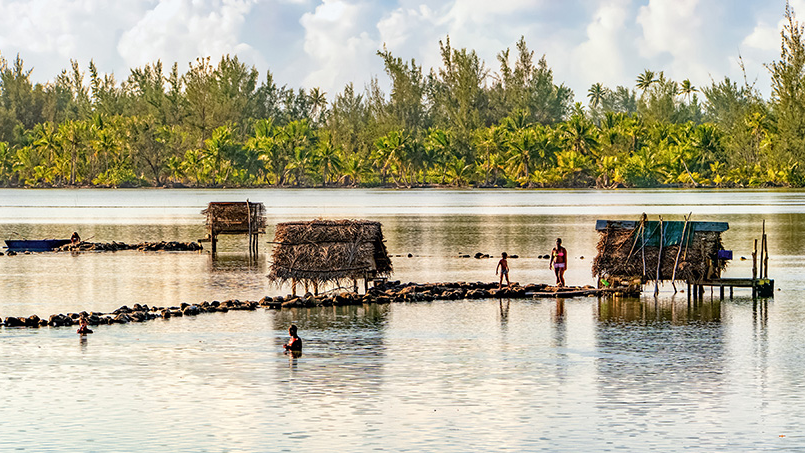
Horo i‘a Fish Weirs of the Mā‘ohi, French Polynesia. Photo by Wasim Muklashy
On defining Lo—TEK
“Lo—TEK really came from working directly with communities. I studied sacred landscapes and how they intersect—or sometimes clash—with Western conservation frameworks. When working with the Subak rice terraces in Bali, I realized these landscapes weren’t just cultural sites; they were incredibly sophisticated environmental technologies.
“The terraces manage water, produce food, sequester carbon, and support entire communities. They’re sacred landscapes, but they’re also functioning infrastructures. That realization changed how I understood the relationship between culture, ecology, and design.
“As designers, we build stormwater systems and wetlands in cities, but many of these ideas have existed for centuries in traditional ecological knowledge systems.
“Lo—TEK is about recognizing that ancestral systems are not primitive. They’re highly advanced climate-resilient technologies.”

Loko i‘a Fishponds of the Native Hawaiians, Hawai’i. Photo by Mark Lee
On discovering Indigenous knowledge
“I studied architecture in Australia and Aboriginal environments. I often describe that experience as an unlearning. Up until that point, I had learned architecture and planning through very Western frameworks. But that course introduced the idea that landscapes carry thousands of years of cultural relationships and stewardship that are still present.
“Mountains, rivers, ecosystems—these are not just physical environments. They hold stories, cosmologies, and systems of knowledge that have guided how communities live with the land for generations.
“That perspective shaped the direction of my work and ultimately led to the Lo—TEK framework.”
On designing with water instead of against it
“We talk about climate change as this existential threat, but water is really the imminent [threat]. Rising seas, flooding, drought—water is already reshaping where and how people live.
“What’s fascinating is that many Indigenous cultures don’t frame water as a threat. Water is understood as an ancestor, a teacher, even kin.
“When you begin to see water that way, the question shifts. Instead of asking how we control water, we start asking how we design with it—how water systems themselves can guide the way our cities and landscapes evolve.”
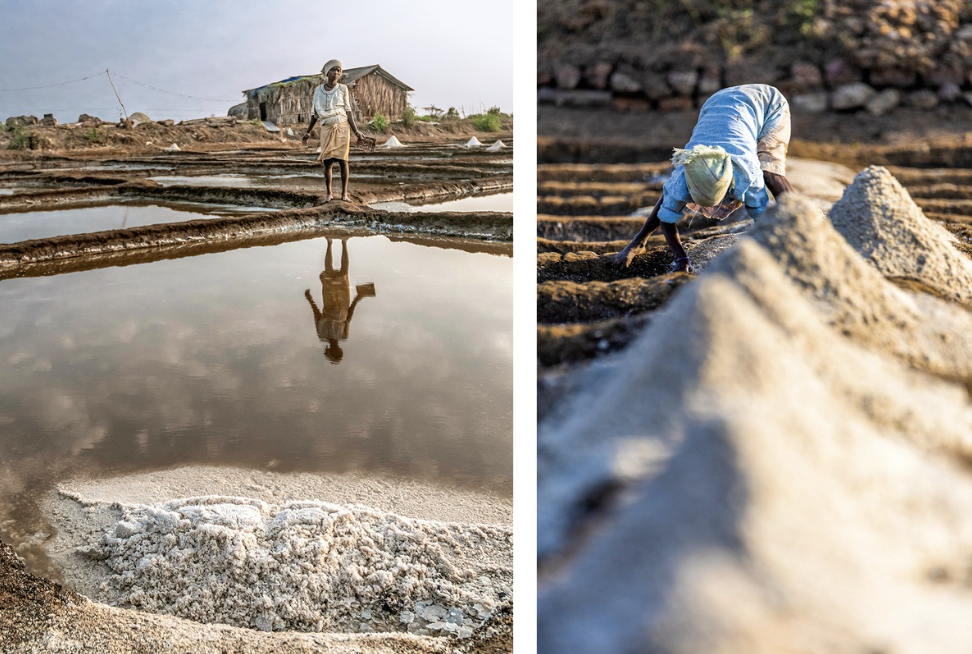
Mithache Agor Salt Pans of the Goans, India. Photo by Anoop Negi (left); Photo by Akhil Kulkarni (right)
On ancient systems shaping modern infrastructure
“The chinampa agricultural system in Mexico City is an incredible example. It was originally developed by the Nahua and expanded by the Aztecs, and it still functions today—cleaning water, producing food, and supporting local economies.
“[Also] the Sangji fish-pond system in China integrates aquaculture, agriculture, flood management, and textile production. These systems are incredibly sophisticated because they operate as integrated ecological infrastructures.
“What’s fascinating is that China’s Sponge City model—the most advanced urban water management system we have today—was inspired by systems like these. So some of our most cutting-edge urban strategies are actually rooted in ancestral knowledge.”
On rethinking sustainability
“One of the biggest misconceptions is that sustainability is something you measure through a checklist. Frameworks like LEED helped move the profession forward, but they’re still rooted in a Western perspective on architecture and urbanism.
“Many Indigenous systems have sustained ecosystems and communities that are socially, environmentally, and culturally integrated systems. Sustainability isn’t just about materials or efficiency—it’s about relationships. It’s about how people, landscapes, and ecosystems coexist over time.”
On the future of design
“What gives me hope is seeing a global shift toward collaboration. Designers, scientists, and Indigenous communities are beginning to work together in ways that weren’t happening before. If we want a future that is regenerative instead of extractive, that collaboration is essential.”
—Murrye Bernard