This Prison-Turned-Luxury Hotel Offers the Perfect Escape
By Murrye Bernard | Photos courtesy of Hoshino Resorts
Some hotels promise you'll never want to leave.
HOSHINOYA Nara Prison just happens to be the only one where that joke comes with more than a century of history.
Yes, it really was a prison. And yes, you can book a room.
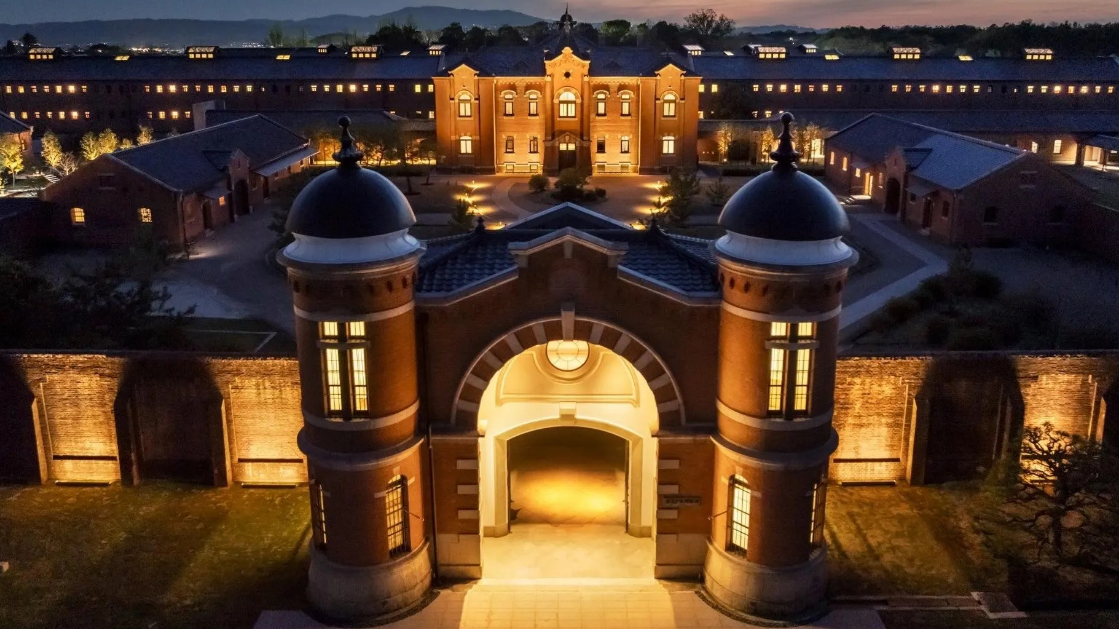
This summer, HOSHINOYA Nara Prison officially welcomed its first guests to Japan's first luxury hotel housed in a former prison—and one of the country's most remarkable adaptive reuse projects. The hotel was designed by Rie Azuma of Azuma Architects & Associates, with conservation efforts led by Yoshihiko Sano of Yasui Architects & Engineers.
Originally designed by architect Keijiro Yamashita and completed in 1908, the red-brick complex is the only one of Japan’s Five Great Prisons of Meiji to survive fully intact. It operated for more than a century before closing in 2017, the same year it was designated an Important Cultural Property, in recognition of its exceptional architectural and historical significance.
Rather than erasing the prison's past during its renovation, the architects preserved its defining architectural features while transforming the landmark into a serene 48-suite retreat.
Before you picture bunk beds and bars, don't.
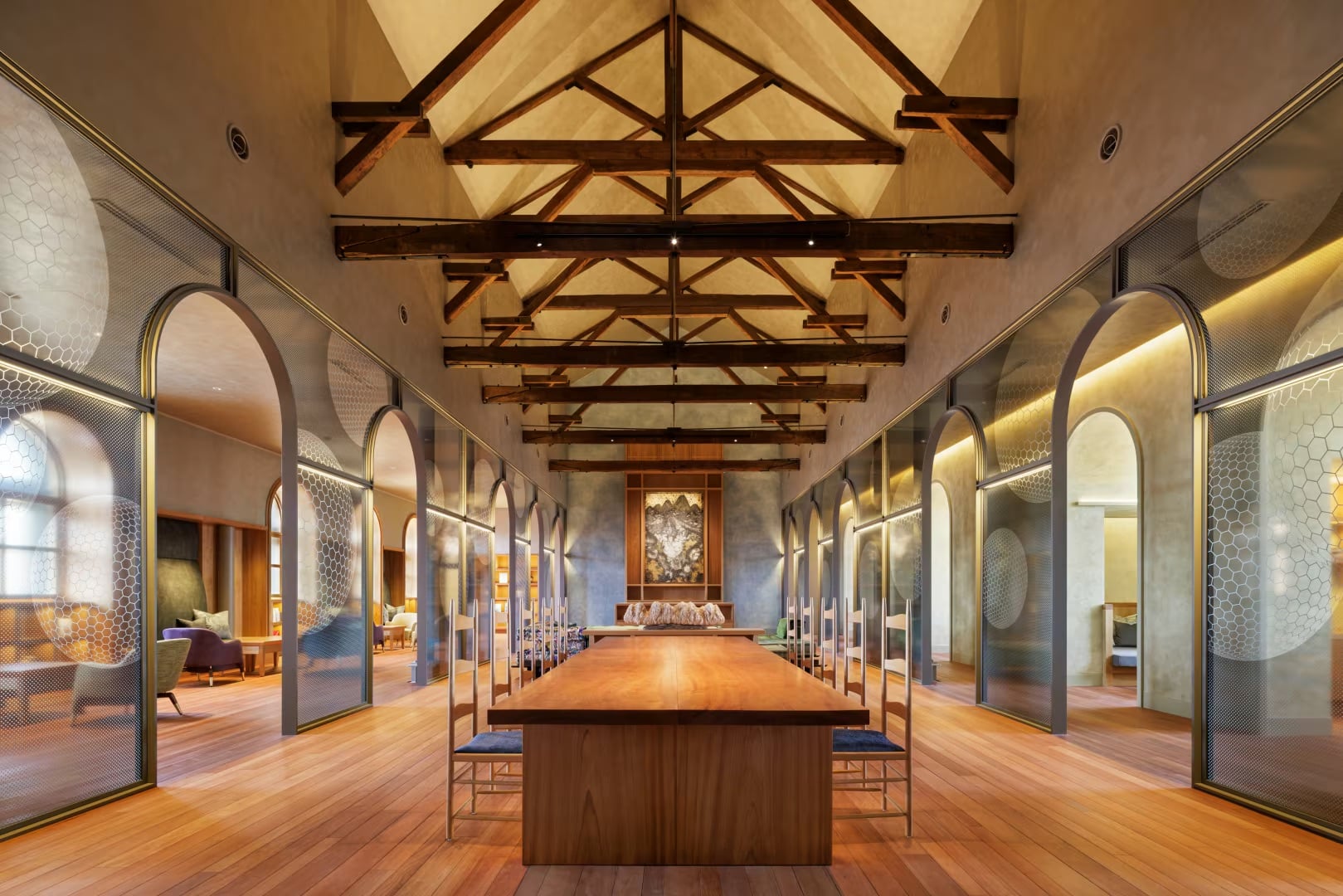
The former prison assembly hall is now a communal living room for hotel guests.
The original prison cells have been carefully combined into spacious guest suites with lofty ceilings, restored brick walls, and understated interiors that let the historic architecture take center stage. Elsewhere, original circulation routes, iron doors, and the prison's unmistakable radial layout remain intact, preserving the building's character while giving guests a tangible connection to its past.
The prison's dramatic Haviland System floor plan—where cell wings radiate from a central guard station—still defines the building, turning what was once a highly controlled layout into one of the hotel's most striking architectural features.
That's what makes this project so fascinating. It isn't pretending the prison never existed. The heavy doors are still there. The long corridors remain. Even the central observation point still anchors the building. But the feeling has completely changed. Spaces once associated with confinement now invite curiosity, reflection, and, yes, an exceptionally comfortable night's sleep.
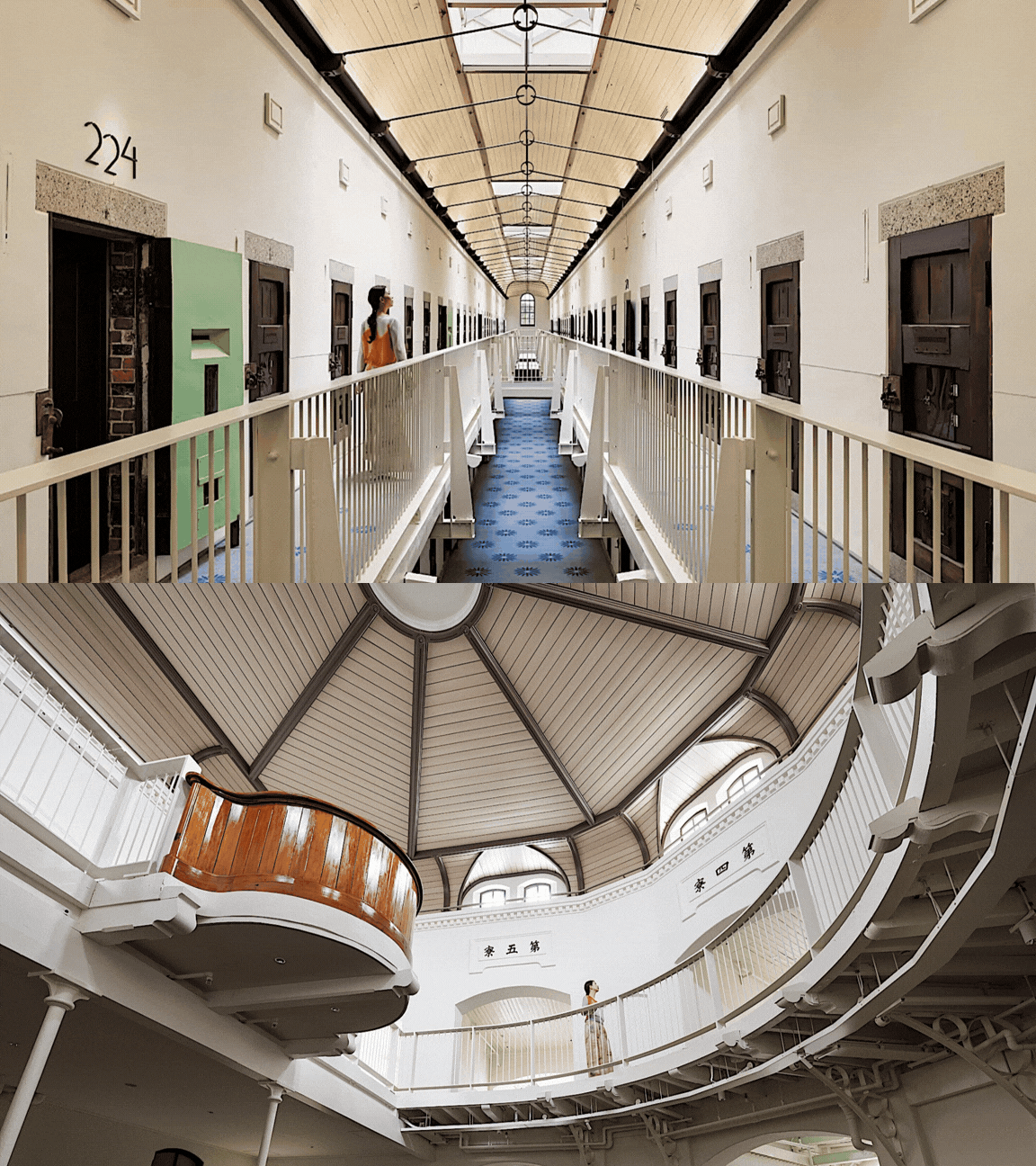
This corridor comprises former prison cells converted to luxury hotel suites. | The former central guard station
The property also includes the Nara Prison Museum, where visitors can learn about the building's complex history. The museum provides important context, reminding guests that this project is as much about preservation as hospitality.
And that's where things get interesting: Adaptive reuse often asks us to see buildings differently. Warehouses become offices. Churches become restaurants. Factories become apartments. But transforming a prison into a luxury retreat? That's a conversation starter.
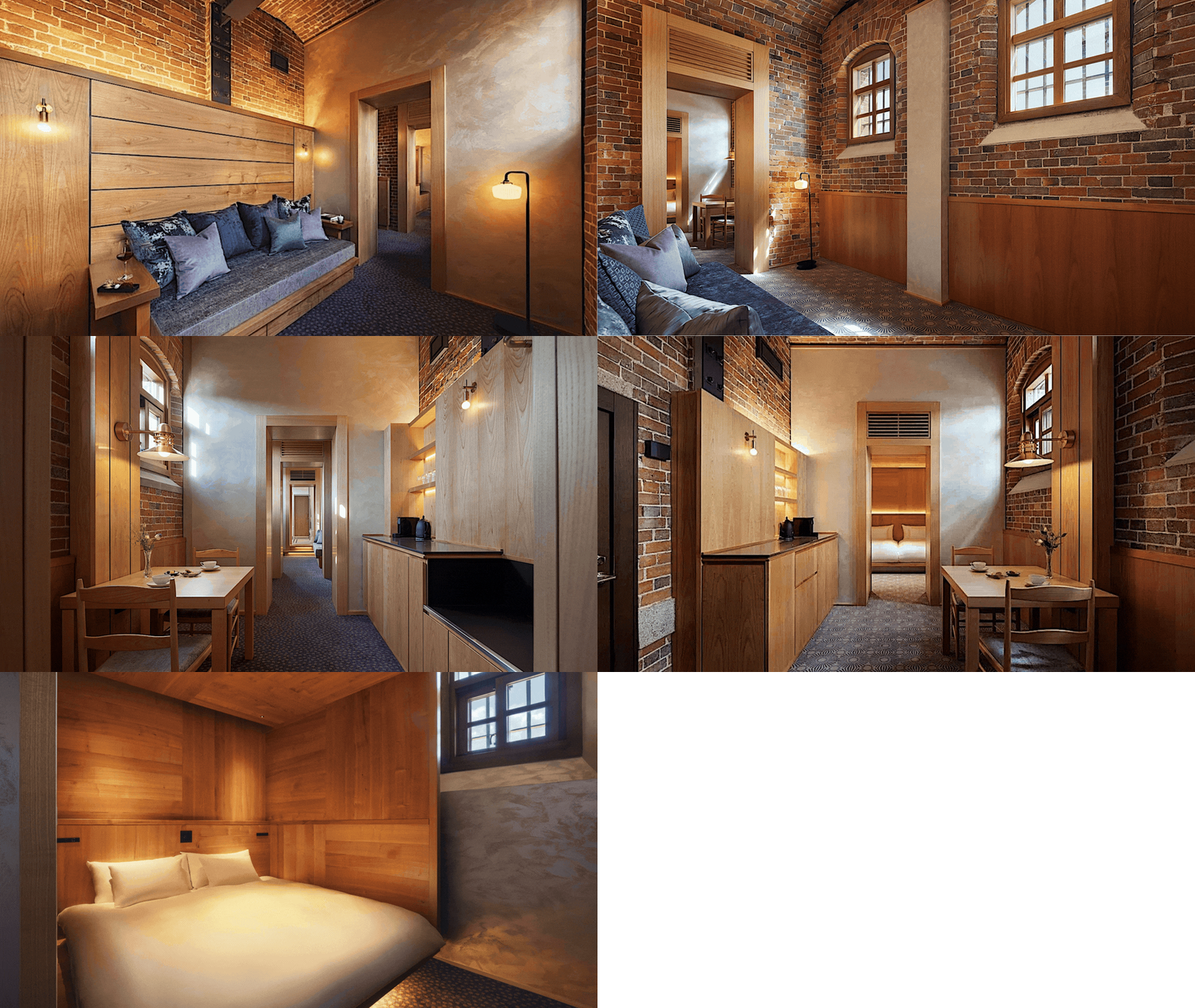
Guestroom suites include a separate living room, dining room, and bedroom.
Some travelers will see an unforgettable design destination. Others may wonder whether places tied to incarceration should become vacation spots at all. And both reactions feel fair. HOSHINOYA Nara Prison doesn't ask us to forget what the building was, just to see it differently.
HOSHINOYA Nara Prison doesn't pretend to have all the answers. It simply opens the door (which, thankfully, now unlocks from the inside). ⬥
Join our community!
Thank you for subscribing!
Have a great day!