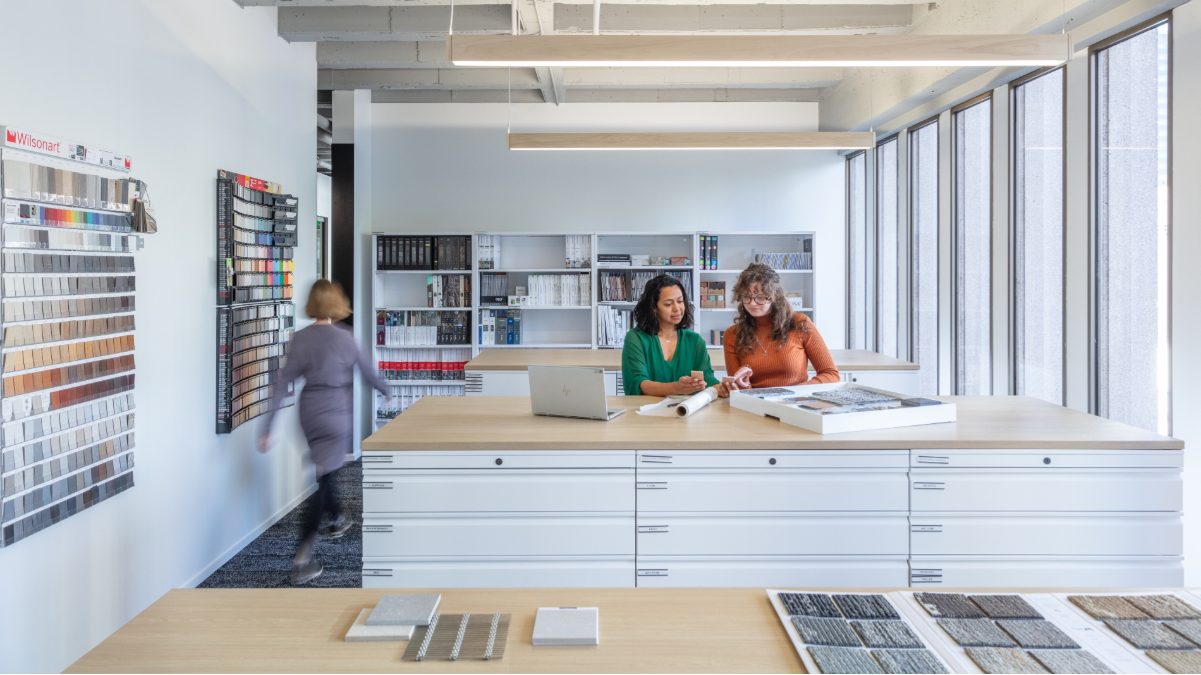
HOK’s New Seattle Studio Is a Love Letter to the Pacific Northwest
Photography by Heywood Chan
HOK’s Seattle studio is the kind of place that immediately tells you where you are—and who works there. Located inside the 1200 Fifth Building (formerly the IBM Building), the studio honors the legacy of architect Minoru Yamasaki while feeling unmistakably modern, warm, and rooted in its context.
“Our design goal was to celebrate both architecture and the Pacific Northwest,” says David Holt, director of interiors for HOK’s Seattle studio. David points out that while Yamasaki is globally known, his Seattle roots made this project especially meaningful. Inside, the team intentionally peeled back layers to expose original concrete floors and the iconic waffle-slab ceiling. “Juxtaposed against that,” David explains, “every interior material has a texture derived from nature and a color pulled from the local natural palette.”
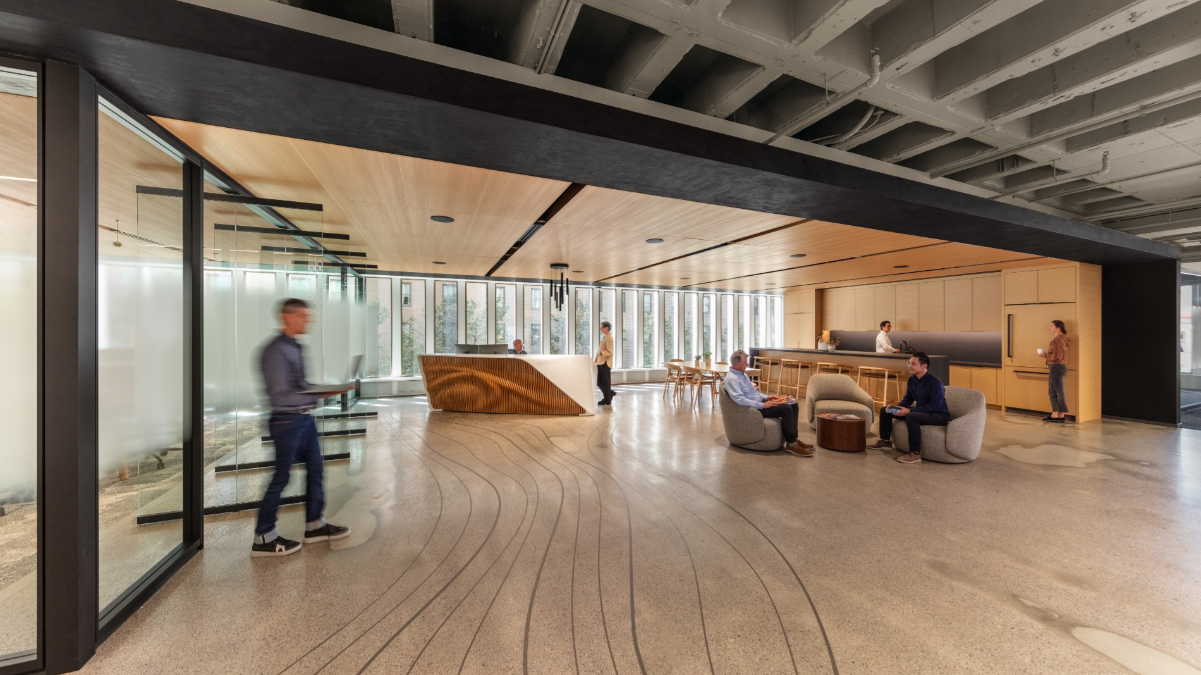
That dialogue between past and present begins the moment you step off the elevator. Floor patterns inspired by regional topography guide visitors inward, leading to a digitally fabricated wood and Corian welcome desk—an abstract nod to Puget Sound’s shipbuilding history. The desk anchors a hospitality-driven zone that includes a lounge, kitchen, and conference room, all designed to flex and flow together.
“The tenor of our office is one of friendly, accessible professionals who take our work seriously, but not ourselves,” David says. Leading with a hospitality space was intentional. “We wanted that front door to signal warmth and approachability to visitors, candidates, and our own team.”
And it works. By day, the space hums with people grabbing coffee, working away at their desks, or gathering around the community table. By night, walls slide open to transform the studio into an event space for larger meetings and community gatherings. “The easy scalability has been key to it being a successful space,” David notes.
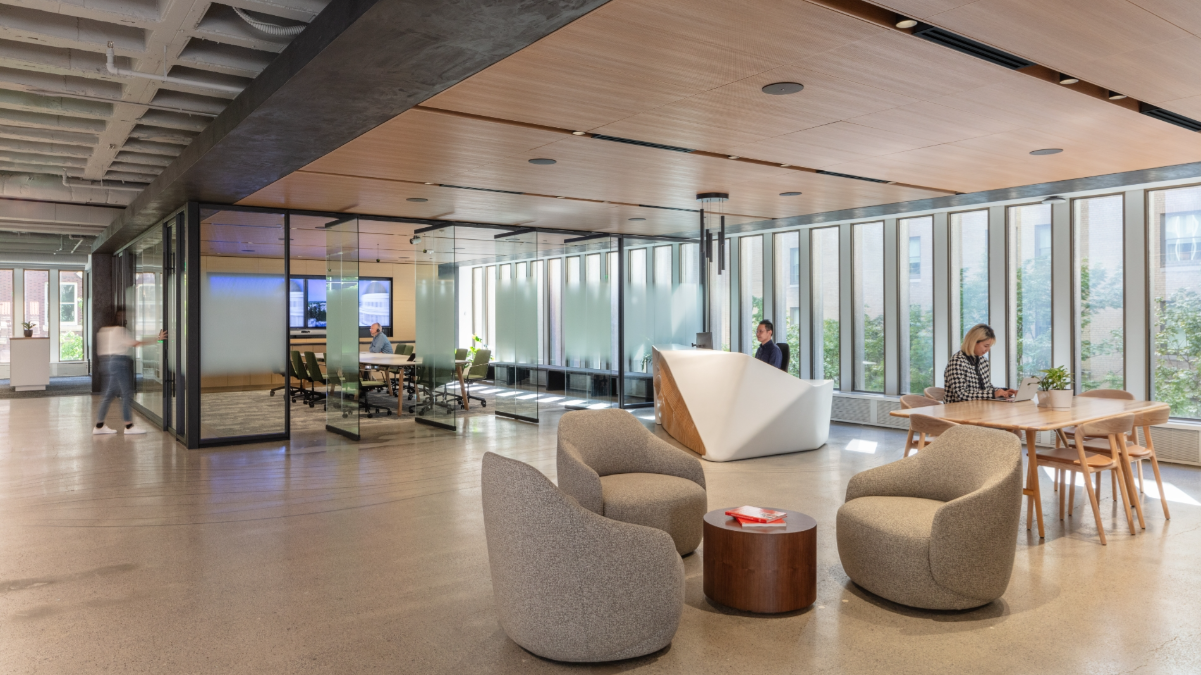
Beyond the hospitality zone, the studio unfolds into a variety of work environments: cozy living-room-style seating areas (yes, there’s a bar cart), reconfigurable team rooms, and an open, column-free workspace with 72 sit-stand desks grouped into adaptable hubs. Every workstation has access to natural light and views of the surrounding tree canopy—a non-negotiable for the team.
Supporting how people feel at work was just as important as supporting how they work. In response to research on neurodiversity, the team designed conference rooms with identical footprints and differing layouts, lighting levels, and acoustics. “The spaces aren’t uniform,” David explains. “The responsibility of adjustment isn’t put on the user. Instead, people can choose the environment that best fits their task and mood.”
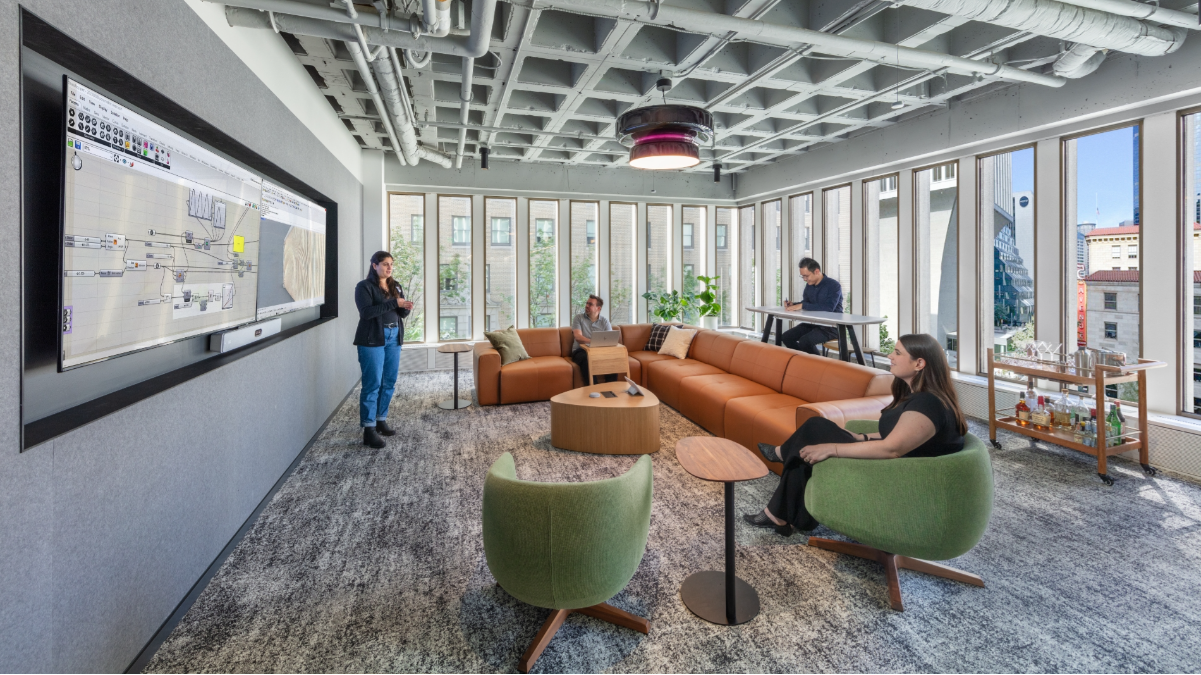
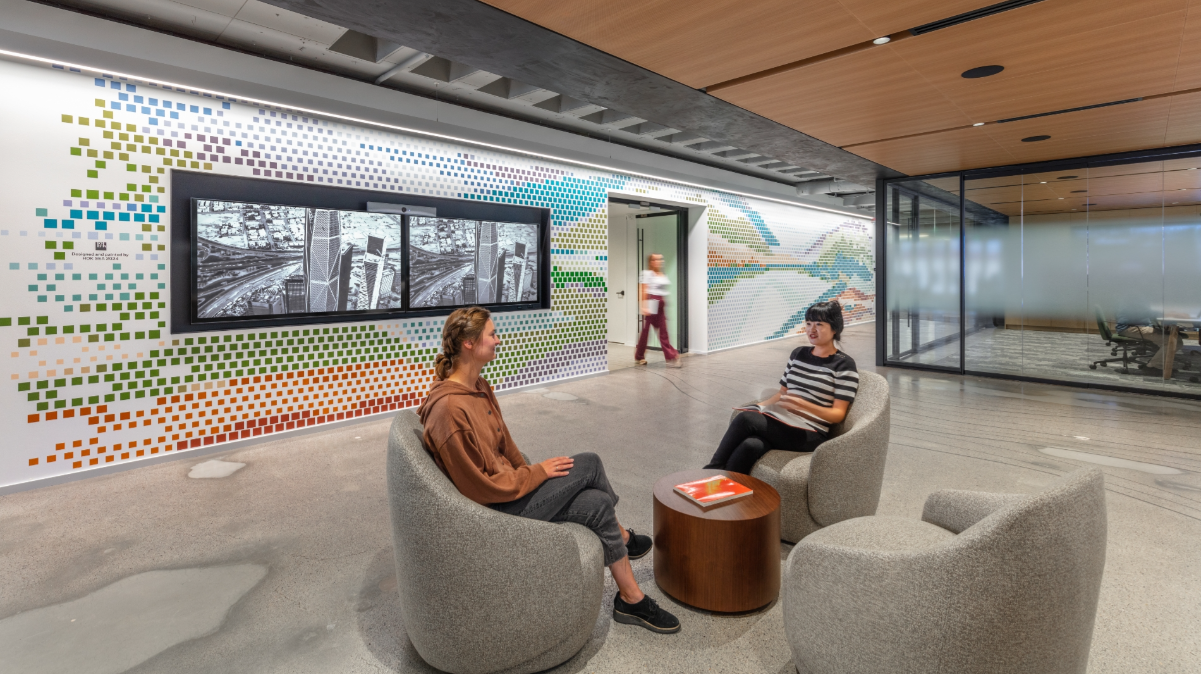
Personality shows up everywhere, too. A vibrant, hand-painted mural—designed by HOK and executed by staff—greets guests at the entrance. Meeting rooms are named after beloved hiking trails, while wallcoverings sneak in local legends like Bigfoot and the Kraken. Call them Easter eggs, call them inside jokes—either way, they make the space feel deeply human.
Layered throughout are biophilic elements, sound-absorbing materials, and varied ceiling heights that support focus, collaboration, and well-being. Targeting LEED Gold certification, the studio’s exposed structure and concrete floors also help reduce the project’s carbon footprint.
Put it all together, and you get a studio that feels like Seattle distilled: grounded, creative, a little playful, and deeply connected to its surroundings. Or, as David sums it up, a place that’s “serious about design, respectful of our history, but with a personality that’s unique to our part of the country.”
—Murrye Bernard