Rewriting the Rules: Anduba Wallcoverings Sets the Standard for Design Equity
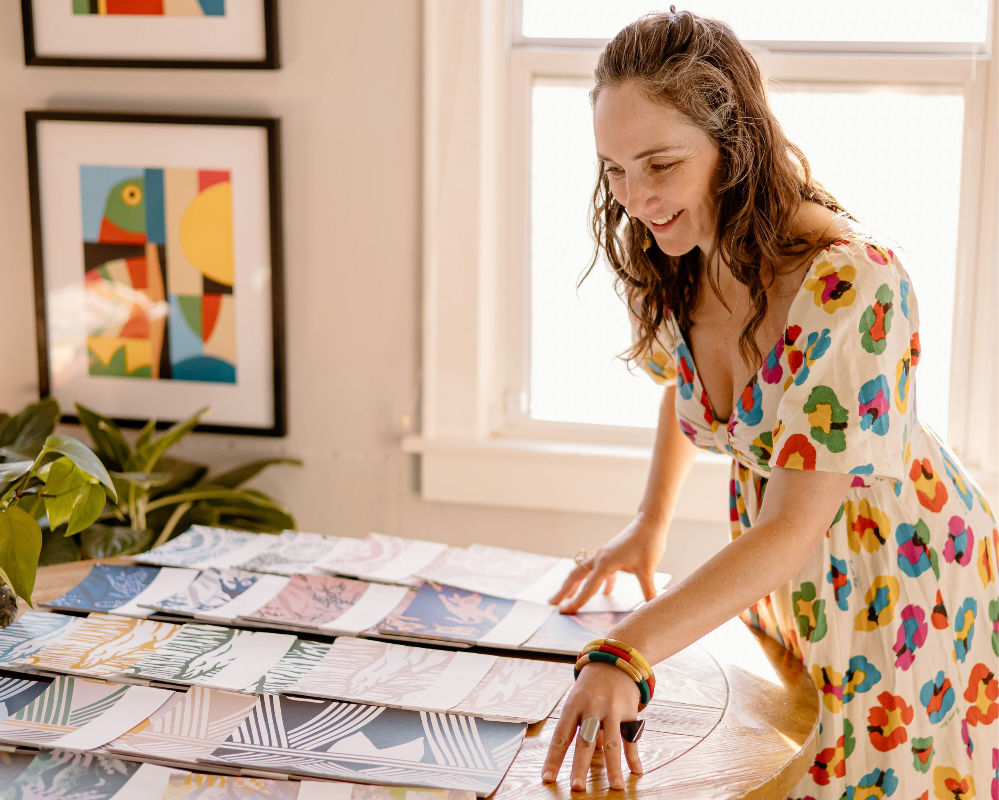
Anduba Founder Flavia Pereira
Originality is hard to come by in most walks of life, and design is no exception. It can be difficult to “break the mold.” Thankfully for you, you have us to discover those groundbreakers and troublemakers.
So allow us to introduce you to one of these industry disruptors: Flavia Pereira, founder of Anduba. Through her travels, she came to understand that indigenous art should not be reserved for just museum displays.
“It was a trip to Mexico City, where I was struck by how Diego Rivera brought murals to the streets so art could meet people where they are,” she says. “The idea that this work belonged in everyday spaces, not just collections, clicked into place.”
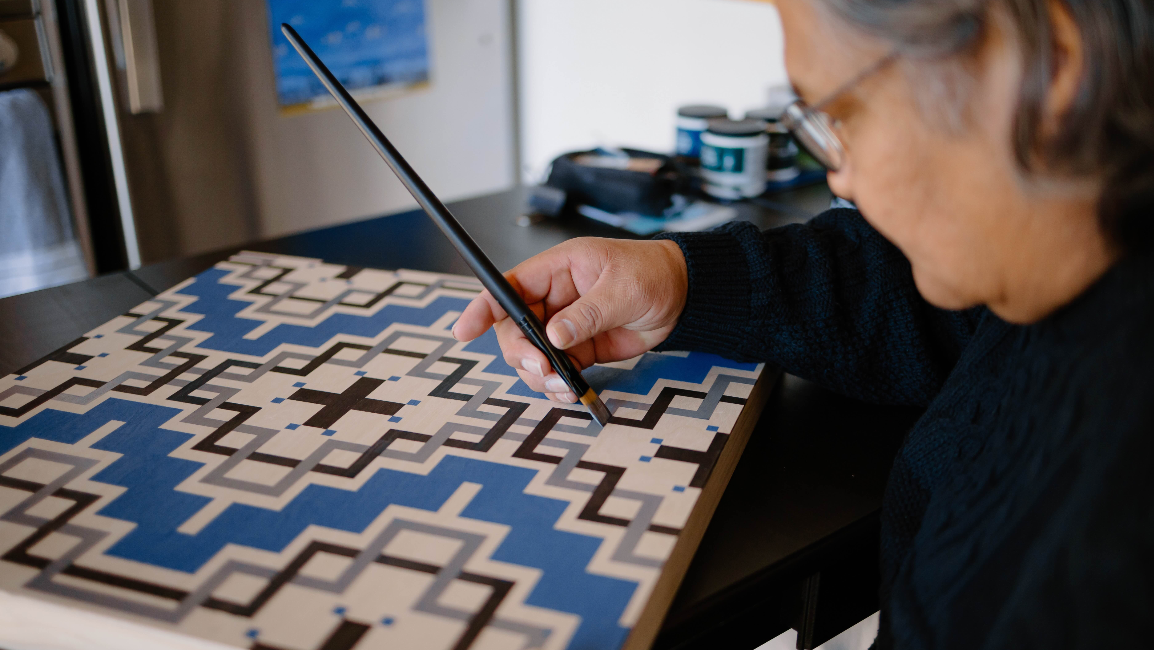
Artist Jay Cee Beyale working on his design of Ganado Tapestry
This revelation planted the seed for Anduba, a wallcovering company that Flavia decided would step outside the traditional licensing model and do something truly bold: allow artists to retain full copyright of their designs and earn royalties on every yard sold, up to three times the industry standard.
Anduba's debut collection launched just a few weeks ago and is appropriately named The Brave Ones, comprising seven patterns created by five indigenous artists from Brazil, Mexico, and the United States. Most, if not all, were driven by the idea of interconnectivity, especially that of cultures worldwide.
Boy, do we need more of that messaging nowadays, am I right?
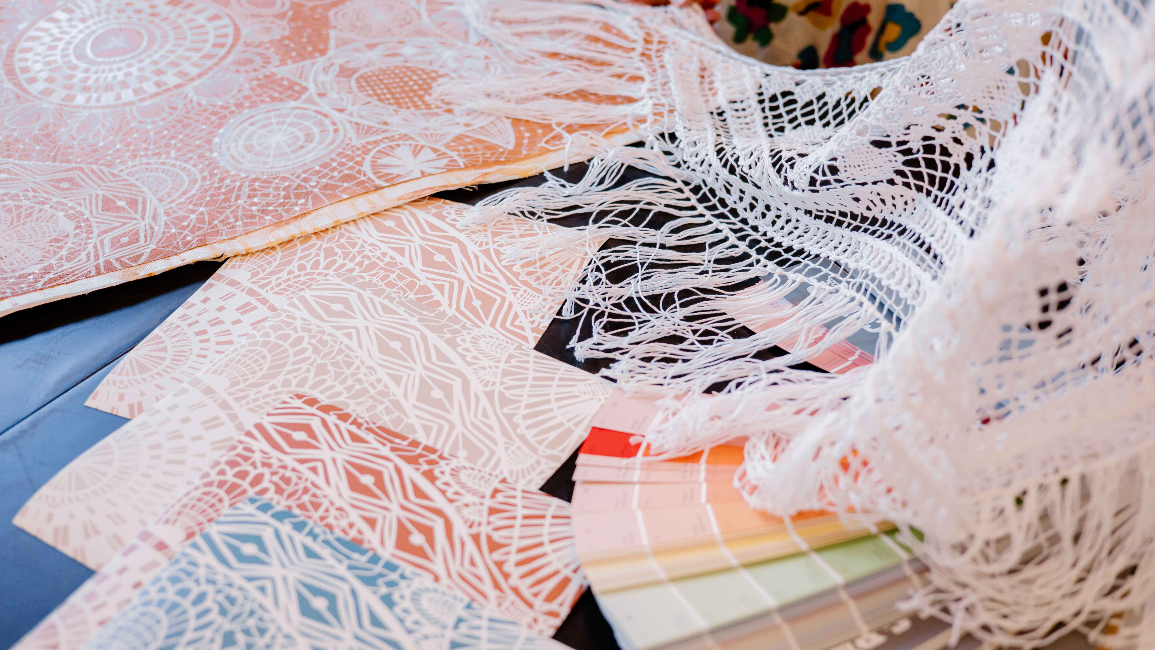
Web of Life by Miguela Moura in progress
For example, Miguela Moura’s Web of Life pattern is a painted version of Ñanduti—a weaving technique passed down through generations of women in her Guarani community in Brazil. The crafting method is based on the idea that in a spider’s web, every thread shapes the whole. Imagine that!
Anduba is one of six founding participants in the Living Future’s Declare Equity Pilot program. “This program aligns with our belief that truly sustainable materials must be transparent not only about ingredients, but also labor practices, cultural responsibility, and community impact,” Flavia explains. “But what I also found meaningful was that [Living Future] wanted the certification to be accessible to small manufacturers, too, not just industry giants.”
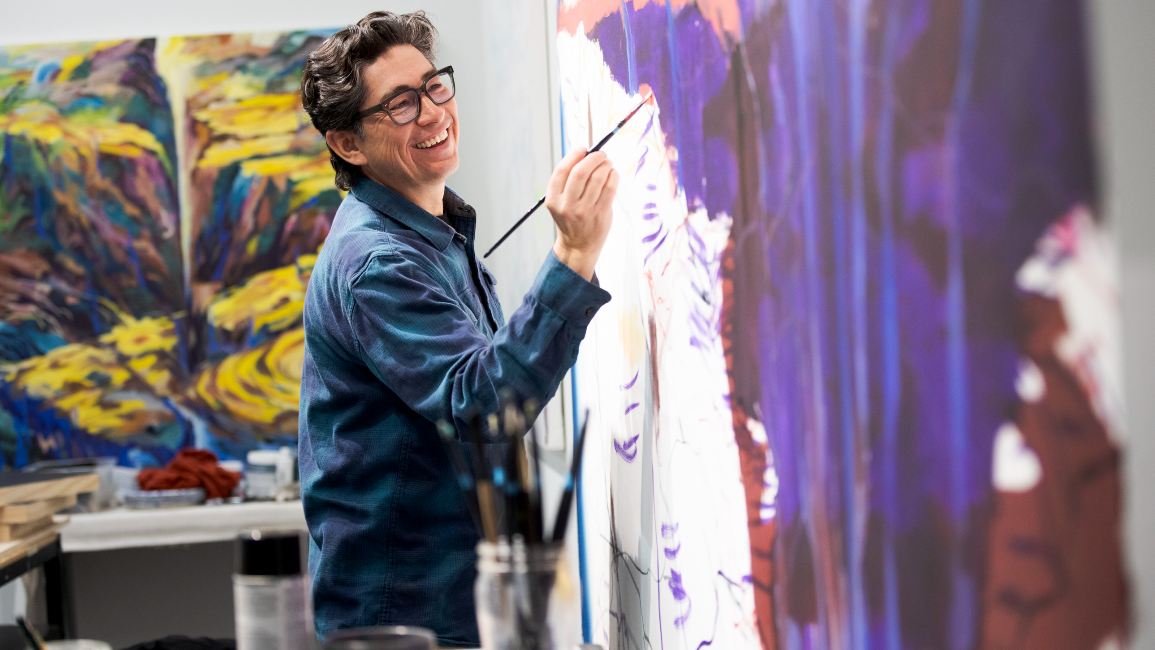
Artist Steven Yazzie at work
The Brave Ones is made to order to avoid waste. All wallcoverings are free of harmful chemicals and PVCs. Commercial iterations of the patterns are printed on a substrate made from recycled plastic bottles—a typical 75-yard project repurposes approximately 650 plastic bottles. The collection is available now and is shipping to all 50 states.
And we won’t have to wait too long for the second collection, which is already underway with an ETA of spring 2027. This time, it’ll be made entirely by indigenous women, with a common thread of the “feminine power of creation.”
Sounds like it will certainly fan the flames that blazed this trail for Flavia in the first place. And we’ll be watching to see where it takes her.
—AnnMarie Martin