How Chic Can a 14th-Century Monastery Be? Check Out This Kraków Gem!
By Nicole Haddad
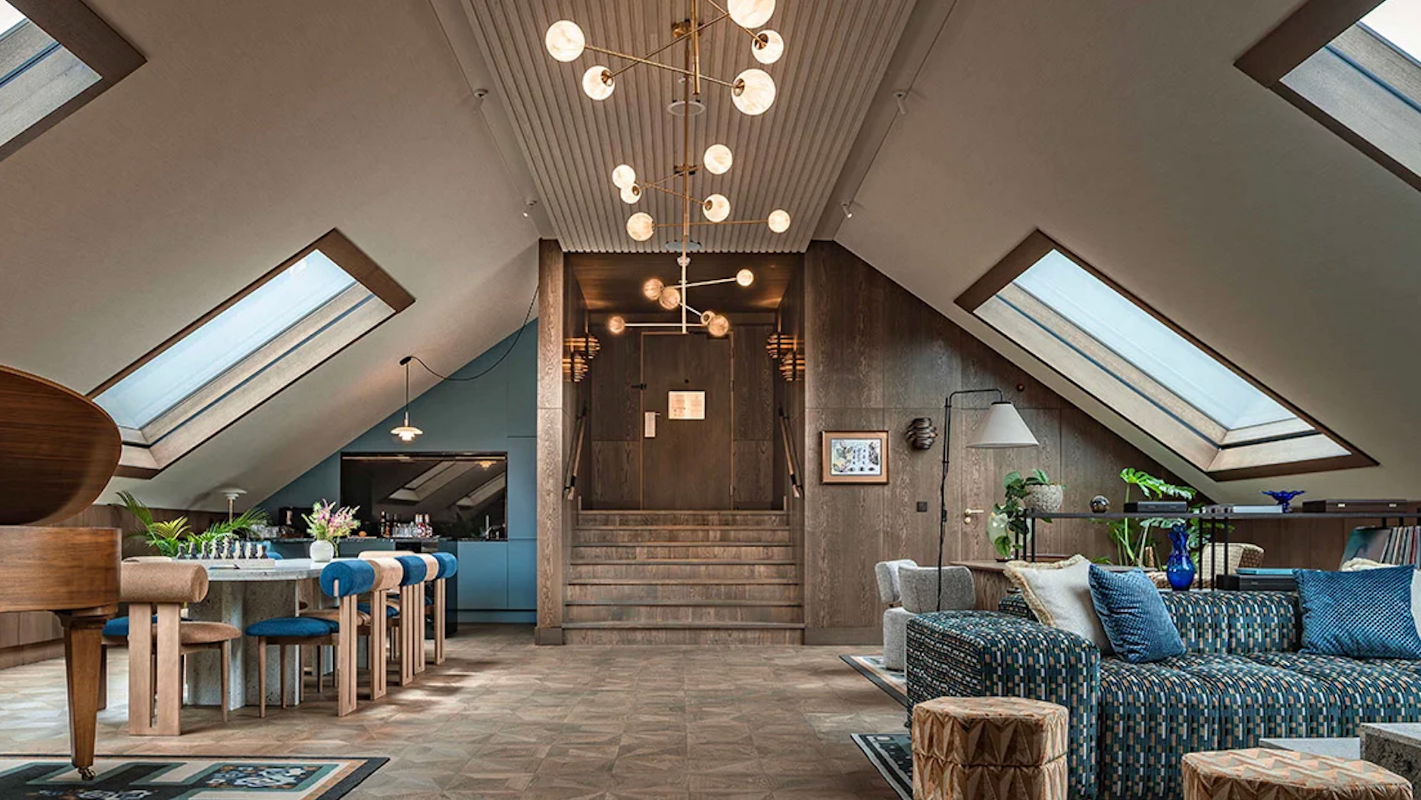
In an era once dominated by glass-and-steel buildings, adaptive reuse is on the rise, and we’re laying out the red carpet. From preserving embodied energy and lowering carbon footprints to embracing authenticity and historic character over the newest shiny fad, it’s tapping into the cultural zeitgeist. Stradom House, a five-star hotel located in Kraków, Poland’s historic center, perfectly exemplifies the allure.
Dating back to 1360, the property occupies a restored complex that was originally founded as a church and monastery. Barcelona- and London-based ADC Atelier reimagined the space to reflect the site’s evolving narrative—shaped in part by its past lives as a hospital, post office, and military headquarters. Founded by architect Aaron David Clarke (hence the ADC in the company name), a former key member of the Soho House in-house design team, and his wife Marta Tuneu, an architect who previously designed fashion accessories for Louis Vuitton in Paris, the interior architecture and design firm specializes in revitalizing historical buildings.
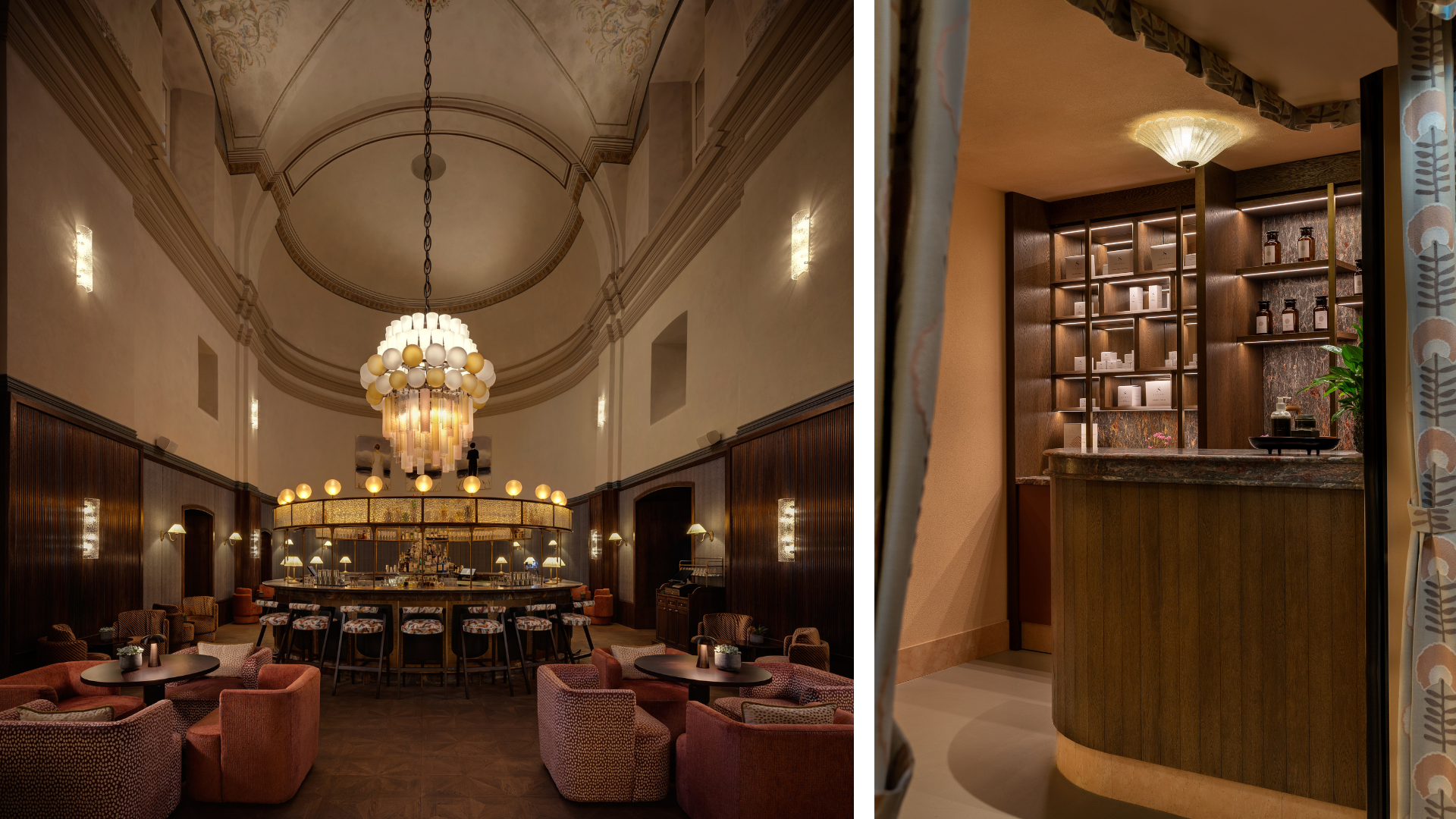
“We are very conservative in the approaches we take [in] these types of buildings," Marta explains. "We reuse, reinvent, and repurpose whatever we can to bring back the life and identity of the space, while adapting it to modern needs.” That’s why, today, you can have a Femme Fatale cocktail underneath centuries-old wall and ceiling frescoes, which were restored by a team of local women, in the hotel’s Hedwig’s Club, a voluminous, 14th-century baroque chapel-turned-cocktail bar. Original sections were left in their weathered states, while newly restored areas are intentionally more noticeable and in a more vibrant tone. The bar itself was custom-designed to follow the geometry of the chapel. Suspended above, a massive chandelier acts as the room’s jewelry, paying tribute to Poland's long tradition of jewelry-making.
The hotel’s architectural shell was kept simple, allowing the monastery’s decorative elements to stand out against the military period’s more austere look. “It was challenging to show the different layers and phases after the building went through so many iterations," Marta says. "So the strategy was to bring back the monastery’s calming colors in the rooms and more intimate spaces and to introduce a more saturated palette in the public areas.” Original architectural elements were preserved whenever possible—the entrance doors, for example, were carefully restored and rehung. Meanwhile, the lobby’s front desk was designed from raw stones strewn across the property.
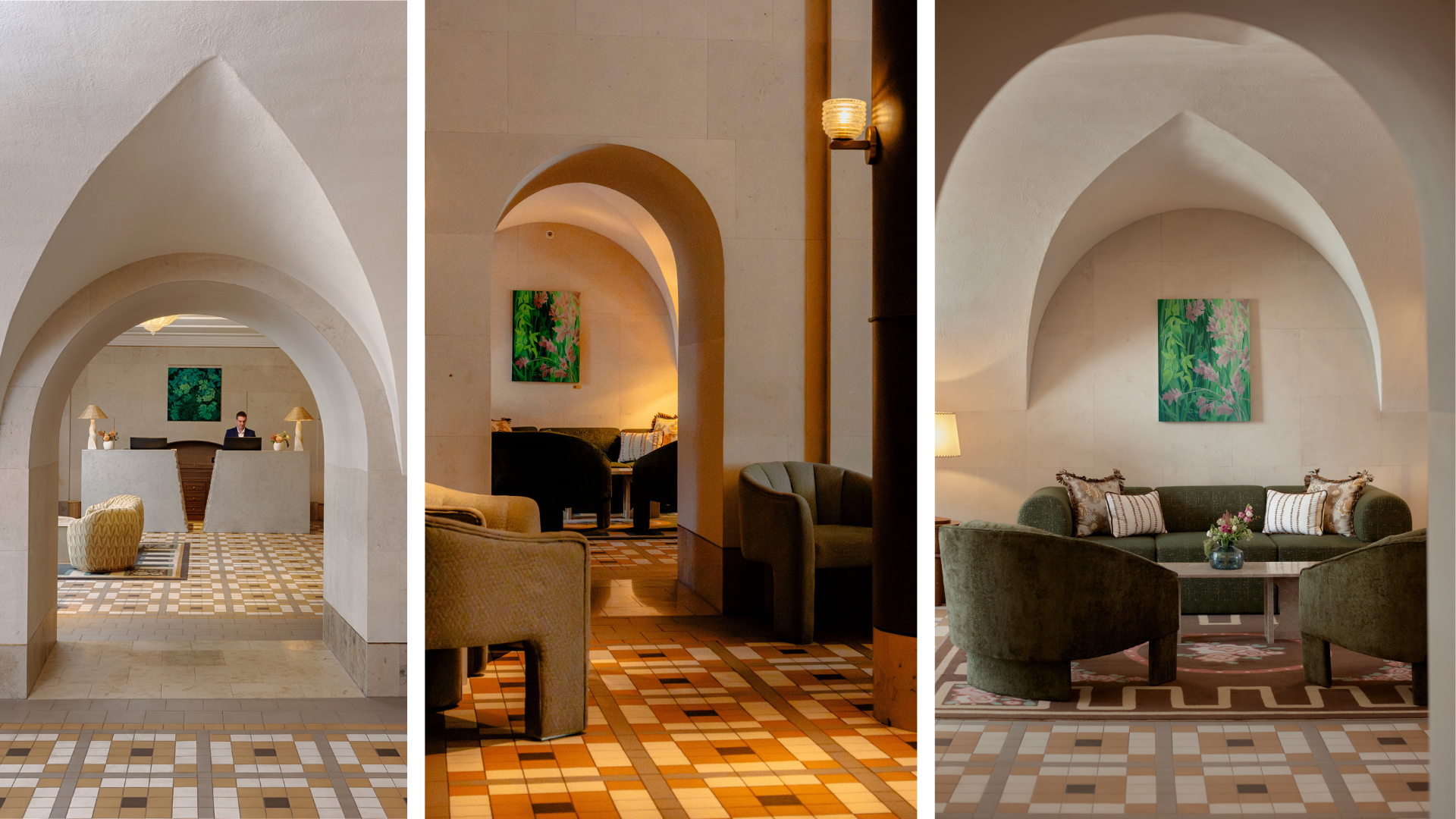
To develop interiors that felt authentic, the design team did a deep dive into the culture and researched all aspects of Polish design. Vintage furniture highlighting the country’s traditions was carefully curated. The floors were custom-designed, inspired by original, classic floors sourced in part from Polish books, while the custom rugs drew on historical floral motifs.
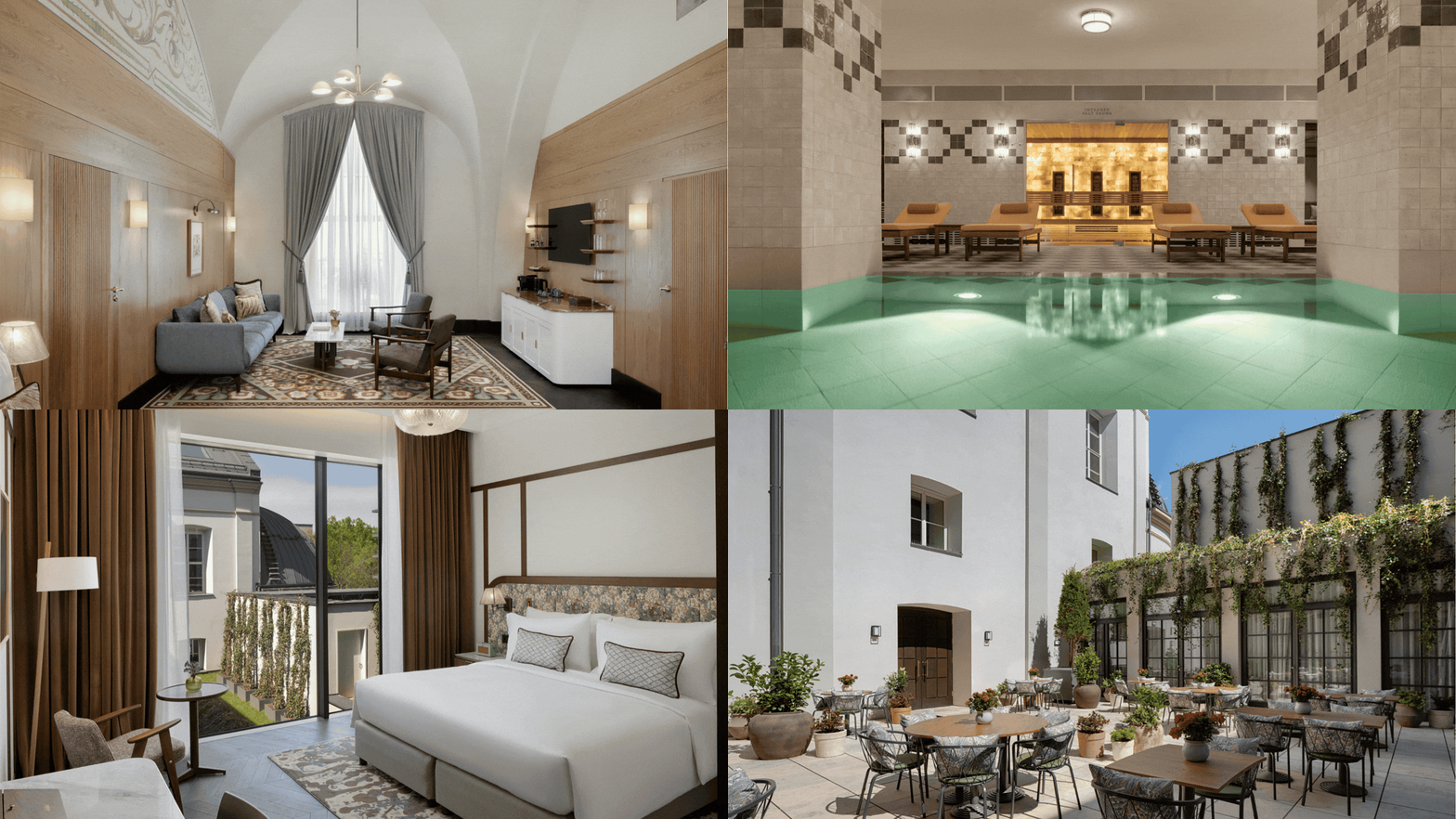
The effect is timeless. Each atmospheric space beautifully ties in with the next—from Gaia, an intimate, cozy Mediterranean-style restaurant, to Stradomska 12, a second dining option that offers a modern interpretation of Polish cuisine, to the relaxing Bakehouse 14, a chic bakery and café. What’s more, the SÓL Spa & Wellness offers the ultimate sanctuary with sauna facilities, a pool filled with ozonated water, a cryotherapy bath, a fitness center, products by Alexandra Soveral, and more. Stradom House is essentially an architectural and decorative love letter to Kraków. ⬥
Join our community!
Thank you for subscribing!
Have a great day!