Spago Turns Dinner Into a Deliciously Dramatic Performance
By Murrye Bernard | Photos by Owen Raggett
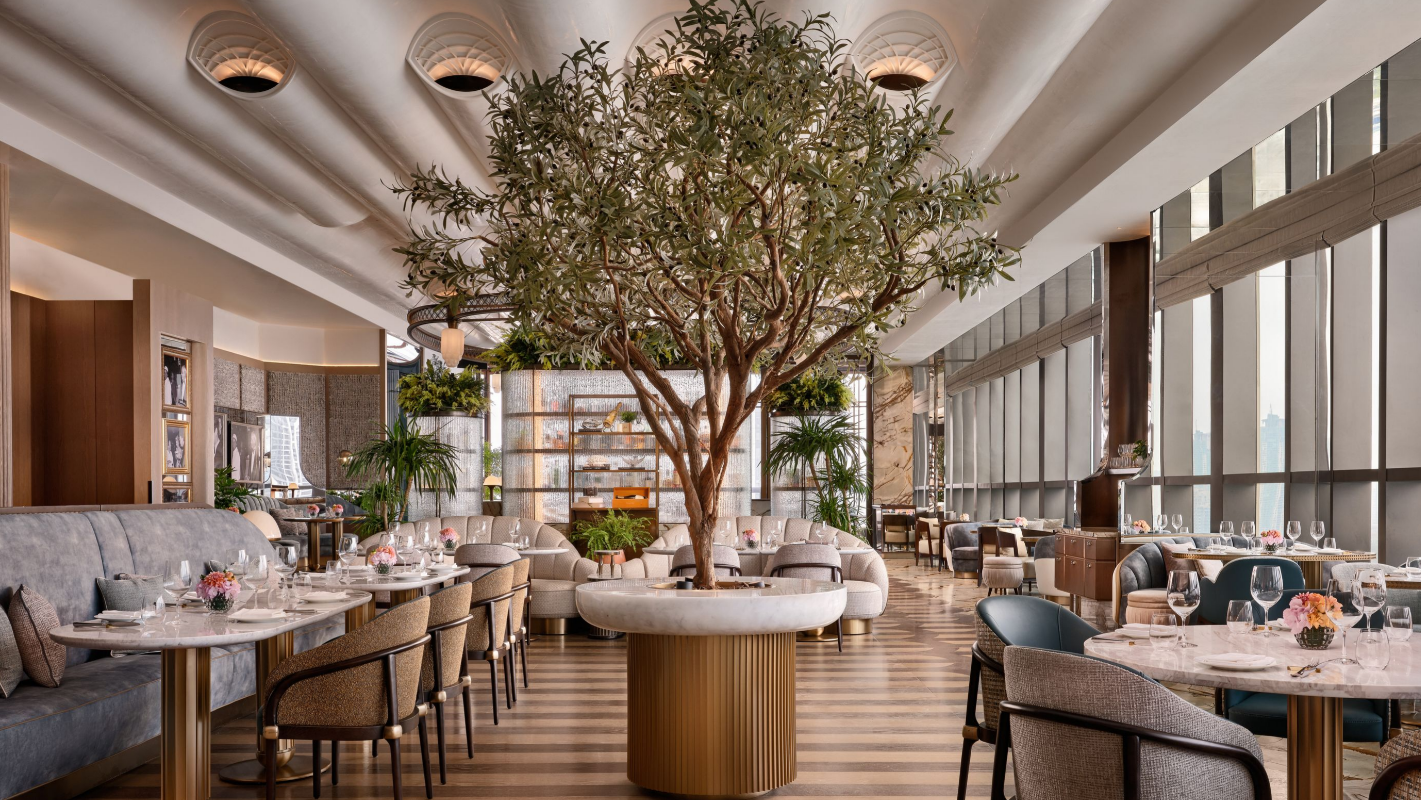
Some restaurants seem to want to impress you the second you walk through the door. Spago, the newest restaurant at The St. Regis on the Bund, Shanghai, has other plans.
Designed by Hong King–based AB Concept, the space unfolds more like a good movie than a flashy reveal. You catch glimpses of what's ahead, wander into another room, discover something unexpected, and before you know it, dinner has turned into an adventure. And that's exactly the point.
The design story began with a little detective work. While researching the history of the St. Regis brand, AB Concept co-founder Ed Ng stumbled upon A Journey in Other Worlds, an 1894 science fiction novel, written by St. Regis founder John Jacob Astor IV. The book imagines exploration and futuristic worlds more than a century before space travel was a reality, and that spirit of curiosity became the restaurant's creative compass.
"We never wanted to translate the novel directly into the interior," Ed says. "It was about capturing that spirit of imagination and adventure … creating a Spago that feels glamorous and familiar, but also unexpected."
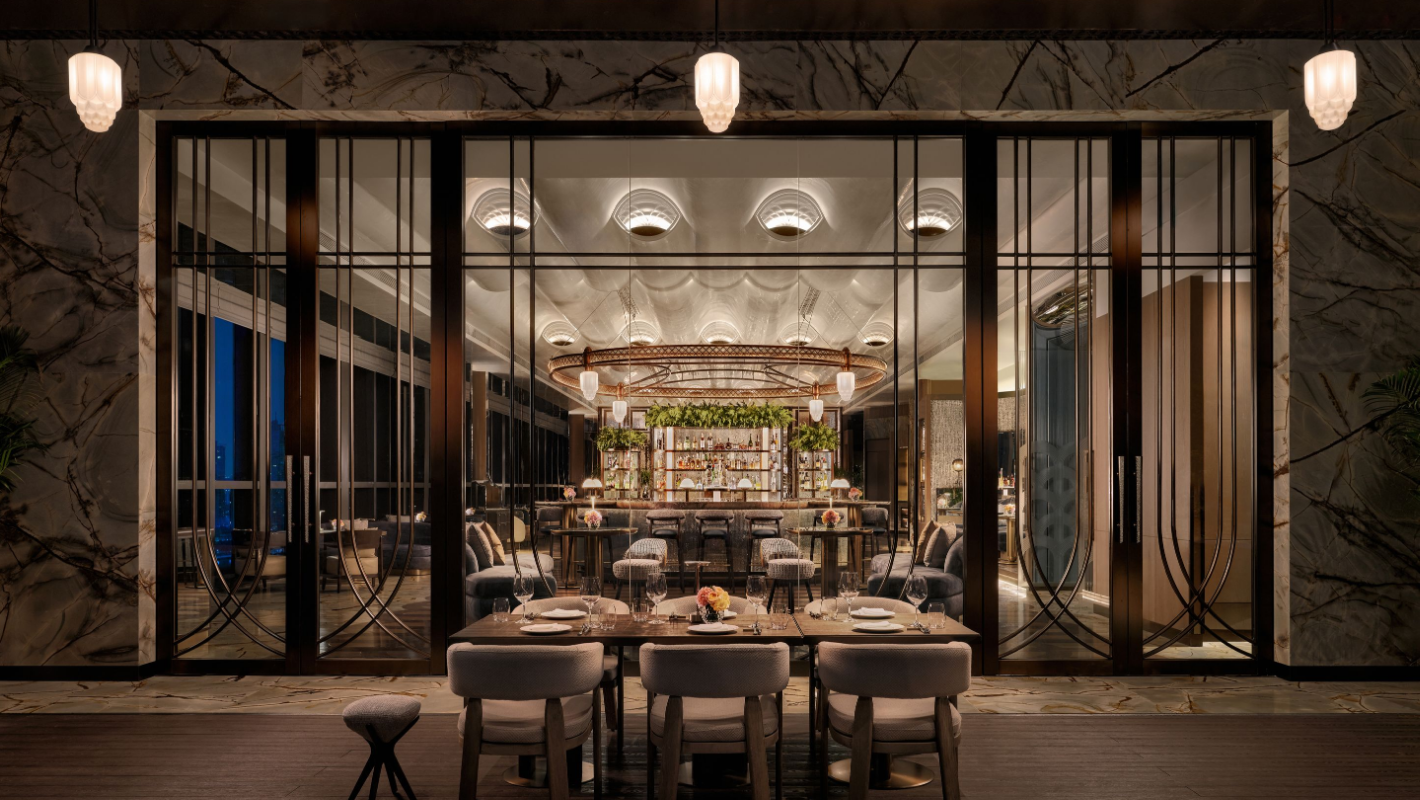
That balancing act shows up everywhere. Warm bronze, richly veined stone, and timber keep the restaurant feeling inviting, while stainless steel details, reflective surfaces, and sculptural forms quietly nudge the space toward the future. "The glamour gives warmth and emotion; the futuristic patterns bring curiosity and a sense of surprise," Ed says.
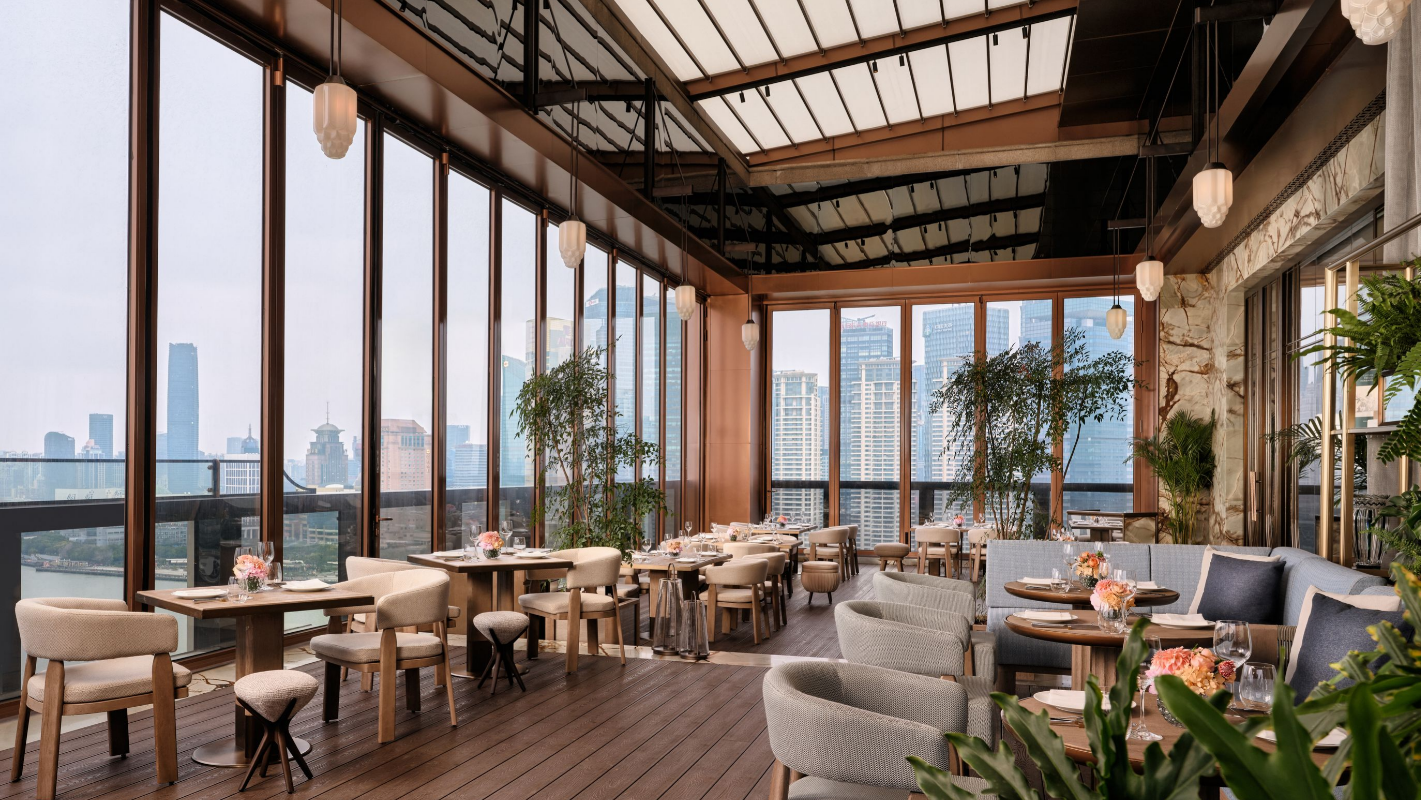
The layout plays an equally important role. Rather than revealing the entire restaurant at once, each space builds on the last. There's anticipation at the entrance, energy gathering around the lounge and bar, a composed elegance in the dining room, and finally, a peaceful terrace overlooking Shanghai.
"You don't walk in and understand the entire restaurant in just one glance," Ed says. Instead, the restaurant rewards wandering, revealing one experience after another before settling into quieter moments where guests can slow down, enjoy the food, and connect with each other.
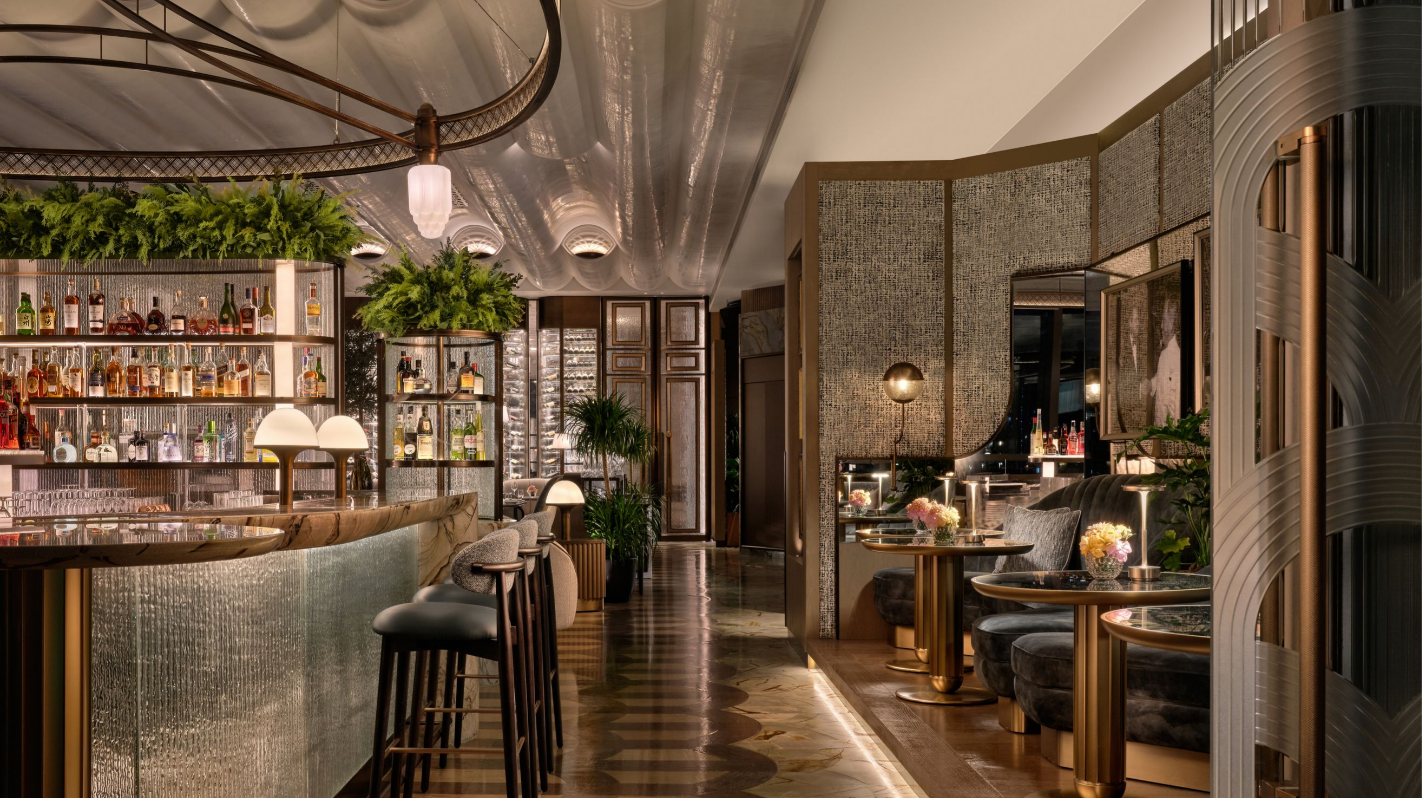
The restaurant's beating heart is the dramatic wheel chandelier hovering above the bar—a sculptural centerpiece that naturally draws people together. Nearby, the open kitchen adds another layer of theater as chefs become part of the performance, transforming food preparation into live entertainment instead of something hidden behind swinging doors.
Then comes the final act: After all the glamour inside, guests step onto a lush, library-like terrace filled with greenery, soft seating, and sweeping city views. It's less a grand finale and more of a perfect encore—a quiet place to order one last cocktail, keep the conversation going, and soak in the skyline.
And just like any good production, Spago changes with every performance. Morning light highlights the textures and materials, while evening transforms the restaurant into something moodier, warmer, and a little more mysterious. You could visit twice in one day and leave feeling like you'd seen two entirely different shows. ⬥
Join our community!
Thank you for subscribing!
Have a great day!